Tianyi Sensor IOT Technology Co., Ltd
Sales Manager:Ms. Emily Wang
Cel,Whatsapp,Wechat:+86 15898932201
Email:info@fengtutec.com
Add:No. 155 Optoelectronic Industry Accelerator, Gaoxin District, Weifang, Shandong, China


Sales Manager:Ms. Emily Wang
Cel,Whatsapp,Wechat:+86 15898932201
Email:info@fengtutec.com
Add:No. 155 Optoelectronic Industry Accelerator, Gaoxin District, Weifang, Shandong, China
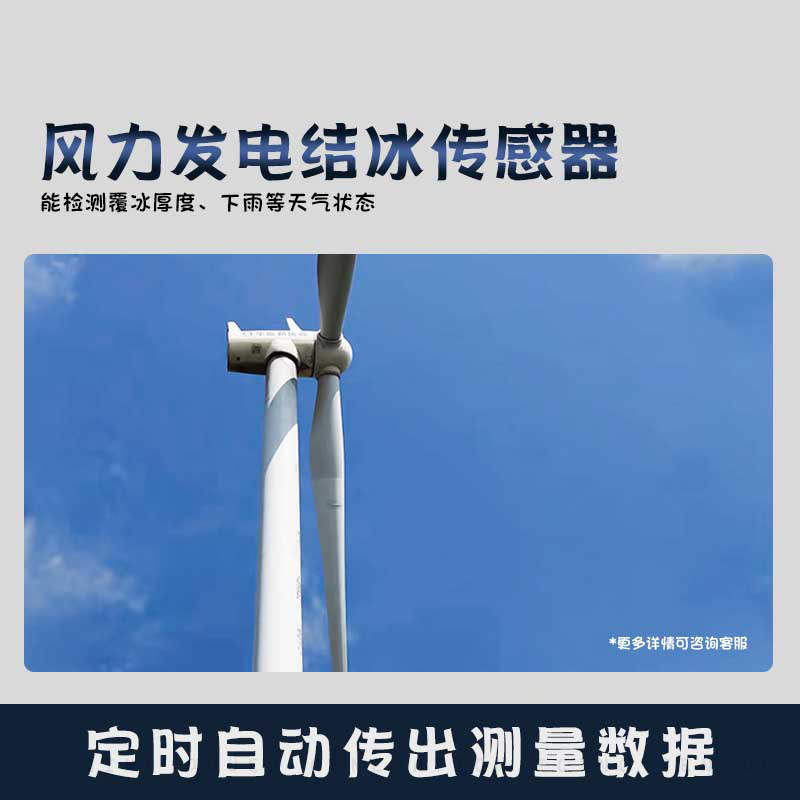
Model:FT-JB3H
Brand:tianyi
1.Product Introduction of Detecting Ice on Wind-turbine Blades
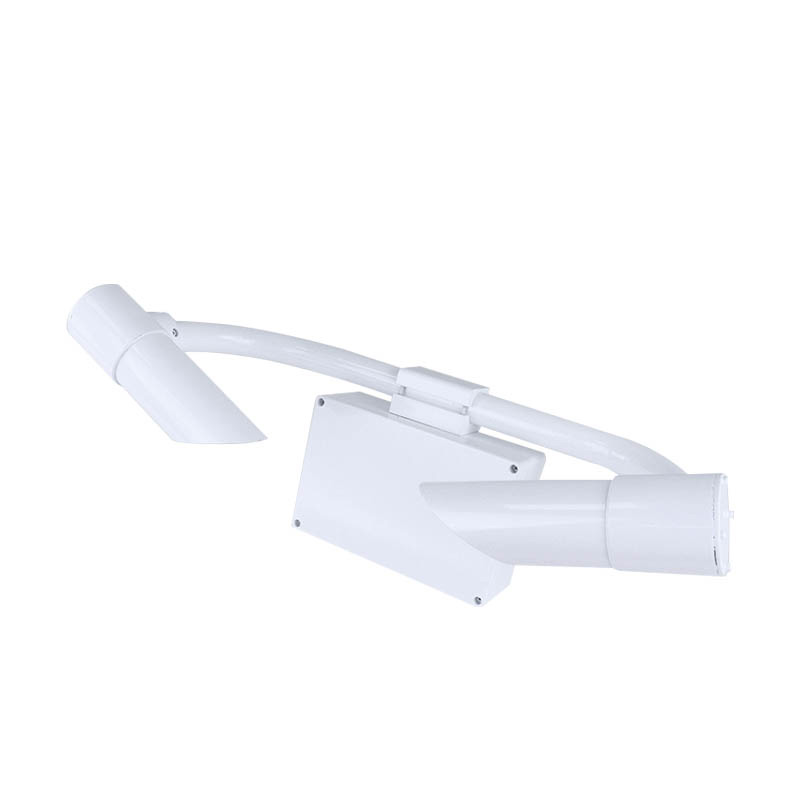
Detecting Ice on Wind-turbine Blades Monitoring begins as soon as ice starts to accumulate on wind turbine blades,Used to detect ice accumulation on rotor blades.Detecting Ice on Wind-turbine Blades uses microwave detection technology to monitor the icing information in the sensitive area of the sensor based on the difference between feedback information of different substances such as ice, water, and air based on the microwave signal, and calculate the icing thickness based on the signal strength and the distribution information of the icing in the sensor area.This product is generally installed on the blades of a wind turbine.By measuring the ice covering on this sensor, the ice covering at the current blade position can be determined equally.
2.Detecting Ice on Wind-turbine Blades technical indicators
1.Detection resolution: 0.01mm
(1) Maximum measured thickness: 30.00mm
(3) Communication method: Wireless 433
(4) Air rate: 10K
(5) Communication Agreement: See Communications Section
(6) Communication distance:>100 meters (accessible)
(7) Power supply method: embedded battery
(8) Standby time:>72 hours
(9) Working temperature: -40℃~65℃
(10) Protection level: IP66
(11) Weight: ≤210g
3.Detecting Ice on Wind-turbine Blades product features
(1) Can detect weather conditions such as ice thickness and rain.
(2) It has functions such as temperature detection, battery voltage detection, and charging voltage detection.
(3) Automatically transmit measurement data at regular intervals.
(4) The equipment is lightweight and flexible, and is easy to fit tightly on the blades.
(5) Recharge the battery with a photovoltaic charging module.
(6) The sensor thickness is less than 15mm
(7) Install in different positions of the blade and tower
(8) Powered by solar energy
(9)Lora wireless communication
(10) Use the same coating as the blade
(11) Combined with the information of micro weather stations
Total Nitrogen Analyzer utilizes the resorcinol method and photoelectric quantitative technology. Its integrated design allows for rapid sampling and testing, boasts strong anti-interference capabilities, and enables real-time monitoring of total nitrogen content in water. It is widely used in...
instrument used to measure rainfall utilizes a three-channel narrowband infrared detector and a pure sine wave AC signal source to measure precipitation based on infrared optical principles. It supports the real-time scanning of raindrop size and count, offering a resolution of 0.01 mm, a rain...
instrument to measure rainfall utilizes a PVDF piezoelectric film as its core rain sensing component, combined with embedded AI neural network technology to accurately distinguish raindrop signals. It is used for remotely measuring precipitation amount, precipitation intensity, and precipitati...
The core of the Odor Online Monitor lies in simulating human olfactory perception, enabling simultaneous monitoring of multiple malodorous pollutants. It is particularly suitable for 24/7 continuous monitoring in environments such as landfill sites, chemical industrial parks, and wastewater treatmen...


 Get a Free Quote
 Skype
Skype
 whatsapp
 mail
mail