Tianyi Sensor IOT Technology Co., Ltd
Sales Manager:Ms. Emily Wang
Cel,Whatsapp,Wechat:+86 15898932201
Email:info@fengtutec.com
Add:No. 155 Optoelectronic Industry Accelerator, Gaoxin District, Weifang, Shandong, China


Sales Manager:Ms. Emily Wang
Cel,Whatsapp,Wechat:+86 15898932201
Email:info@fengtutec.com
Add:No. 155 Optoelectronic Industry Accelerator, Gaoxin District, Weifang, Shandong, China
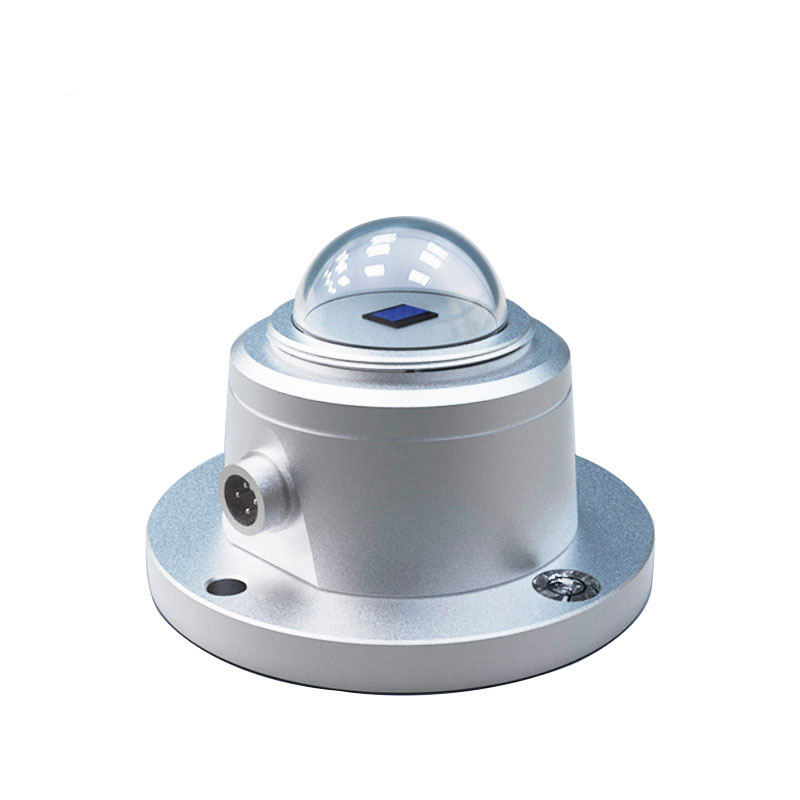
Model:FT-FS1
Brand:tianyi
1.Photosynthetic Active Radiation Sensor Technical Indicators
Photosynthetic Active Radiation Sensor is used to measure photosynthetic light levels in air and water to determine the photosynthetic active radiation (PAR).
Power supply: DC12V
Power consumption: 0.036W
Working environment: -20~65℃
Communication interface: RS485
Operating current: 3mA@DC12V
Minimum data interval: 0.5S
2.Photosynthetic Active Radiation Sensor parameters
Measurement elements: Irradiance
Measurement range: 0-2000W/m²
Resolution: 1W/m²
Response time: ≤10S
Accuracy: <±3%
Annual stability: ≤±3%
Zero point drift: ≤6 W/m²
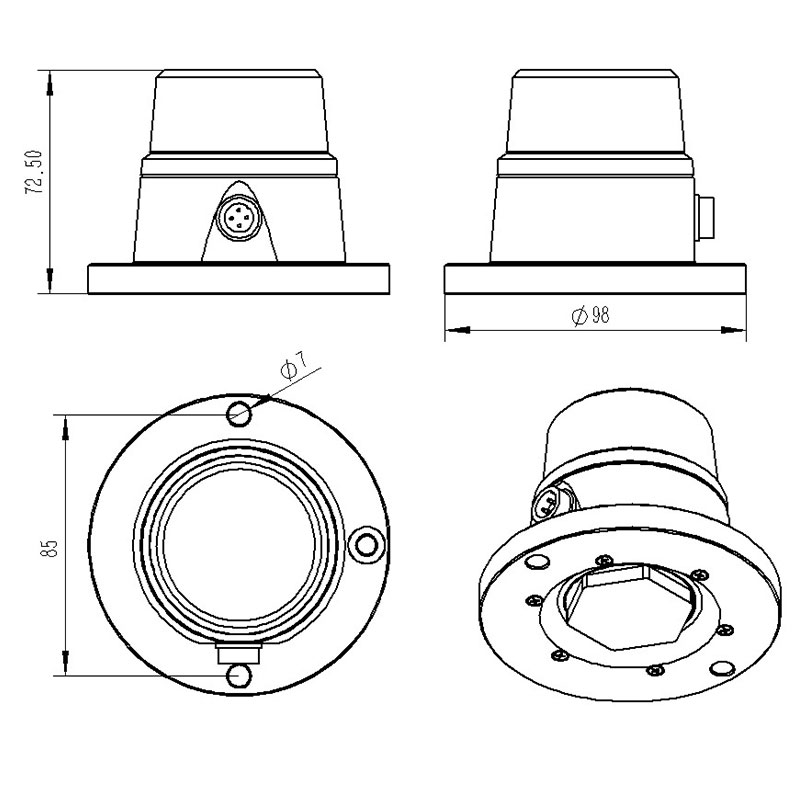
3.Photosynthetic Active Radiation Sensor Product Size Diagram
Piezoelectric Rain Gauge employs a PVDF piezoelectric film as its rain-sensing element, utilizing an embedded AI neural network to distinguish rain droplet signals and prevent false triggers caused by interference from grit, dust, vibration, and similar factors. The device features a completel...
Facility agriculture refers to an agricultural form that utilizes new production equipment, modern agricultural engineering technologies, and management techniques to regulate environmental parameter factors such as temperature, light, water, soil, air, and fertilizer for the growth of plants like v...
rainfall measuring equipment is a high-precision rainfall observation instrument that measures precipitation using a tipping-bucket mechanism. It features a rain-catching aperture with a diameter of Φ200 mm, a resolution of 0.2 mm, and a measurement error not exceeding ±2%. Capable of digita...
Cultural relics carry the memories of human civilization and are precious non-renewable resources. Meteorology, as an important part of the natural environment, has an intricate connection with the protection of cultural relics.Meteorological conditions are directly related to the preservation...


 Get a Free Quote
 Skype
Skype
 whatsapp
 mail
mail