Tianyi Sensor IOT Technology Co., Ltd
Sales Manager:Ms. Emily Wang
Cel,Whatsapp,Wechat:+86 15898932201
Email:info@fengtutec.com
Add:No. 155 Optoelectronic Industry Accelerator, Gaoxin District, Weifang, Shandong, China


Sales Manager:Ms. Emily Wang
Cel,Whatsapp,Wechat:+86 15898932201
Email:info@fengtutec.com
Add:No. 155 Optoelectronic Industry Accelerator, Gaoxin District, Weifang, Shandong, China
time:2025-03-31 09:57:41 source:Weather Station viewed:438 time
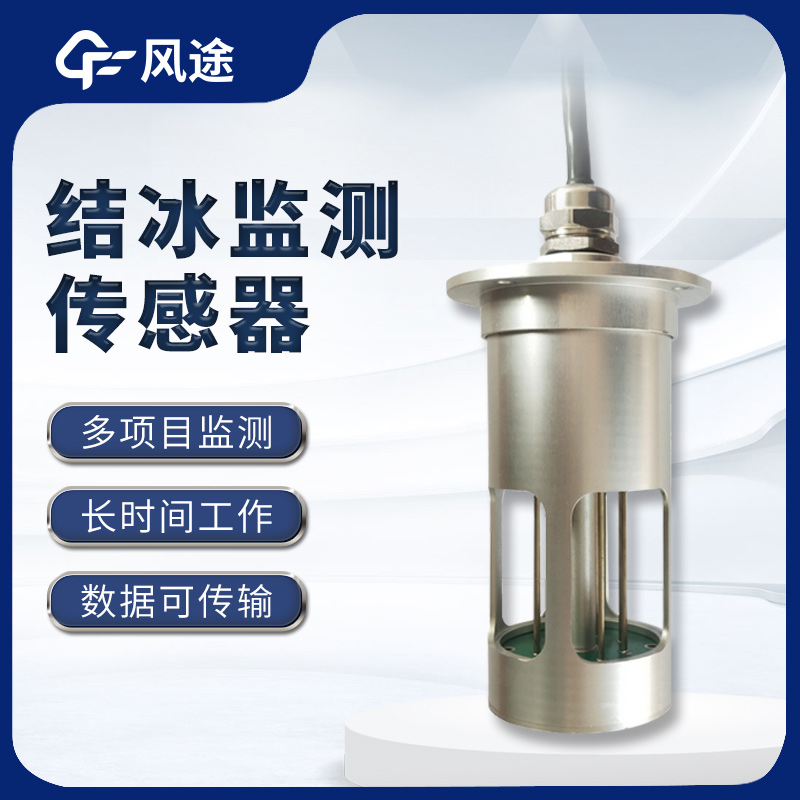
In winter, there is frequent rain and snow, and road icing seriously affects the safety of pedestrians and vehicles. To address this issue, our company has launched the Road Ice Sensor. By adopting microwave electrical signal detection technology and equipped with a temperature compensation function, it can accurately and real-time monitor the conditions such as road water accumulation, icing, and ice thickness, providing a scientific basis for road maintenance departments.
This sensor has a detection resolution of 0.1mm, an icing measurement range of 0-10.00mm, and an accuracy of 0.1mm. It can identify various road conditions, with an operating temperature range of -40°C to 85°C and a protection level of IP67. It can not only detect the thickness of ice accumulation but also monitor situations such as rain and water accumulation. With a built-in temperature sensor and combined with the compensation function, it ensures the accuracy of the data. It supports timed data transmission, making it convenient for remote monitoring. Each device has a unique number, which is suitable for large-scale monitoring systems. It has a simple structure and is easy to install, equipped with an RS485 interface and supporting the ModbusRTU protocol.
It has a wide range of applications, including facilities such as cooling towers, communication towers, transmission line towers, and bridges. When installing, the sensor needs to be placed at the position where icing needs to be detected, ensuring that the detection antenna is exposed near the icing point, and attention should be paid to protecting the antenna part. In terms of wiring, it provides about 3-core 8-wire wiring, including interfaces such as 5V+, 5V-, RS485-A, and RS485-B.
It adopts an RS485 bus structure, with a baud rate of 9600, 8 data bits, 1 stop bit, and no parity bit, ensuring stable data transmission. During use, the following points need to be noted: Check the surface of the sensor before the icing season to prevent it from being covered by debris; wait for 3 minutes after powering on to allow it to enter the normal measurement state.
Ultrasonic Smart Weather Station integrates multi-element monitoring and uses a fully digital design to achieve accurate perception and real-time transmission of environmental data...
Methane, as the main component of natural gas, is widely used in industrial production and urban gas supply. However, its colorless, odorless, flammable and explosive properties make methane leakage a major safety hazard. The handheld Laser methane telemeteris mainly used for long-distance mea...
In today's intertwined context of agricultural modernization and ecological conservation needs, dynamic changes in soil moisture directly impact crop growth, water resource utilization, and ecosystem stability. Automatic Soil Monitoring Systems are becoming the link connecting farmland managemen...
Life Detector Device is a vital sign detection device based on ultra-wideband radar technology. It can penetrate non-metallic obstacles such as brick walls and rubble, detecting stationary life forms at a distance of ≥26 meters and moving life forms at a distance of ≥36 meters. It features t...


 Skype
Skype
 whatsapp
 mail
mail