Tianyi Sensor IOT Technology Co., Ltd
Sales Manager:Ms. Emily Wang
Cel,Whatsapp,Wechat:+86 15898932201
Email:info@fengtutec.com
Add:No. 155 Optoelectronic Industry Accelerator, Gaoxin District, Weifang, Shandong, China


Sales Manager:Ms. Emily Wang
Cel,Whatsapp,Wechat:+86 15898932201
Email:info@fengtutec.com
Add:No. 155 Optoelectronic Industry Accelerator, Gaoxin District, Weifang, Shandong, China
time:2026-01-27 10:41:51 source:Weather Station viewed:322 time
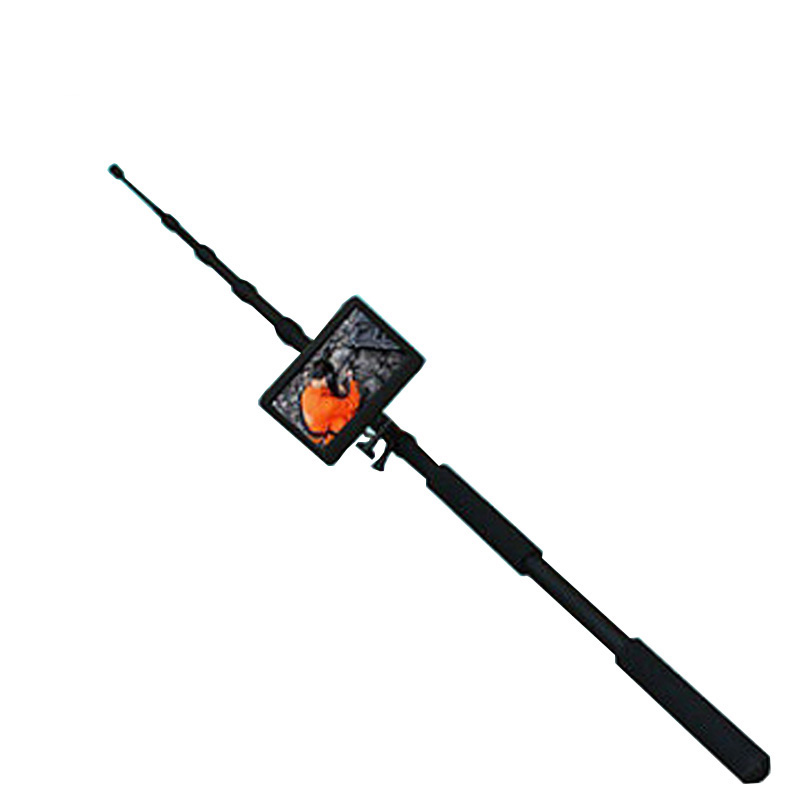
Life Detector Device integrates infrared thermal imaging detection, 4K high-definition video observation, and two-way voice communication functions. This device can effectively locate signs of life in complex environments such as debris and enable communication between rescuers and those trapped.
Life Detector Device is a specialized technical equipment designed for search and rescue in complex disaster sites. It primarily integrates passive infrared thermal imaging technology, high-definition visible light imaging technology, and two-way audio communication technology, aiming to improve the efficiency of life search and communication in environments with opaque obstacles such as collapsed buildings, earthquake debris, and mudslide-covered areas.
In terms of device composition, its core component is a detection probe integrating multiple sensors. This probe contains a high-sensitivity uncooled infrared focal plane detector. This detector can passively receive infrared radiation emitted by humans or warm-blooded animals and convert it into a temperature distribution image, i.e., a thermal image. Even in dense smoke, darkness, or partially obscured conditions, as long as there is a temperature difference, the thermal imaging function can help rescuers initially identify areas where life may exist. At the same time, the front end of the probe is equipped with a 4K resolution ultra-high-definition visible light camera. When a general area is identified through thermal imaging or further confirmation is needed, rescuers can activate the visible light camera to obtain clear optical images to identify specific environmental details, body posture, or facial features for visual confirmation.
In addition to its detection capabilities, a key feature of this device is its "intercom" function. A high-fidelity microphone and speaker are integrated into the probe or its connected extension components. After the detector is inserted into cracks or holes in the debris, rescuers can initiate two-way voice communication through the control terminal. If the trapped person is conscious, rescuers can directly use voice to comfort them and inquire about their physical condition and surrounding environment. The trapped person can also respond through the device, providing crucial information. This real-time voice communication greatly enhances the targeted nature and psychological support effect of rescue operations.
In actual emergency rescue scenarios, the use process of this device is clearly targeted. Operators first use the thermal imaging mode to scan the target area extensively, quickly screening out suspected points showing abnormal temperature differences. Upon detecting a suspected target, the device switches to or simultaneously activates 4K high-definition video, allowing the probe to be moved closer for detailed observation to rule out false positives (such as small animals or residual heat from electrical appliances). Once a survivor is confirmed, the voice communication function is immediately activated to establish contact. Throughout the process, the infrared video, visible light video, and audio data acquired by the device are transmitted in real time to the command terminal, allowing commanders to analyze the situation and develop specific rescue plans.
The device's highly integrated design makes it an efficient rescue tool in complex and confined environments such as rubble. Through technological means, it partially penetrates visual obstacles, converting invisible thermal radiation into visible images, and establishes a communication channel through sound, overcoming the limitations of traditional search methods (such as shouting and optical telescopes) in obscured environments. Therefore, it is widely used in professional fields such as firefighting, earthquake rescue, civil defense, and mine accident rescue, and is an important component in modern emergency rescue equipment systems for improving survivor location accuracy and rescue success rates.
Rain And Snow Gauge is a high-precision precipitation monitoring device utilizing weighing and Internet of Things (IoT) technology. It can monitor all types of precipitation, including rain and snow, and is specifically designed for meteorological observation and environmental monitoring....
Stainless Steel Tipping Bucket Rain Gauge is a hydrometeorological instrument used to measure natural rainfall,It converts precipitation into a digital signal output, offering high detection accuracy and strong anti-interference capabilities, making it suitable for meteorological monitoring and hydrological data acquisition....
Total Nitrogen Analyzer utilizes the resorcinol method and photoelectric quantitative technology. Its integrated design allows for rapid sampling and testing, boasts strong anti-interference capabilities, and enables real-time monitoring of total nitrogen content in water. It is widely used in...
In the cold winter, transmission lines often face severe challenges of icing. When conditions such as low temperature, high humidity, and specific wind speed occur simultaneously, the phenomenon of icing on transmission lines is likely to form. Line icing not only increases the mechanical load on co...


 Skype
Skype
 whatsapp
 mail
mail