Tianyi Sensor IOT Technology Co., Ltd
Sales Manager:Ms. Emily Wang
Cel,Whatsapp,Wechat:+86 15898932201
Email:info@fengtutec.com
Add:No. 155 Optoelectronic Industry Accelerator, Gaoxin District, Weifang, Shandong, China


Sales Manager:Ms. Emily Wang
Cel,Whatsapp,Wechat:+86 15898932201
Email:info@fengtutec.com
Add:No. 155 Optoelectronic Industry Accelerator, Gaoxin District, Weifang, Shandong, China
time:2026-01-28 11:06:42 source:Weather Station viewed:356 time
The Piezoelectric rain gauge sensor utilizes a PVDF piezoelectric film as the core rain-sensing component, combined with an embedded AI neural network algorithm to differentiate raindrop signals. This sensor is used for remotely measuring precipitation amount, precipitation intensity, and precipitation start and end times, achieving high-precision automated precipitation monitoring.
The Piezoelectric rain gauge sensor is an advanced sensing device for precipitation measurement based on the piezoelectric effect principle. It identifies precipitation events by detecting the weak electrical charge signals generated when raindrops strike the sensor surface, and further calculates relevant precipitation parameters. Compared to traditional mechanical tipping bucket rain gauges, this sensor has no moving parts, fundamentally avoiding problems such as mechanical wear, jamming, and the need for horizontal installation, significantly improving long-term operational reliability and data accuracy.
Its core technology lies in the combination of PVDF piezoelectric film material and intelligent signal processing algorithms. PVDF (polyvinylidene fluoride) is a high-molecular-weight polymer piezoelectric material with good flexibility and stable piezoelectric properties. When raindrops of different sizes and velocities strike the sensor's rain-sensing surface, they cause microscopic vibrations in the film, thereby generating microvolt-level electrical charge signals proportional to the impact energy. Raindrops of different diameters and terminal velocities produce different signal waveform characteristics. The sensor's built-in high-sensitivity charge amplification circuit captures and amplifies these raw signals.
The key breakthrough is the application of an embedded AI neural network algorithm. An artificial intelligence model trained on a large number of samples is integrated into the sensor's processing unit. This model can analyze the incoming charge signal waveforms in real time, intelligently differentiate between single raindrop signals and multiple overlapping raindrop signals, and effectively filter out non-precipitation interference signals such as wind noise, insect impacts, or mechanical vibrations. By identifying the "characteristic fingerprint" of raindrops, the algorithm can more accurately deduce precipitation intensity and accumulate the continuous sequence of charge signals to calculate the total precipitation amount, while precisely recording the start and end times of precipitation.
A complete piezoelectric rain gauge monitoring terminal typically consists of a sensor probe, a signal processing host, a power supply module, and a communication unit. The sensor probe usually uses a stainless steel casing, and the rain-sensing surface is treated with a special coating for hydrophobicity and corrosion resistance. The signal processing host contains the core algorithm and is responsible for data processing. The device can be powered by solar panels and batteries, and transmits precipitation data remotely to a monitoring center via methods such as 4G, LoRa, or RS485.
In practical applications, this sensor demonstrates wide applicability. In the field of smart hydrological monitoring, it is densely deployed within river basins, providing high spatio-temporal resolution precipitation data for flood forecasting and water resource management. In meteorological observation networks, it serves as a standard configuration for new automatic weather stations, improving the automation level of precipitation observation. In the transportation sector, it is particularly suitable for real-time rainfall monitoring and disaster warning along railway lines and highway slopes. In urban flood control, it is installed in low-lying areas or key nodes of drainage networks, providing real-time data for emergency dispatch. Furthermore, its high precision and maintenance-free characteristics are also highly valuable in agriculture, forestry, ecological research, and airport meteorological observation.
Overall, Piezoelectric rain gauge sensor represents an important direction in the development of precipitation measurement technology towards intelligence and high reliability. By integrating advanced sensing materials and artificial intelligence algorithms, it solves many of the pain points of traditional measurement methods, providing a more reliable data foundation for precise management and scientific decision-making in various water-related industries. With the continuous optimization of algorithmic models and the deep integration of Internet of Things technology, its application efficiency will be further expanded.
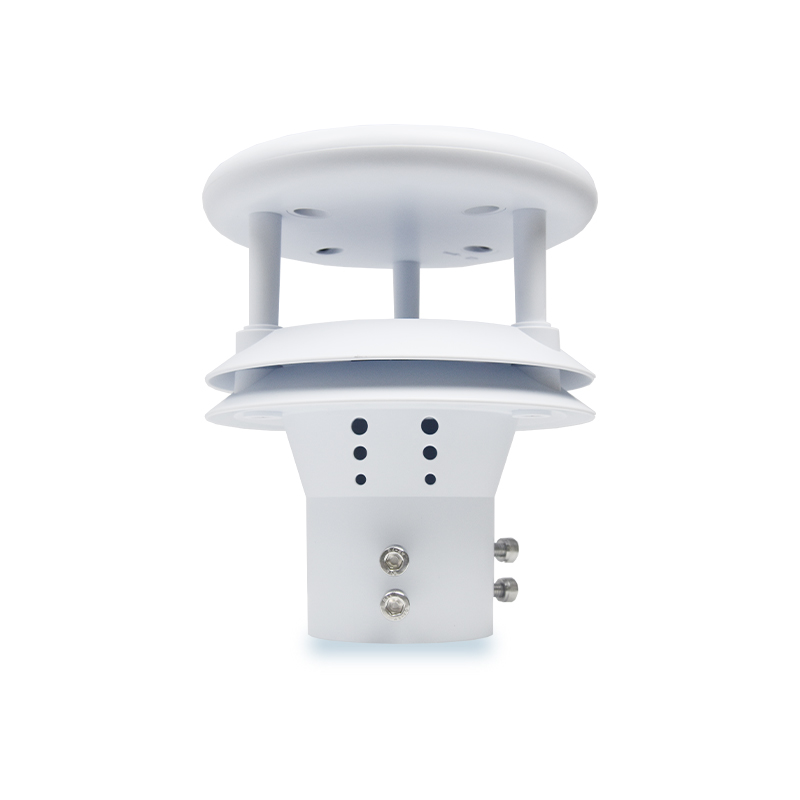
As a key device in modern meteorological monitoring, one of the primary advantages of the wireless Small Automatic Weather Station is its adoption of wireless data transmission technology.1. Freedom from Wired Infrastructure LimitationsTraditional wired weather stations are constrained by cabling, b...
Water quality monitor system for drink water is a micro-system for water supply monitoring built on the Internet of Things (IoT). It collects and stores water quality curve data, is compatible with pipe pressure conditions up to 0.3 MPa, and serves online monitoring in various drinking water s...
Why Does Wind Power Generation Easily Encounter Icing Issues?First, wind farms are mostly located in areas with abundant wind resources such as mountains and coastal regions, where harsh climatic conditions (high humidity, low temperatures) easily lead to weather phenomena like clouds, fog, and free...
Tianyi specializes in the research, development and production of meteorological monitoring equipment, with profound technical strength and rich experience in the field of Automatic Farmland Weather Station. The weather stations produced by the company feature high-precision sensors and are made of...


 Skype
Skype
 whatsapp
 mail
mail