Tianyi Sensor IOT Technology Co., Ltd
Sales Manager:Ms. Emily Wang
Cel,Whatsapp,Wechat:+86 15898932201
Email:info@fengtutec.com
Add:No. 155 Optoelectronic Industry Accelerator, Gaoxin District, Weifang, Shandong, China


Sales Manager:Ms. Emily Wang
Cel,Whatsapp,Wechat:+86 15898932201
Email:info@fengtutec.com
Add:No. 155 Optoelectronic Industry Accelerator, Gaoxin District, Weifang, Shandong, China
time:2025-12-02 11:03:21 source:Weather Station viewed:381 time
Piezoelectric sensor is a rainfall sensor based on the impact measurement principle, calculating rainfall by measuring the weight of individual raindrops. It can also integrate multiple pollutant parameters such as temperature, humidity, wind speed, wind direction, atmospheric pressure, and PM2.5, making it suitable for meteorological, hydrological, and agricultural applications.
Piezoelectric sensor is a professional sensor used for accurately measuring rainfall. Its core function is the automatic and continuous monitoring and recording of natural rainfall, providing crucial precipitation data for meteorological observation, hydrological analysis, water resource management, agricultural irrigation scheduling, and urban flood control.
The working principle of this device differs from traditional tipping bucket rain gauges. It employs the impact measurement principle. The core component of the sensor is a highly sensitive piezoelectric sensing element. When a raindrop falls from the air and impacts the sensor's sensing surface, it generates a tiny impact force. The piezoelectric element converts this mechanical impact force into a proportional electrical signal. The system captures and analyzes the amplitude and frequency of this signal through a precision circuit. Because raindrops of different sizes produce different impact force signal characteristics, the built-in algorithm can estimate the mass (or equivalent volume) of individual raindrops by analyzing their impact signals, and cumulatively calculate the sum of all impacting raindrops, thereby real-time calculating the cumulative rainfall per unit time and unit area, i.e., rainfall intensity and total rainfall. This method does not require collecting and storing rainwater, theoretically avoiding errors caused by evaporation, wetting losses, or mechanical tipping delays in traditional methods.
A significant development trend of modern Piezoelectric sensor is high integration and multi-functionality. A single rainfall measurement module often serves as the core, integrated into a larger multi-parameter environmental monitoring unit. This integrated design allows it to not only measure rainfall but also simultaneously monitor a range of related meteorological and environmental parameters. Typical integrated parameters include basic meteorological elements: air temperature, relative humidity, wind speed, wind direction, and atmospheric pressure. Further integration can extend to environmental air quality monitoring, such as simultaneously measuring six key pollutant parameters: PM2.5, PM10, carbon monoxide (CO), sulfur dioxide (SO2), nitrogen dioxide (NO2), and ozone (O3). This design creates a compact "integrated meteorological and environmental observation station," greatly facilitating the synchronous data acquisition and correlation analysis. In practical applications, the Piezoelectric sensor device exhibits specific advantages due to its structural characteristics. Because it has no moving parts (such as tipping buckets), mechanical wear is virtually zero, resulting in high long-term stability and relatively low maintenance requirements. It can distinguish the size distribution of raindrops, which is helpful in studying rainfall types (such as drizzle and heavy rain). The device is typically designed for low power consumption, making it suitable for solar-powered, unattended field stations. During installation, ensure that the sensor's sensing surface is placed horizontally in an open area, away from trees, buildings, and other objects that may cause obstruction or splashing effects.
In the field of meteorological monitoring, it provides high-temporal-resolution rainfall data, serving weather forecasting calibration and climate research. In water resource management, accurate rainfall data is fundamental for calculating watershed water balance, reservoir management, and flood warning. In agricultural irrigation, real-time rainfall data can directly guide irrigation decisions, achieving water conservation and increased efficiency. When integrated with pollutant monitoring functions, the device can also be used to study the impact of "rain washout" on air quality, i.e., the wet deposition process, providing an important tool for environmental science research. Therefore, the Piezoelectric sensor has evolved from a single precipitation measurement instrument into a key node in modern integrated environmental monitoring networks.
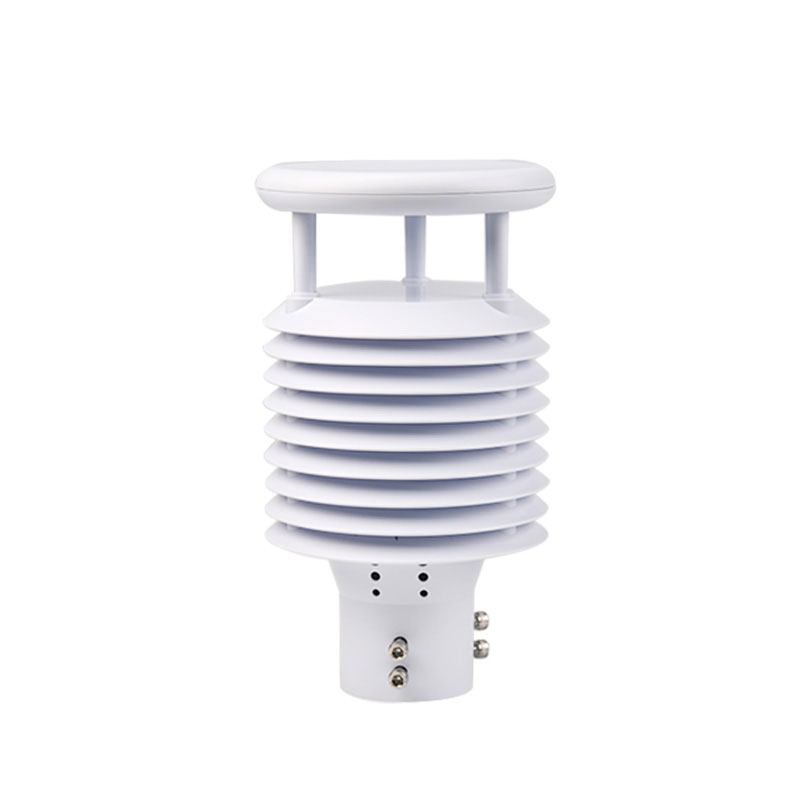
The core advantage of the Wireless Weather Station lies in its integrated composite meteorological sensor. This key component can accurately measure various meteorological parameters, effectively meeting application needs in different scenarios and providing reliable support for obtaining meteorolog...
Geological disaster monitoring and early warning system utilizes harmless laser technology to continuously monitor minute displacements in building structures such as dilapidated buildings, walls, and columns from a long distance. The minimum detection value is 1mm, and the measuring range is...
Based on the forward scattering method, Visibility and Present Weather Sensor calculates visibility by measuring the total extinction coefficient of air, and can identify various weather types such as fog, rain, snow, mixed precipitation, and clear skies. The instrument features an aluminum ca...
Nowadays, with the rapid development of industry, the pollution problem in industrial parks has attracted much attention. Traditional environmental monitoring methods can no longer meet the needs of refined supervision of pollution in industrial parks. However, the emergence of Air quality monitorin...



 Skype
Skype
 whatsapp
 mail
mail