Tianyi Sensor IOT Technology Co., Ltd
Sales Manager:Ms. Emily Wang
Cel,Whatsapp,Wechat:+86 15898932201
Email:info@fengtutec.com
Add:No. 155 Optoelectronic Industry Accelerator, Gaoxin District, Weifang, Shandong, China


Sales Manager:Ms. Emily Wang
Cel,Whatsapp,Wechat:+86 15898932201
Email:info@fengtutec.com
Add:No. 155 Optoelectronic Industry Accelerator, Gaoxin District, Weifang, Shandong, China
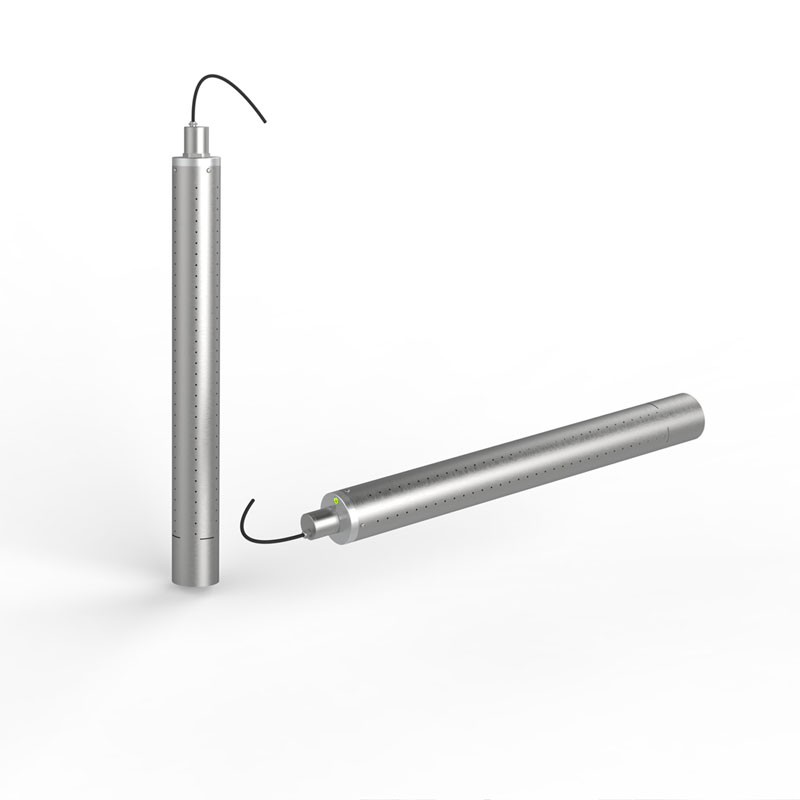
Model:FT-LSY1
Brand:tianyi
1、Dam seepage monitoring Product Introduction
Dam seepage monitoring can monitor dam water level and flow changes, detect water seepage under the dam, and detect early signs of ground movement.Dam seepage monitoring is a high-precision instrument for measuring flow in open channels. Combining a magnetostrictive level sensor with a standard hydraulic weir structure, it is suitable for agricultural irrigation, hydrological monitoring, urban drainage, and industrial wastewater treatment, enabling continuous, stable, and unattended measurement of water flow in open channels. This equipment can be widely used in various open channel environments such as canals, troughs, and irrigation ditches, and is suitable for measuring fluids such as clean water, rainwater, and general industrial wastewater. The equipment operates on a 12V DC power supply, with an operating temperature range of 0℃ to +60℃ and humidity less than 95%. It has an IP65 or higher protection rating, enabling long-term operation in harsh outdoor environments with high humidity, dust, and strong sunlight. To ensure measurement accuracy and system stability, it is recommended to install the equipment in a location free from severe vibration, strong electromagnetic interference, and easy to maintain.
2、Dam seepage monitoring Technical parameters
| Measurement range | 0~600mm |
| Sensitivity | 0.01mm |
| Measurement accuracy | ≤0.1%F.S |
| Working voltage | DC12V (0.5W@12V) |
| Output signal | RS485-MODBUS protocol |
| Protection level | IP67 |
| Case material | 304 Stainless Steel |
| Dimensions | Φ89×850mm |
This firefighting infrared thermal imager features a 384×288 pixel infrared detector and a 60Hz high-frame-rate display. It supports eight image modes and a 600-meter laser rangefinder, complies with the new XF/T 635-2023 national standard, and boasts an IP67 protection rating to ensure stabl...
When it comes to anemometers, the most classic Mechanical anemometer immediately comes to mind. It realizes the measurement of wind speed and direction through mechanical structures and physical principles, and its classic nature stems from a mature technical system and extensive application practic...
Weather conditions have always been a key factor affecting crop growth and harvest. Alas! Frequent meteorological disasters have brought great crises to agriculture!Drought, a common meteorological disaster, results from prolonged precipitation scarcity, leading to soil water shortage and dry air. C...
People have been measuring the wind for a long time, and the tools for wind measurement have been constantly upgraded. In the 15th century, Leonardo da Vinci designed a vane anemometer, marking the beginning of the era of scientific wind measurement. In 1846, Thomas Romney Robinson, a British naval...


 Get a Free Quote
 Skype
Skype
 whatsapp
 mail
mail