Tianyi Sensor IOT Technology Co., Ltd
Sales Manager:Ms. Emily Wang
Cel,Whatsapp,Wechat:+86 15898932201
Email:info@fengtutec.com
Add:No. 155 Optoelectronic Industry Accelerator, Gaoxin District, Weifang, Shandong, China


Sales Manager:Ms. Emily Wang
Cel,Whatsapp,Wechat:+86 15898932201
Email:info@fengtutec.com
Add:No. 155 Optoelectronic Industry Accelerator, Gaoxin District, Weifang, Shandong, China
time:2026-03-06 11:11:20 source:Weather Station viewed:293 time
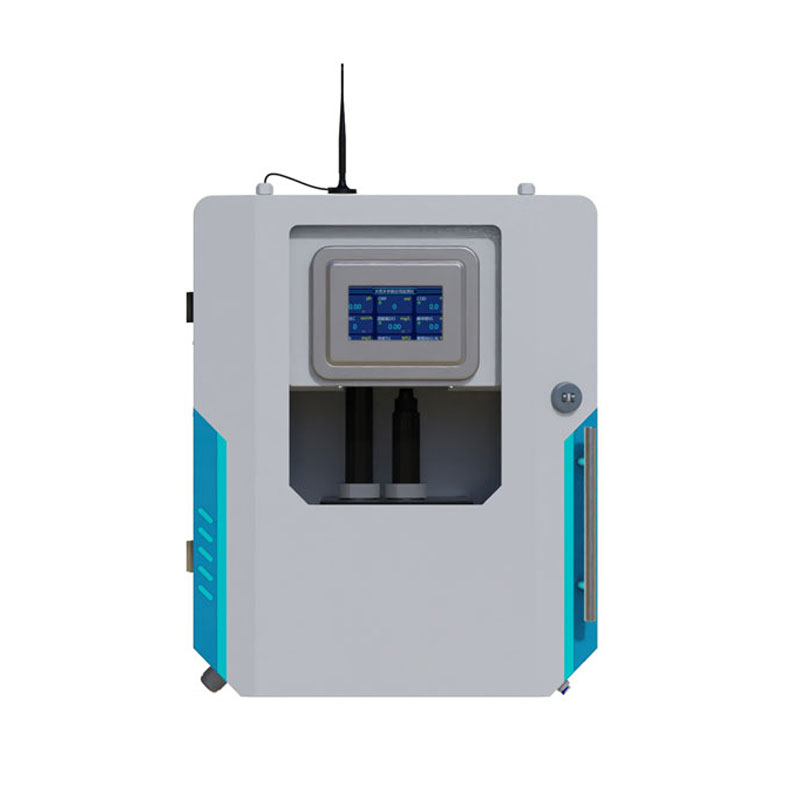
Water Quality Monitoring Station Secondary Water can simultaneously measure multiple water quality parameters, primarily monitoring indicators such as pH, residual chlorine, and turbidity. It features real-time monitoring and high-precision sensing characteristics, adapting to various secondary water supply testing needs.
Water Quality Monitoring Station Secondary Water is a dedicated device for secondary water supply quality testing. Its core function is to achieve real-time and accurate monitoring of secondary water supply parameters, adapting to various testing scenarios in the secondary water supply field. It is an important device for ensuring the safety of secondary water supply. This device can simultaneously measure multiple water quality parameters, eliminating the need to test individual indicators separately, significantly improving the efficiency of secondary water supply quality testing and meeting the actual needs of secondary water supply safety monitoring.
The device's core monitoring parameters are clearly defined, mainly including pH value, residual chlorine, turbidity, conductivity, and temperature. These parameters are key indicators for determining whether the secondary water supply quality meets standards and are directly related to the safety of residents' drinking water. Meanwhile, the equipment is equipped with high-precision sensors, which effectively improves the accuracy of water quality parameter monitoring, reduces detection errors, and ensures the reliability of monitoring data, providing accurate basis for secondary water supply quality assessment.
Water Quality Monitoring Station Secondary Water encompasses multiple detection modes, including online monitoring and laboratory testing of secondary water supply, adapting to different testing scenarios. The online monitoring mode enables 24-hour uninterrupted monitoring, providing real-time feedback on changes in secondary water supply quality and promptly detecting anomalies; the laboratory testing mode meets the needs of accurate testing of batch samples and is suitable for regular water quality checks.
Its core advantages lie in real-time monitoring and multi-scenario applicability, meeting the monitoring needs of different scenarios such as residential secondary water supply, office building secondary water supply, and rural secondary water supply. It is widely used in secondary water supply operation and maintenance, water quality supervision, and related fields such as water supply companies. Compared to traditional secondary water supply testing methods, this instrument is easy to operate and highly efficient, requiring no complex manual operation. Ordinary staff can learn to use it after simple training, and it can simultaneously complete multi-parameter testing, effectively solving the problems of time-consuming and cumbersome traditional testing methods. As a specialized device for monitoring the water quality of secondary water supply, it provides a solid guarantee for the safety of secondary water supply, helps to standardize the management of secondary water supply, and safeguards the safety of residents' drinking water.
The four key aspects of agriculture, namely soil moisture condition, crop seedling condition, pest and disease condition, and disaster condition, are crucial elements in the agricultural production process. The soil moisture condition reflects the water status of the soil, and an appropriate soil mo...
Negative oxygen ion monitoring plays a crucial role in ecological environment research and air quality management. Negative oxygen ions are negatively charged ions in the air, which are widely distributed in the natural environment. Their concentration levels are closely related to air quality. High...
The intelligent meteorological system is a highly integrated, low-power, and quickly installable automatic meteorological observation device. It requires no debugging and can be deployed immediately. It is used for continuous data collection of elements such as temperature, humidity, wind spee...
River Level Monitoring Station is one of the tools in the modern flood control and disaster reduction system. It realizes real-time control of watershed hydrological information through multi-dimensional data collection and intelligent analysis. The system is composed of four major modules: water le...


 Skype
Skype
 whatsapp
 mail
mail