Tianyi Sensor IOT Technology Co., Ltd
Sales Manager:Ms. Emily Wang
Cel,Whatsapp,Wechat:+86 15898932201
Email:info@fengtutec.com
Add:No. 155 Optoelectronic Industry Accelerator, Gaoxin District, Weifang, Shandong, China


Sales Manager:Ms. Emily Wang
Cel,Whatsapp,Wechat:+86 15898932201
Email:info@fengtutec.com
Add:No. 155 Optoelectronic Industry Accelerator, Gaoxin District, Weifang, Shandong, China
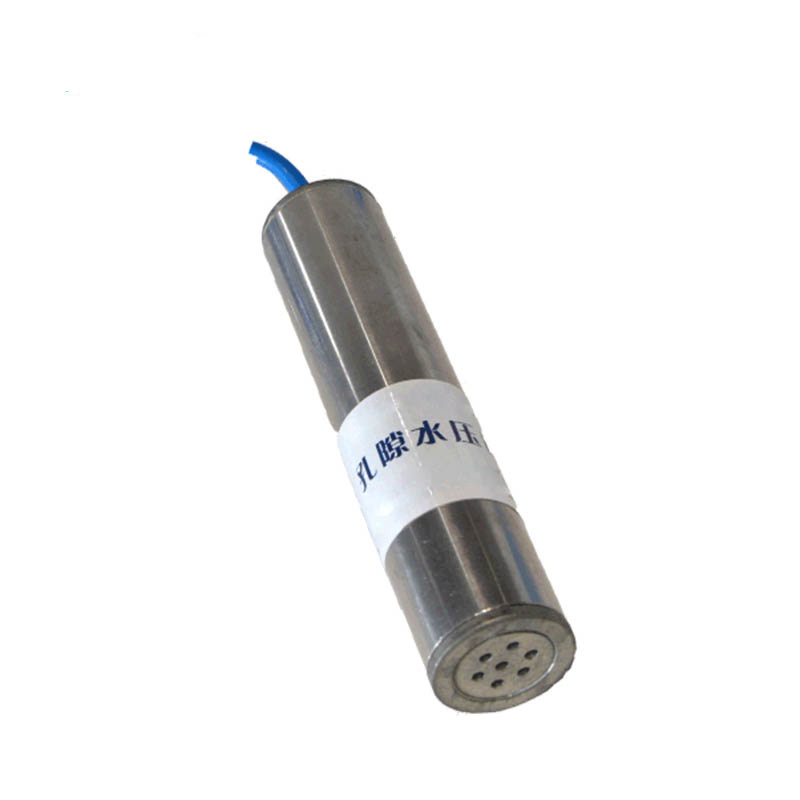
Model:FT-SYJ1
Brand:tianyi
Pore water pressure gauge Functional Overview:
Pore water pressure gauge is a pressure sensor used to measure the pore water pressure and groundwater level in soil and rock to measure the fluid pressure in soil and rock.Pore water pressure refers to the pressure exerted by water within the pores of groundwater or rock mass under static or dynamic conditions. According to the principle of effective stress in soil, increased pore water pressure reduces the effective stress of the soil, thus affecting its strength and stability, and increasing the risk of geological disasters such as landslides. Therefore, the changes in pore water pressure during construction can serve as a basis for construction control, and its distribution can be used as a basis for regional stability analysis calculations.
Pore water pressure gauge By monitoring the changes in pore water pressure in a designated area in real time, the mechanical state of the soil or rock mass in that area can be monitored in real time. This allows for the scientific prediction of rock mass landslide risks, assessment of foundation stability, and control of construction safety, which has significant theoretical and practical implications in geotechnical engineering, hydraulic engineering, and geological disaster prevention.
The Pore water pressure gauge piezoresistive piezometer measures pore water pressure within structures and soil by being either "long-term buried within hydraulic structures or other concrete structures in soil" or "embedded in piezometers, boreholes, dam pipelines, and other pressure vessels." It is suitable for measuring pore water pressure in projects such as dams, tunnels, roadbeds, and slopes, including seepage, phreatic lines, and reservoir water levels.
Pore water pressure gauge Overall Structure:
The silicon piezoresistive piezometer consists of core components including a communication cable with an internal air guide tube, a pressure-resistant connector, a 304 stainless steel housing (containing a diffused silicon sensitive element and transmitter circuit), and a front-end protective cap.
Pore water pressure gauge Working Principle:
The silicon piezoresistive piezometer uses a diffused silicon sensitive element to measure water pressure. Simultaneously, the pressure measuring chamber is kept open to the atmosphere through an air guide tube, allowing for real-time pressure compensation. This eliminates the influence of atmospheric pressure changes on the water pressure measurement results, ultimately accurately calculating the pore water pressure value inside the soil.
Installation Method: Supports "Pressure Testing Tube Installation".
Gas Tube Length: Default 5m, custom length available upon request.
Power Supply: 12-30VDC;
Average Power Consumption:
Static Power Consumption: 0.88W;
Maximum Instantaneous Power Consumption: 1.68W.
Communication Interface: Supports RS485 and 4G communication interfaces;
Probe Material: 304 Stainless Steel;
Protection Rating: IP68 for sensor part;
Outer Diameter: φ26.8mm;
Measuring Range: 0~1000KPa (optional);
Typical Accuracy: 0.5 grade accuracy (default);
Overload Capacity: <1.5 times the measuring range
Operating Environment: -10~50℃, non-corrosive measurement environment for stainless steel;
Temperature Drift: 0.03%FS/℃
Pore water pressure gauge Installation Precautions:
The transmitter can be installed vertically, tilted, or horizontally inside tanks or troughs. Ensure that impurities such as mud and sand do not bury or clog the transmitter probe.
When the medium fluctuates significantly, measures should be taken to secure the transmitter probe, such as adding a counterweight.
The venting cable plays a crucial role in atmospheric compensation. During installation, avoid overtightening the cable or bending it at sharp angles to prevent blockages. The vent outlet should face downwards to prevent rainwater blockage. During use, avoid abrasion, punctures, or scratches to the wires. If such problems cause equipment malfunction, the device must be returned to our company for repair at the user's own expense.
This product is a precision instrument. Do not disassemble it arbitrarily. Protect it from collisions and drops. Do not allow sharp objects or other foreign objects to touch the sensor diaphragm, as this may damage the core.
This system employs a twelve-element integrated sensor to simultaneously monitor parameters such as wind speed, wind direction, temperature, humidity, air pressure, optical rainfall, and PM2.5, PM10, CO, NO2, SO2, and O3. The equipment requires no debugging, can be quickly deployed, and is sui...
In the fields of meteorology, environmental monitoring, agriculture, hydrology, transportation, and wind power generation, obtaining high-precision, high-time-resolution meteorological data for small-scale (microscale) areas is crucial. Traditional meteorological observation stations are usually lar...
A Water Quality Monitoring Buoy is an on-site water quality testing device installed in water areas such as rivers, lakes, reservoirs, and coastal waters. It is mainly used in fields like the implementation of the river chief system and the construction of sponge cities. It can conduct continuous an...
Tianyi specializes in the research, development and production of meteorological monitoring equipment, with profound technical strength and rich experience in the field of Automatic Farmland Weather Station. The weather stations produced by the company feature high-precision sensors and are made of...


 Get a Free Quote
 Skype
Skype
 whatsapp
 mail
mail