Tianyi Sensor IOT Technology Co., Ltd
Sales Manager:Ms. Emily Wang
Cel,Whatsapp,Wechat:+86 15898932201
Email:info@fengtutec.com
Add:No. 155 Optoelectronic Industry Accelerator, Gaoxin District, Weifang, Shandong, China


Sales Manager:Ms. Emily Wang
Cel,Whatsapp,Wechat:+86 15898932201
Email:info@fengtutec.com
Add:No. 155 Optoelectronic Industry Accelerator, Gaoxin District, Weifang, Shandong, China
time:2026-03-12 10:55:04 source:Weather Station viewed:301 time
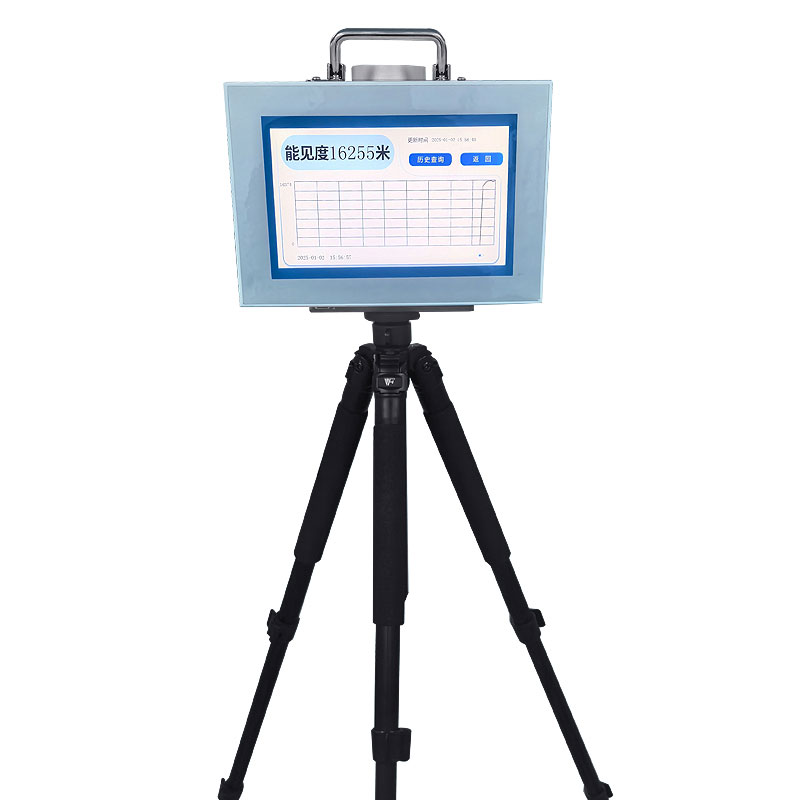
Visibility Testing Instrument is a device used to measure atmospheric visibility. It uses the forward scattering method to calculate visibility, with a parameter range of 10km and a resolution of 1m. It is widely used in meteorological monitoring, traffic safety, environmental protection, and other fields.
Visibility Testing Instrument is a device specifically designed for measuring atmospheric visibility. Its core technology uses the forward scattering method to measure the total extinction coefficient of air. Through professional calculations, it obtains current atmospheric visibility data. The measurement is accurate, the operation is stable, and it is suitable for visibility monitoring needs in various scenarios. It can be put into use without complicated operation.
The instrument has clearly defined core parameters. The visibility measurement range can reach 10km, and the resolution is 1m. It can accurately capture subtle changes in atmospheric visibility, ensuring the accuracy and reliability of the measurement data. Its working principle is based on the forward scattering method. By emitting specific light rays and receiving the scattered signals from the air medium, it calculates the total extinction coefficient of air and then converts it into a visibility value. The measurement process is efficient and interference-free.
The Visibility Testing Instrument visibility measurement device is widely used in meteorological monitoring, traffic safety, and environmental protection, playing a particularly important role in highway safety management and aviation flight support. In the highway sector, accurate visibility data assists in traffic control and prevents traffic accidents caused by low visibility; in the aviation sector, it provides crucial references for takeoff and landing, ensuring flight safety.
This instrument is easy to operate, requiring no professional personnel to monitor it. It enables automated continuous monitoring and outputs real-time visibility data, providing accurate data for decision-making in related fields. It is adaptable to complex outdoor environments, operating stably under various climatic conditions, unaffected by high or low temperatures, rain, fog, or other adverse weather conditions, ensuring the continuity of monitoring data. As a practical visibility measurement device, it requires no complex debugging and is easy to deploy, providing an efficient measurement method for visibility monitoring in meteorology, transportation, and environmental protection, facilitating the orderly conduct of related work.
The water and rainwater detection equipment, namely the Water Level Monitoring System, can efficiently and accurately obtain data such as water level, flow rate, and rainfall.The Water Level Monitoring System is a fully automatic hydrological online monitoring system based on microwave technology. I...
Radar water level gauges utilize K-band planar radar technology to perform non-contact measurements of water levels and rainfall. With a measurement range of 0.1 to 40 meters, an accuracy of ±5 mm, and a resolution of 1 mm, these devices are widely deployed in water conservancy monitoring fie...
Developed based on the principles of charge induction and MEMS technology, this lightning warning system utilizes a combined electric field differential and threshold-based algorithm to effectively prevent false alarms caused by adverse weather conditions—such as rain, strong winds, and blowi...
In the complex and unpredictable rescue environment, firefighters often face numerous challenges. Tasks such as underwater rescue and the inspection of waterlogged areas at fire scenes have become difficult aspects of rescue work due to the interference of water bodies and insufficient light. The em...


 Skype
Skype
 whatsapp
 mail
mail