Tianyi Sensor IOT Technology Co., Ltd
Sales Manager:Ms. Emily Wang
Cel,Whatsapp,Wechat:+86 15898932201
Email:info@fengtutec.com
Add:No. 155 Optoelectronic Industry Accelerator, Gaoxin District, Weifang, Shandong, China


Sales Manager:Ms. Emily Wang
Cel,Whatsapp,Wechat:+86 15898932201
Email:info@fengtutec.com
Add:No. 155 Optoelectronic Industry Accelerator, Gaoxin District, Weifang, Shandong, China
time:2026-10-26 13:16:08 source:Weather Station viewed:1 time
By employing the forward-scattering technique to measure the total atmospheric extinction coefficient—which is then converted into a visibility value—this sensor can identify various weather conditions, including fog, rain, snow, mixed precipitation, and clear skies. It is well-suited for applications in road traffic management and meteorological monitoring, featuring a robust, protective enclosure and standardized communication interfaces, while supporting long-term, low-power outdoor deployment.
The sensor measures the total atmospheric extinction coefficient via the forward-scattering method to calculate real-time visibility, while simultaneously identifying a range of weather phenomena. It is widely used in road traffic and meteorological monitoring. The enclosure is crafted from high-quality aluminum, treated with anodizing and paint, providing excellent resistance to water, dust, and physical impact—ensuring reliability in complex outdoor environments. The transmitter and receiver lenses are oriented downward to minimize stray light interference from the sun, thereby ensuring the stability of the optical measurement process.
The sensor automatically identifies weather conditions such as fog, rain, snow, mixed precipitation, and clear skies, with an identification accuracy of at least 95%. An internal watchdog circuit ensures continuous, long-term operation, while the communication and power interfaces incorporate lightning protection to mitigate the risk of damage from lightning strikes or static electricity. The device supports a wide input voltage range (12V to 24V) and consumes approximately 1 watt of power; this low power consumption allows for deployment in locations without mains power by using solar panels and battery packs.
Equipped with an RS485 or RS232 digital interface and utilizing the standard MODBUS protocol, the sensor integrates easily into existing systems without the need for additional protocol adaptation or debugging. It provides visibility monitoring data at 15-second, 1-minute, and 10-minute intervals, with data available immediately upon power-up, simplifying the deployment and commissioning process. The sensor offers a measurement range of up to 30 kilometers, with specific error tolerances defined for different range segments. Measurement repeatability is maintained within 4%, and the device operates across a temperature range of -40°C to +60°C, with a humidity tolerance of 0% to 100% RH. The unit measures 610 mm × 230 mm × 360 mm and weighs no more than 10 kg. Its ease of installation and transport makes it well-suited for large-scale deployment at locations such as along highways, at meteorological stations, and within port areas. It provides a continuous stream of stable, reliable visibility and weather observation data, serving as a foundational data resource for traffic management and meteorological monitoring operations.
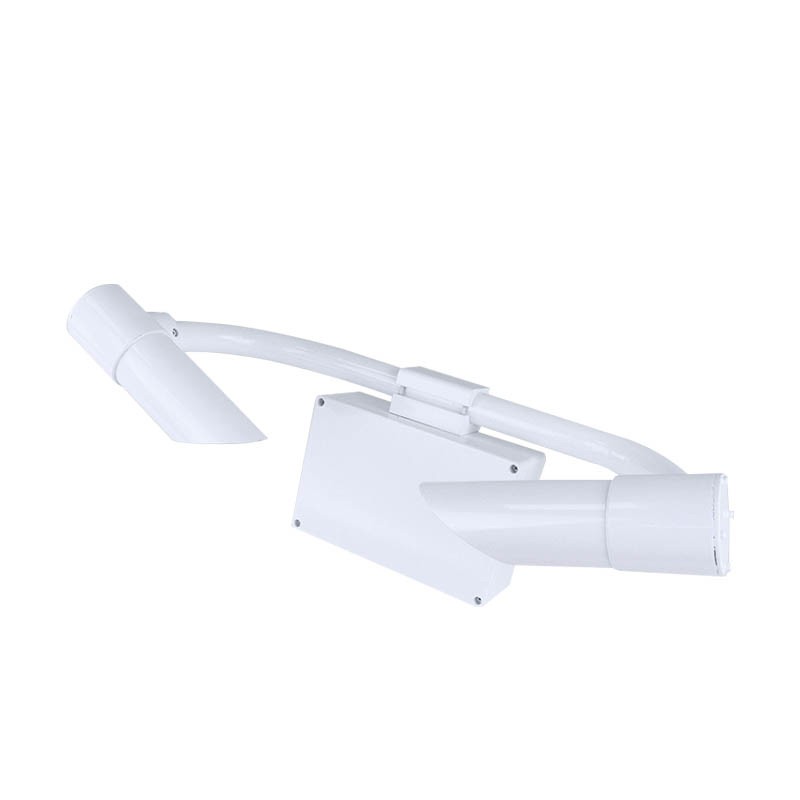
The weather sensor employs the forward-scatter method to measure the total atmospheric extinction coefficient and calculate visibility. It covers a range of 2 km to 50 km and identifies weather phenomena such as fog, rain, and snow with an accuracy rate of at least 95%, making it widely used i...
In the field of meteorological monitoring, TianYi has launched a series of Handheld Weather Stations, among which the FT-SQ5 model has attracted much attention. It integrates the monitoring functions of multiple key meteorological elements. With high-precision sensors and intelligent chips, it can a...
Visibility and Present Weather Sensor uses the forward scattering method to measure the total extinction coefficient of air and calculate visibility. It can identify various weather phenomena such as fog, rain, snow, mixed precipitation, and clear skies, with a recognition rate of over 95%. It...
Water Rescue Equipment refers to a remotely controlled lifebuoy. Controlled wirelessly, it is powered by four ducted propulsion units, achieving an unloaded speed of 27 km/h. It supports one-key return and automatic return upon loss of contact, making it suitable for rescue operations in river...


 Skype
 whatsapp
 mail