Tianyi Sensor IOT Technology Co., Ltd
Sales Manager:Ms. Emily Wang
Cel,Whatsapp,Wechat:+86 15898932201
Email:info@fengtutec.com
Add:No. 155 Optoelectronic Industry Accelerator, Gaoxin District, Weifang, Shandong, China


Sales Manager:Ms. Emily Wang
Cel,Whatsapp,Wechat:+86 15898932201
Email:info@fengtutec.com
Add:No. 155 Optoelectronic Industry Accelerator, Gaoxin District, Weifang, Shandong, China
time:2026-07-23 10:25:50 source:Weather Station viewed:31 time
The weather sensor employs the forward-scatter method to measure the total atmospheric extinction coefficient and calculate visibility. It covers a range of 2 km to 50 km and identifies weather phenomena such as fog, rain, and snow with an accuracy rate of at least 95%, making it widely used in road traffic and meteorological monitoring.
This weather sensor is a meteorological observation device based on the principle of optical forward scattering. It calculates the total atmospheric extinction coefficient—and subsequently the current visibility value—by measuring the intensity of infrared light scattered by atmospheric particulates. The device finds extensive application in sectors such as road traffic, meteorological monitoring, airport operations, and port shipping.
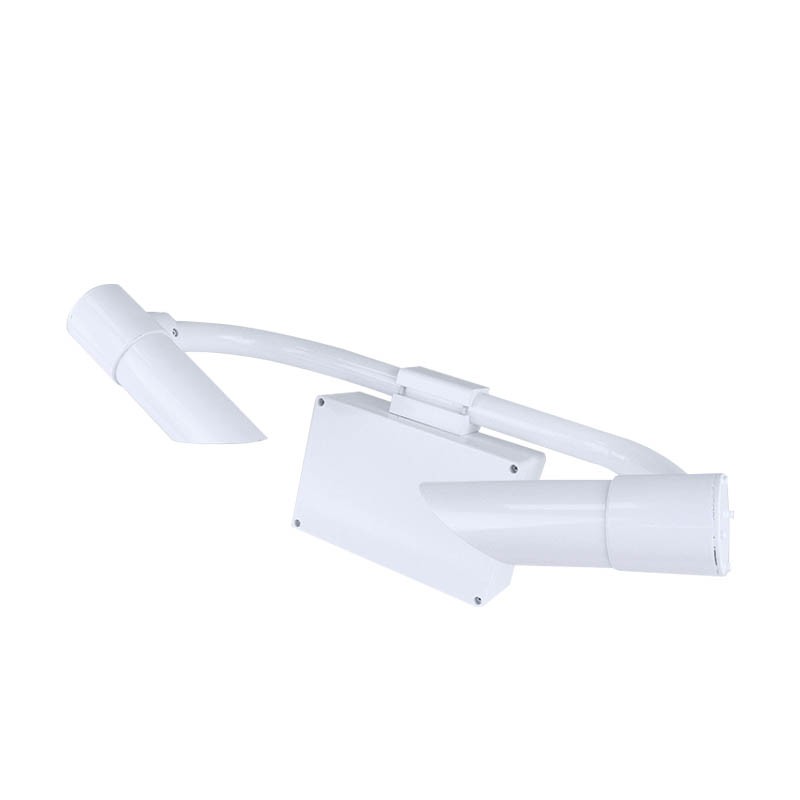
The forward-scatter method is one of the most mature technologies currently used for visibility measurement. The instrument's transmitter emits infrared light pulses; when the light encounters suspended atmospheric particles (such as fog droplets, haze particles, raindrops, or snowflakes) in the sampling zone, forward scattering occurs. The receiver detects the intensity of the scattered light signal, converts it into an atmospheric extinction coefficient via algorithms, and then calculates the meteorological optical range based on the Koschmieder principle. Compared to traditional transmissometer methods, forward-scatter instruments do not require the installation of separate transmitter and receiver units on opposite sides of the road, making installation more convenient and broadening the scope of application.
In terms of technical design, the weather sensor is engineered for reliable long-term outdoor operation. The housing is made of high-quality aluminum, treated with anodizing and painting processes to ensure water resistance, dust resistance, and impact resistance. The transmitter and receiver lenses are designed to face downward, effectively minimizing interference from stray light such as sunlight. A built-in watchdog circuit ensures stable operation during long periods of unattended use. Both communication and power interfaces feature lightning protection designs, reducing the risk of damage from lightning strikes and static electricity.
The sensor's weather identification function covers common conditions such as fog, rain, snow, mixed precipitation, and clear weather, achieving an identification rate of at least 95%. The device supports a wide input voltage range (12V to 24V) with a total power consumption of approximately 1W; it can be powered by solar panels and batteries, making it suitable for deployment in remote areas and field environments. The digital interface supports both RS485 and RS232 standards and utilizes the standard Modbus protocol, eliminating the need for additional protocol adaptation. The instrument directly outputs visibility data at 15-second, 1-minute, and 10-minute intervals, allowing users to read the data without further configuration.
In terms of technical specifications, the weather phenomenon instrument offers a measurement range of 2 km to 50 km with a resolution of 1 m. Measurement error is within ±2% for distances up to 2 km, within ±5% for the 2 km to 10 km range, and within ±10% for distances exceeding 10 km. The device operates reliably across a temperature range of -40°C to +60°C and relative humidity levels of 0% to 100%. Measuring 610 mm × 230 mm × 360 mm and weighing no more than 10 kg, the unit is convenient to transport and install on-site.
As the demand for high-precision monitoring in highway traffic, air transport, and meteorological services continues to grow, weather phenomenon instruments are becoming essential tools for visibility observation and the identification of weather phenomena.
The rain and water conditions refer to the changes in hydrological elements such as rainfall, river and reservoir water levels, and flow rates within a region. They serve as important bases for flood control and disaster reduction as well as water resource management. Measuring the rain and water co...
A propeller flow meter is a contact-type water flow velocity measuring instrument. Its working principle is that water flow pushes the instrument's propeller to rotate around an axis, and there is a definite functional relationship, usually linear, between the rotational speed of the propeller a...
Ultrasonic anemometers calculate wind speed and direction using ultrasonic phase difference detection technology. They employ an integrated structure, eliminating mechanical wear and requiring no calibration or maintenance. They provide stable 24-hour monitoring and are suitable for various ou...
Shandong Fengtu IoT Technology Co., Ltd. is a manufacturer of meteorological monitoring instruments based in Weifang City, Shandong Province. Established in 2017 with a registered capital of 10 million RMB, the company focuses on the R&D, production, and sales of meteorological and environmental...



 Skype
Skype
 whatsapp
 mail
mail