Tianyi Sensor IOT Technology Co., Ltd
Sales Manager:Ms. Emily Wang
Cel,Whatsapp,Wechat:+86 15898932201
Email:info@fengtutec.com
Add:No. 155 Optoelectronic Industry Accelerator, Gaoxin District, Weifang, Shandong, China


Sales Manager:Ms. Emily Wang
Cel,Whatsapp,Wechat:+86 15898932201
Email:info@fengtutec.com
Add:No. 155 Optoelectronic Industry Accelerator, Gaoxin District, Weifang, Shandong, China
time:2025-10-21 08:53:32 source:Weather Station viewed:511 time
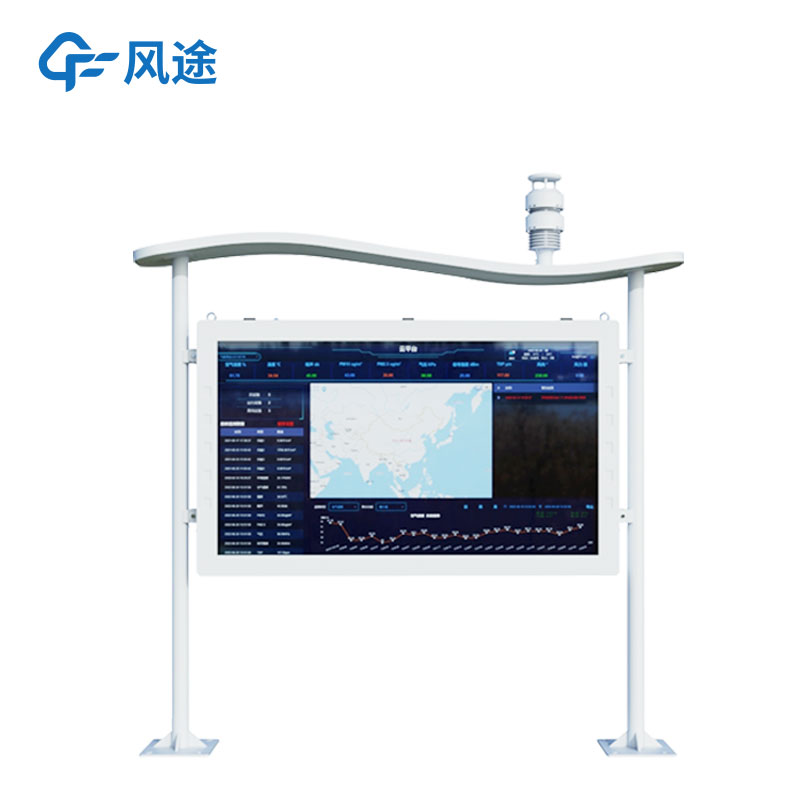
Negative oxygen ion monitoring stations function to real-time capture and transmit negative oxygen ion data in the air. Through "on-site display + remote viewing," they convert the originally invisible and intangible negative oxygen ion concentration into intuitive data, allowing managers and the public to stay informed about environmental air quality at any time.
Such systems feature high integration and flexibility. Beyond core negative oxygen ion monitoring, a complete system can be expanded to monitor various environmental and meteorological elements according to actual needs, such as air temperature, humidity, PM2.5, PM10, atmospheric pressure, noise, wind speed, and wind direction, enabling comprehensive monitoring of air quality in a region.
In terms of data usage, the system supports real-time information publishing through on-site LED large screens, making it convenient for tourists and residents to view. Simultaneously, all data is transmitted to a cloud platform via wireless networks (such as 4G), allowing managers to access remotely through computers and mobile apps for real-time monitoring across different locations. The system also possesses data storage and historical data analysis capabilities, providing long-term data support for environmental quality assessment.
The manufacturer of negative oxygen ion monitoring stations is TianYi, an enterprise specializing in IoT monitoring equipment with products covering meteorological environment, agriculture, water quality, and other fields. In meteorological environment monitoring, TianYi offers a series of solutions including negative oxygen ion monitoring stations, which have been deployed in numerous ecological parks, forest parks, and tourist attractions nationwide.
TianYi provides multiple models of negative oxygen ion monitoring equipment to meet different scenario requirements. While these products share similar core negative oxygen ion monitoring functions, they differ in specific configurations and functional focuses.
Basic monitoring models, represented by products like FT-FZ2, mainly integrate core monitoring elements such as negative oxygen ions, air temperature, humidity, PM2.5, and PM10, making them suitable for scenarios focusing on basic air quality monitoring.
Multi-functional integrated models, such as FT-FZ3 and FT-FZ5, further expand monitoring capabilities for additional parameters including wind speed, wind direction, noise, atmospheric pressure, and oxygen content beyond the basic monitoring elements, offering more comprehensive functionality.
Highly intelligent integrated models, represented by new models like FT-FZ5, adopt full-color LCD screens for data display with better visual effects. They also incorporate humanized features such as voice announcements for exceeding standards and automatic screen brightness adjustment, achieving a higher level of intelligence.
As meteorological monitoring needs become increasingly diverse, traditional meteorological equipment faces challenges in installation convenience, data comprehensiveness, and environmental adaptability. Conventional miniature weather instruments often suffer from measurement errors caused by sensor...
As the impacts of climate change continue to intensify, the frequency and destructive scale of flood disasters are on the rise, posing severe threats to public safety and socio-economic development. Summer is inherently a high-risk period for disasters such as floods and droughts. To further enhance...
In numerous meteorological monitoring and related fields, accurately measuring wind speed and direction is of great significance. From the perspective of large-scale meteorological research, understanding accurate data of wind speed and direction helps meteorological departments better predict weath...
rainfall measuring equipment has a 200mm diameter drum and uses a mechanical tipping bucket combined with electromagnetic induction to collect rainfall data. It has a resolution of 0.2mm, a measurement error of ≤±2%, supports Modbus 485 output, and can monitor rainfall of varying intensities...


 Skype
Skype
 whatsapp
 mail
mail