Tianyi Sensor IOT Technology Co., Ltd
Sales Manager:Ms. Emily Wang
Cel,Whatsapp,Wechat:+86 15898932201
Email:info@fengtutec.com
Add:No. 155 Optoelectronic Industry Accelerator, Gaoxin District, Weifang, Shandong, China


Sales Manager:Ms. Emily Wang
Cel,Whatsapp,Wechat:+86 15898932201
Email:info@fengtutec.com
Add:No. 155 Optoelectronic Industry Accelerator, Gaoxin District, Weifang, Shandong, China
time:2025-09-04 09:09:12 source:Weather Station viewed:391 time
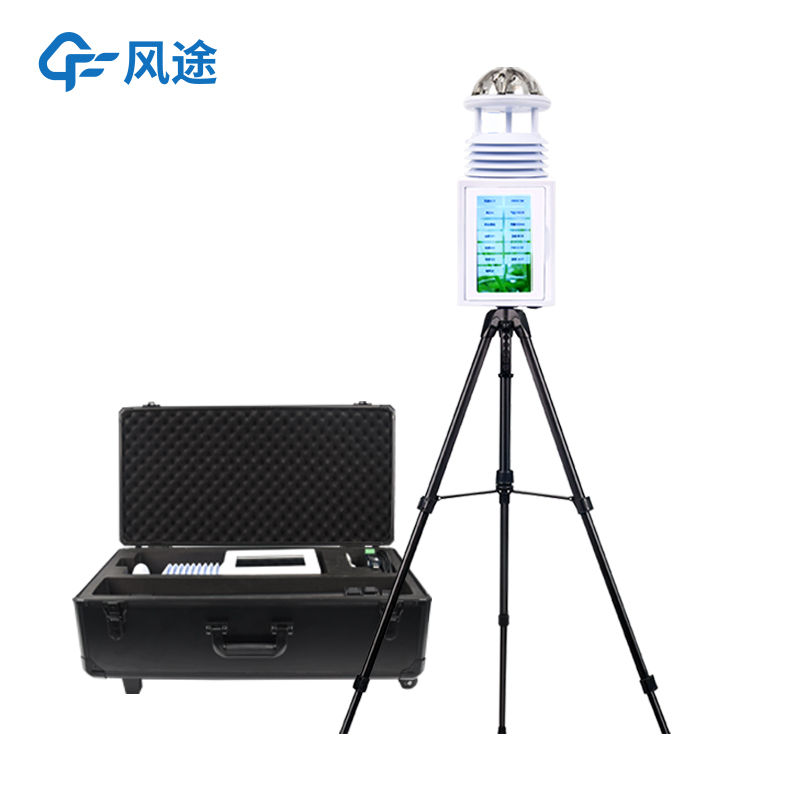
The core advantage of the Wireless Weather Station lies in its integrated composite meteorological sensor. This key component can accurately measure various meteorological parameters, effectively meeting application needs in different scenarios and providing reliable support for obtaining meteorological data in various fields.
In terms of data transmission and architecture design, the weather station adopts an Internet of Things (IoT) architecture and relies on 4G wireless communication technology to collect and upload meteorological data. This communication method breaks free from the constraints of traditional wired connections; even in remote or complex environments, it can transmit data stably, allowing users to obtain the required meteorological information in a timely manner and avoiding decision-making or research disruptions caused by data delays.
It can simultaneously conduct continuous monitoring of key meteorological elements such as atmospheric temperature, atmospheric humidity, air pressure, rainfall, wind speed, and wind direction. The collected data can fully reflect the meteorological conditions of the monitoring area, providing abundant and accurate basic data for subsequent analysis, research, and applications.
The station can output monitoring data in real time, enabling users to grasp meteorological dynamics immediately without waiting—facilitating timely adjustments to response plans. The overall device is lightweight, making it very convenient for both short-distance carrying and long-distance transportation, and it can be flexibly deployed at different locations according to monitoring targets. The installation process is also extremely simple: no professional technical assistance is required, and users can quickly complete assembly and debugging by following a simple operation guide, significantly lowering the threshold for use. Additionally, the integrated and compact design further optimizes the device structure, which not only saves storage space but also reduces the possibility of component wear and tear, enhancing the overall reliability and service life of the device.
A hydropower station, a comprehensive engineering facility that converts hydropower energy into electrical energy, operates on the fundamental principle of utilizing water level drop (water level difference). As water flows from a higher to a lower elevation, its stored energy drives a turbine to ro...
The traditional meteorological monitoring stations have limited distribution, making it difficult to comprehensively and real-timely grasp the complex and changeable meteorological conditions. However, combining drones with meteorological instruments has unexpectedly become a solution to make up for...
Ultrasonic anemometers calculate wind speed and direction using ultrasonic phase difference detection technology. They employ an integrated structure, eliminating mechanical wear and requiring no calibration or maintenance. They provide stable 24-hour monitoring and are suitable for various ou...
instrument to measure rainfall uses a PVDF piezoelectric film to sense raindrop impact. An embedded AI neural network accurately distinguishes raindrop signals, effectively eliminating interference from sand, dust, and vibration. The device has no mechanical parts, requires no maintenance, and...


 Skype
Skype
 whatsapp
 mail
mail