Tianyi Sensor IOT Technology Co., Ltd
Sales Manager:Ms. Emily Wang
Cel,Whatsapp,Wechat:+86 15898932201
Email:info@fengtutec.com
Add:No. 155 Optoelectronic Industry Accelerator, Gaoxin District, Weifang, Shandong, China


Sales Manager:Ms. Emily Wang
Cel,Whatsapp,Wechat:+86 15898932201
Email:info@fengtutec.com
Add:No. 155 Optoelectronic Industry Accelerator, Gaoxin District, Weifang, Shandong, China
time:2026-02-25 11:23:46 source:Weather Station viewed:261 time
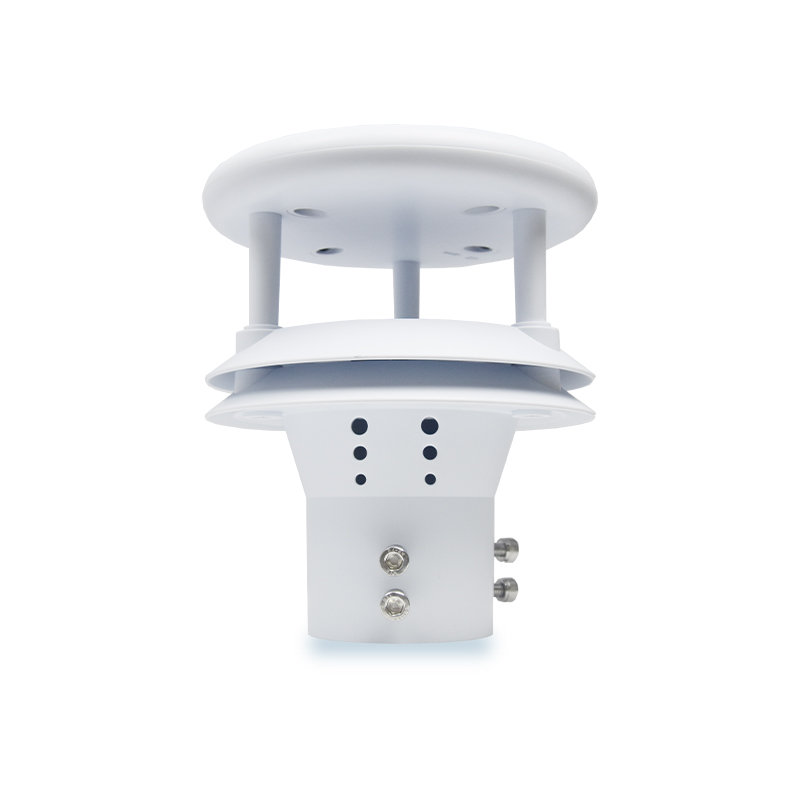
Miniature rain sensor device uses a PVDF piezoelectric film as its rain-sensing device. Based on the piezoelectric effect, it remotely measures precipitation, precipitation intensity, and the start and end times of precipitation. It is widely used in meteorological monitoring, hydrology and water conservancy, agricultural irrigation, and flood warning.
Miniature rain sensor device is a solid-state precipitation measurement device designed based on the piezoelectric effect. Using a PVDF piezoelectric film as its core rain-sensing device, it captures the impact force signal generated by raindrops hitting the sensor surface to achieve continuous remote measurement of precipitation, precipitation intensity, and the start and end times of precipitation. Compared with traditional tipping bucket rain gauges, this device adopts a fully solid-state integrated design with no moving mechanical parts. It features maintenance-free operation, low power consumption, and strong anti-interference capabilities, making it suitable for various scenarios such as fixed weather stations, automatic field monitoring systems, and mobile monitoring platforms.
In terms of working principle, the Miniature rain sensor device utilizes the piezoelectric effect of the PVDF piezoelectric film to detect raindrops. When raindrops fall on the sensor's sensing surface, the impact force causes microscopic deformation of the piezoelectric film, generating a charge signal on the film surface proportional to the impact force. The sensor's internal signal processing circuit amplifies, filters, and performs analog-to-digital conversion on this charge signal. By analyzing the signal's amplitude and frequency characteristics, it calculates the raindrop size, impact velocity, and the number of raindrops per unit time, thereby estimating the instantaneous rainfall intensity and cumulative rainfall. Modern [sensor name] incorporates an embedded AI neural network algorithm, effectively distinguishing raindrop signals from interference signals such as sand, dust, insects, and mechanical vibrations, avoiding false triggering caused by environmental factors and significantly improving the reliability of measurement data.
Regarding measurement performance, [sensor name]'s technical parameters cover the main dimensions of precipitation measurement. The rainfall intensity measurement range is typically 0 to 4 mm per minute, with some models reaching 0 to 240 mm per hour, covering various precipitation processes from light rain to heavy rain. The measurement accuracy is ±4%, with a resolution of 0.01 mm, capable of detecting raindrops larger than 0.5 mm in diameter, meeting the sensitive requirements of meteorological monitoring for minute rainfall. With a sampling frequency of less than 1 second, it can record the start and end times of rainfall with second-level accuracy, providing high temporal resolution data for hydrological analysis and disaster early warning. The equipment operates in a temperature range of -40 to 85 degrees Celsius and a humidity range of 0 to 100% RH, with a protection rating of IP65 to IP68, ensuring stable operation in all weather conditions unaffected by rain, snow, high humidity, or low temperatures.
It is widely used in meteorological environmental monitoring, comprehensive hydrological and water conservancy monitoring stations, traffic and road monitoring, agricultural and forestry meteorology, and wind power generation, for remotely measuring precipitation, precipitation intensity, and the start and end times of rainfall. In meteorological operations, the equipment serves as a core component of urban grid-based meteorological monitoring stations, providing high spatiotemporal resolution rainfall data to support weather forecast model optimization and short-term nowcasting. In the field of hydrology and water conservancy, it is used in automatic hydrological monitoring systems for flood control scheduling, water supply management, and power station reservoir water level monitoring, providing real-time rainfall data for flood warnings and reservoir scheduling. In agricultural irrigation, the equipment monitors rainfall in farmland, assisting in optimizing irrigation plans and water-saving management to avoid water waste caused by over-irrigation. In urban flood management, the equipment is deployed in drainage networks and low-lying areas to monitor rainfall intensity changes in real time, providing decision-making basis for flood warnings and emergency responses. In the transportation sector, the equipment is used for meteorological monitoring along critical infrastructure such as highways, airports, and ports, providing early warnings of the impact of heavy rainfall on driving safety.
Compared to traditional tipping bucket rain gauges, the equipment has significant technological advantages. Its solid-state design with no moving mechanical parts fundamentally avoids accuracy degradation and malfunctions caused by mechanical wear, significantly improving long-term stability. The curved sensing surface design allows raindrops to quickly slide off upon contact, preventing water storage and eliminating the need for regular cleaning and maintenance, greatly reducing on-site operation and maintenance costs. The built-in automatic leveling calibration function automatically completes calibration after installation without manual intervention, ensuring convenient installation and measurement consistency. The low-power design allows the equipment to consume as little as 0.12 watts, making it suitable for long-term operation at unattended outdoor sites powered by solar energy. With strong anti-interference capabilities, it can effectively filter false signals introduced by environmental factors such as leaves, dust, and insects, maintaining measurement accuracy in complex environments. Some models also integrate temperature, humidity, and air pressure sensors, expanding monitoring elements and meeting comprehensive meteorological observation needs. Supported by IoT technology, it uploads data to the cloud platform in real time via RS485 interface or 4G wireless communication, supporting multi-device networking, threshold alarms, historical data tracing, and GIS map display, providing reliable hydrological data support for smart water conservancy, smart agriculture, and smart cities.
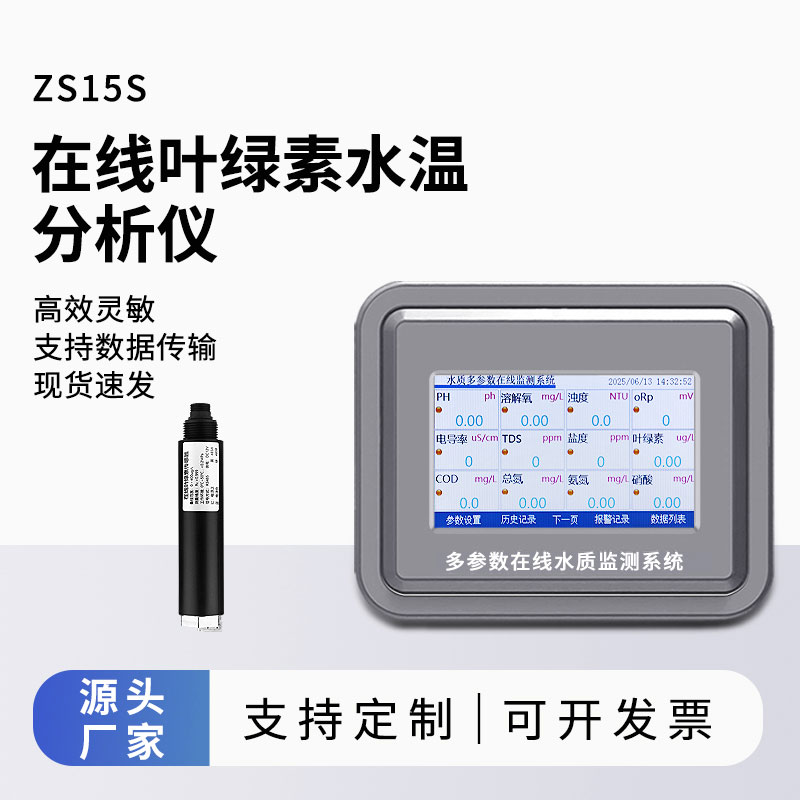
Water quality monitoring is a systematic scientific process designed to assess water conditions, warn of pollution risks, and provide data support for water environment management through real-time monitoring and analysis of various substances in water bodies.Modern water quality monitoring often em...
In the process of coal mine production, wind measurement work is of great importance. The space underground in coal mines is relatively enclosed, and there are flammable and explosive substances such as gas and coal dust. Reasonable ventilation can effectively dilute and discharge gas, reduce the ga...
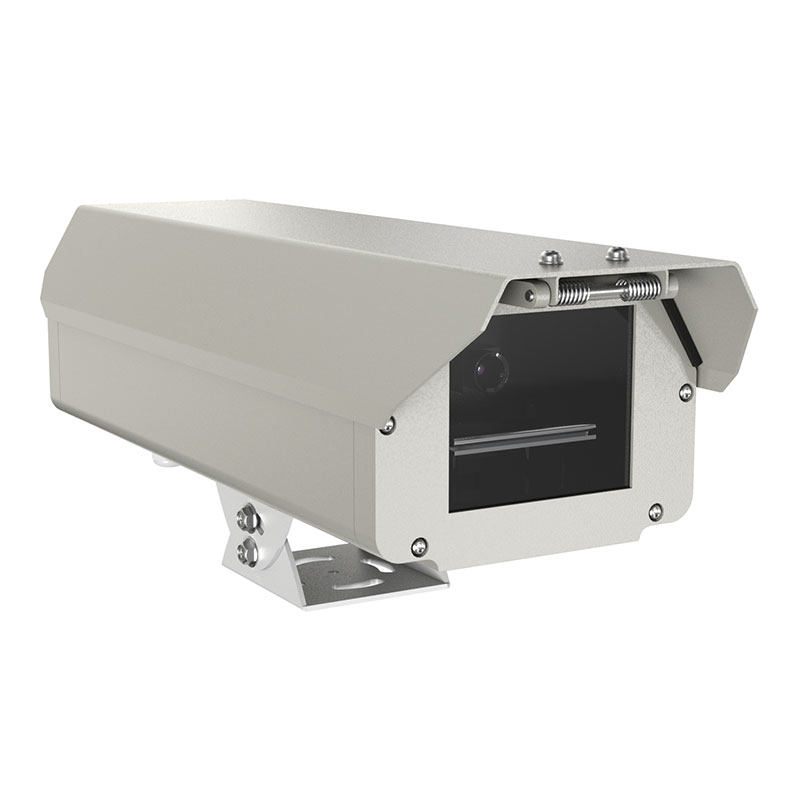
Utilizing the forward-scattering method to measure the total atmospheric extinction coefficient and accurately calculate ambient visibility, this weather phenomenon sensor automatically identifies various weather conditions—such as fog, rain, and snow. Designed for outdoor applications like r...
Entering the high - standard farmland demonstration area, 25 newly installed Solar insecticidal lamps are neatly arranged in the fields. These devices consist of silver lamp poles, black solar panels, and green lamp housings. They absorb solar energy and store electricity during the day, and at nigh...


 Skype
Skype
 whatsapp
 mail
mail