Tianyi Sensor IOT Technology Co., Ltd
Sales Manager:Ms. Emily Wang
Cel,Whatsapp,Wechat:+86 15898932201
Email:info@fengtutec.com
Add:No. 155 Optoelectronic Industry Accelerator, Gaoxin District, Weifang, Shandong, China


Sales Manager:Ms. Emily Wang
Cel,Whatsapp,Wechat:+86 15898932201
Email:info@fengtutec.com
Add:No. 155 Optoelectronic Industry Accelerator, Gaoxin District, Weifang, Shandong, China
time:2026-02-24 12:57:47 source:Weather Station viewed:275 time
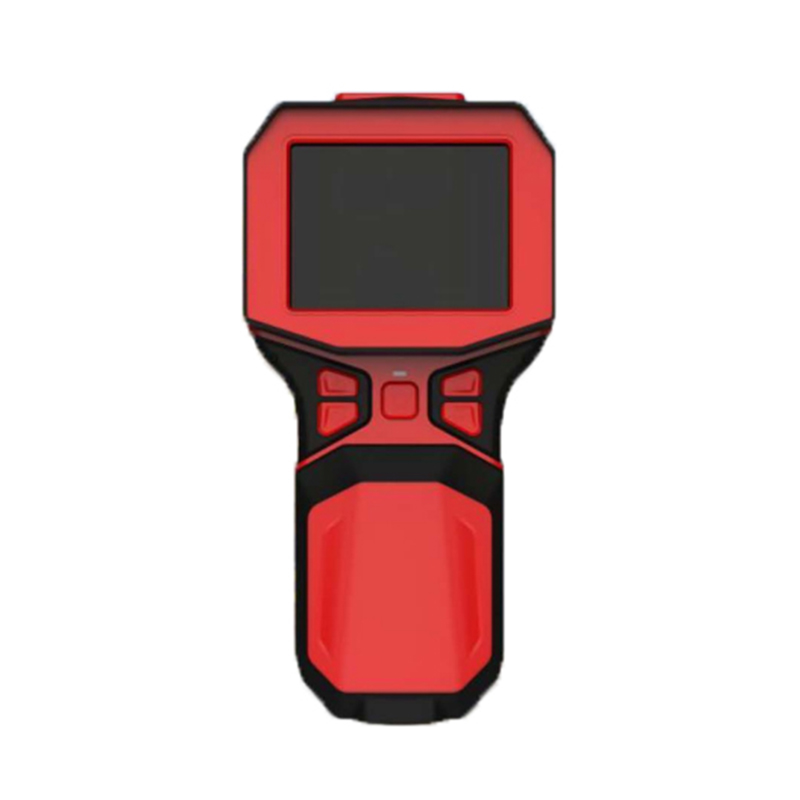
Infrared Thermal Imaging Camera features both infrared and visible light imaging modes, supporting various operating modes including incandescent, black-and-white, firefighting, fire, search and rescue, picture-in-picture, and fusion display, suitable for different on-site environment needs. This device can clearly present temperature field distribution in harsh environments such as dense smoke and darkness, assisting rescue personnel in search and rescue operations and providing a basis for early fire detection and status monitoring.
Firefighting and rescue work often faces severe challenges such as low visibility and complex environments. Dense smoke at fire scenes can severely obscure vision, making it difficult to determine the location of trapped personnel and leading to inaccurate fire point identification. Infrared Thermal Imaging Camera detects the infrared radiation emitted by object surfaces and converts it into visible images, helping firefighters penetrate smoke to see the true situation on-site, improving search and rescue efficiency and safety.
The core technology of this device lies in its multi-mode imaging design. The infrared mode is used to detect temperature differences, presenting the heat distribution in the scene in image form; the visible light mode provides conventional optical images, facilitating the identification of object colors and details. The two modes can be used independently or overlaid in picture-in-picture or blending modes to balance thermal distribution and real-time scene observation. For different rescue stages and mission types, the equipment offers multiple image modes, including incandescent (white-hot), black-hot, firefighting, fire, and search and rescue. In incandescent mode, high-temperature objects appear white, suitable for routine fire reconnaissance; black-hot mode, conversely, facilitates observation of low-temperature objects; firefighting mode optimizes image contrast in fire scenes; and search and rescue mode highlights human thermal characteristics to help locate trapped personnel.
In practical firefighting applications, thermal imagers play an irreplaceable role. Inside smoke-filled buildings, firefighters can use thermal imagers to search for routes along walls, avoiding obstacles and fall hazards. When searching for trapped personnel, the difference between body temperature and ambient temperature makes targets clearly visible in thermal images, allowing for accurate location even when shrouded in smoke. During firefighting, observing the temperature distribution on walls and ceilings helps determine the direction of fire spread and hidden fire points, preventing indiscriminate water spraying that could cause property damage and water stains. After the fire is under control, thermal imagers are used to inspect smoldering areas to prevent reignition.
The equipment is specially designed for environmental adaptability, meeting demanding field requirements. The casing is made of flame-retardant materials, is waterproof and dustproof, and can withstand a certain degree of drop impact. The lens and window are heat-resistant and resistant to smoke and dust, ensuring continuous operation in high-temperature environments. The user interface is simple and intuitive, with large buttons for easy operation by firefighters wearing heavy gloves, and the menu logic is tailored to fire scene usage habits.
The image performance of the thermal imager directly affects search and rescue effectiveness. Detector resolution determines image clarity; higher resolution reveals more details. Thermal sensitivity reflects the equipment's ability to distinguish minute temperature differences; high sensitivity helps detect weak thermal signals. Frame rate affects the smoothness of dynamic images; high frame rate reduces motion blur and facilitates observation of moving targets. Some models are equipped with temperature measurement functions, displaying the highest and lowest temperatures in real time, providing quantitative data for fire assessment.
In addition to fire rescue, this type of equipment is also used for fire prevention inspections and hazard identification. Fire safety managers use thermal imagers to inspect electrical wiring and power distribution equipment, promptly addressing any abnormal heat sources. Regular thermal imaging inspections of warehouses, factories, and other locations can detect early fire hazards. During forest fire prevention patrols, airborne or handheld thermal imagers can detect hidden fires and underground fires.
Daily maintenance is crucial for equipment reliability. After use, clean the lens and casing of soot and dirt, check battery power and equipment functionality, and perform regular performance calibration and software upgrades. Store in a dry environment and avoid prolonged exposure to high temperatures or strong magnetic fields.
Infrared Thermal Imaging Camera transforms invisible temperature distribution into intuitive images, giving firefighters eyes that can see through smoke. Its widespread application in fire fighting, search and rescue, and fire prevention inspections effectively improves rescue efficiency and safety, providing technical support for protecting life and property.
Shandong Fengtu has launched a marine anemometer that integrates six meteorological parameters (temperature, humidity, wind speed, wind direction, air pressure, and rainfall) into one unit. It uses ultrasonic principles for wind measurement, with a range of 0-60 m/s, an accuracy of ±0.1 m/s,...
Negative oxygen ion monitoring plays a crucial role in ecological environment research and air quality management. Negative oxygen ions are negatively charged ions in the air, which are widely distributed in the natural environment. Their concentration levels are closely related to air quality. High...
In high-risk industries such as chemical plants, production safety is not only crucial for business operations but also directly related to personnel safety and environmental protection. These locations often contain flammable and explosive gases or dust, where conventional weather monitoring equipm...
PV Weather Station monitors elements such as solar radiation and temperature and humidity, providing data support for the operation of photovoltaic power plants....


 Skype
Skype
 whatsapp
 mail
mail