Tianyi Sensor IOT Technology Co., Ltd
Sales Manager:Ms. Emily Wang
Cel,Whatsapp,Wechat:+86 15898932201
Email:info@fengtutec.com
Add:No. 155 Optoelectronic Industry Accelerator, Gaoxin District, Weifang, Shandong, China


Sales Manager:Ms. Emily Wang
Cel,Whatsapp,Wechat:+86 15898932201
Email:info@fengtutec.com
Add:No. 155 Optoelectronic Industry Accelerator, Gaoxin District, Weifang, Shandong, China
time:2026-02-06 11:35:35 source:Weather Station viewed:384 time
Vehicle weather sensor integrates temperature, humidity, wind speed, wind direction, atmospheric pressure, and piezoelectric rainfall monitoring functions. It is a portable observation device designed for mobile platforms, capable of acquiring real-time meteorological data around the vehicle and transmitting it wirelessly.
Vehicle weather sensor is an integrated meteorological observation device directly installed on mobile platforms such as vehicles. Its core design focuses on adapting to working environments in motion, enabling real-time and continuous collection of atmospheric data along the vehicle's driving path or at parking locations, effectively extending traditional fixed-site meteorological observation capabilities to dynamic scenarios.
This sensor integrates the measurement capabilities of six basic meteorological elements. Specifically, it measures air temperature and relative humidity to reflect the thermal and humid state of the atmosphere; measures wind speed and direction to obtain information on airflow speed and direction; measures atmospheric pressure, a fundamental parameter for analyzing weather system changes; and uses piezoelectric principles for precipitation monitoring, a technology that senses the vibration signals of raindrops impacting to measure rainfall intensity and accumulation. The simultaneous observation of these elements provides a comprehensive data basis for understanding local micro-meteorological conditions.
As a device specifically designed for mobile observation, Vehicle weather sensor has distinct structural and functional characteristics. The device is highly integrated, compactly packaging multiple sensor probes, signal processing units, and power supply modules within a robust casing. Its small size facilitates quick installation and removal on the roof, side of the vehicle, or on a dedicated bracket. Its internal circuitry and mechanical structure are specially designed to effectively overcome challenges such as vibration, instantaneous acceleration during vehicle movement, and the influence of self-motion on wind speed and direction measurements, ensuring data validity and accuracy. The device uses wireless transmission technologies such as Bluetooth, Wi-Fi, or mobile networks to send the real-time collected and processed meteorological data stream to on-board terminals, tablets, or remote monitoring centers, achieving seamless data transfer from the mobile front end to the display and analysis end.
In practical applications, Vehicle weather sensor's mobile observation capabilities give it a wide range of uses. In the meteorological field, it is installed on meteorological survey vehicles and emergency command vehicles for tracking severe weather events, boundary layer meteorological detection, or supplementing data in gaps in fixed observation networks. In the transportation industry, it provides real-time weather information along highways, railways, and port operations, especially critical data affecting traffic safety such as visibility, strong winds, and road surface precipitation, assisting in traffic safety warnings and dispatching decisions. In environmental monitoring, mobile platforms equipped with this sensor can be used for urban heat island effect surveys and pollutant dispersion path tracking. Furthermore, it can provide flexible and mobile accompanying meteorological monitoring support in scenarios such as agricultural services, scientific expeditions (e.g., traversing complex terrain), and large-scale event support. Overall, by combining precise observation with mobile platforms, Vehicle weather sensor expands the spatiotemporal dimensions of meteorological data acquisition, becoming a practical tool in modern mobile monitoring systems.
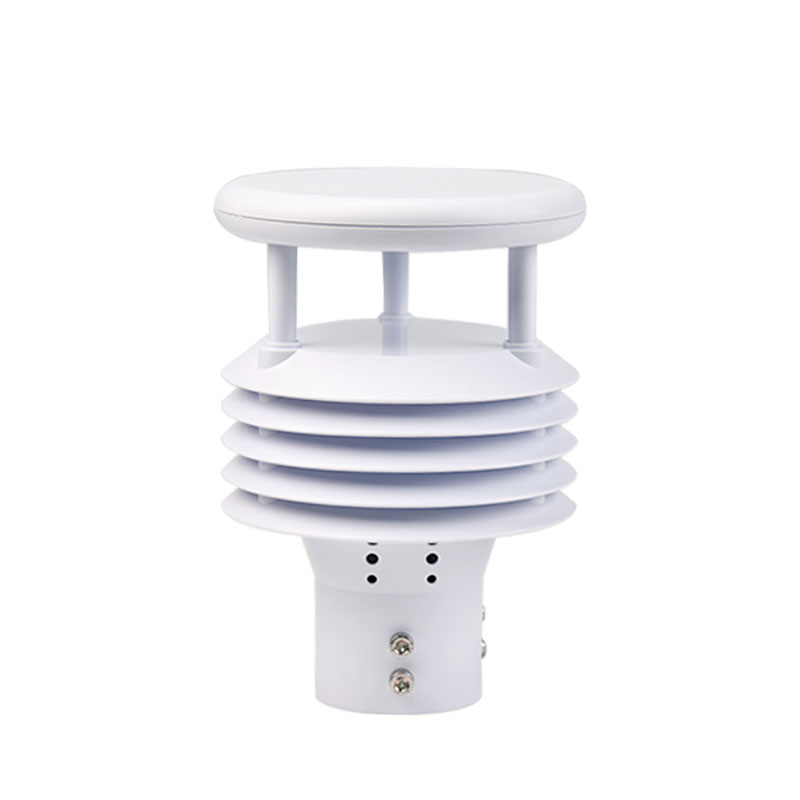
The FT - WQX9 Outdoor Weather Sensors are common devices in the field of meteorological monitoring. Integrating multiple sensors, they can accurately measure data such as wind speed, wind direction, temperature, humidity, air pressure, PM2.5, PM10, rainfall, and solar radiation, providing real - tim...
Life Detector Device is equipped with a 23mm diameter sapphire lens camera and a 10-inch high-definition display, supporting video recording, photography, and electronic zoom. The equipment is suitable for inspection of underground pipelines, air conditioning pipelines, oil and gas pipelines,...
In outdoor natural settings such as dense forests, mountain streams, vast rivers, lakes and seas, and around rushing waterfalls, people often feel the air is exceptionally fresh. The key reason behind this is that the air in these places contains a sufficient amount of negative oxygen ions. Essentia...
As a professional monitoring tool specifically designed for the efficient operation of photovoltaic (PV) power plants, the Photovoltaic Weather Station features functional design, parameter selection, and data application that are deeply tailored to the actual needs of PV scenarios. It serves as a c...


 Skype
Skype
 whatsapp
 mail
mail