Tianyi Sensor IOT Technology Co., Ltd
Sales Manager:Ms. Emily Wang
Cel,Whatsapp,Wechat:+86 15898932201
Email:info@fengtutec.com
Add:No. 155 Optoelectronic Industry Accelerator, Gaoxin District, Weifang, Shandong, China


Sales Manager:Ms. Emily Wang
Cel,Whatsapp,Wechat:+86 15898932201
Email:info@fengtutec.com
Add:No. 155 Optoelectronic Industry Accelerator, Gaoxin District, Weifang, Shandong, China
time:2026-09-08 10:41:13 source:Weather Station viewed:16 time
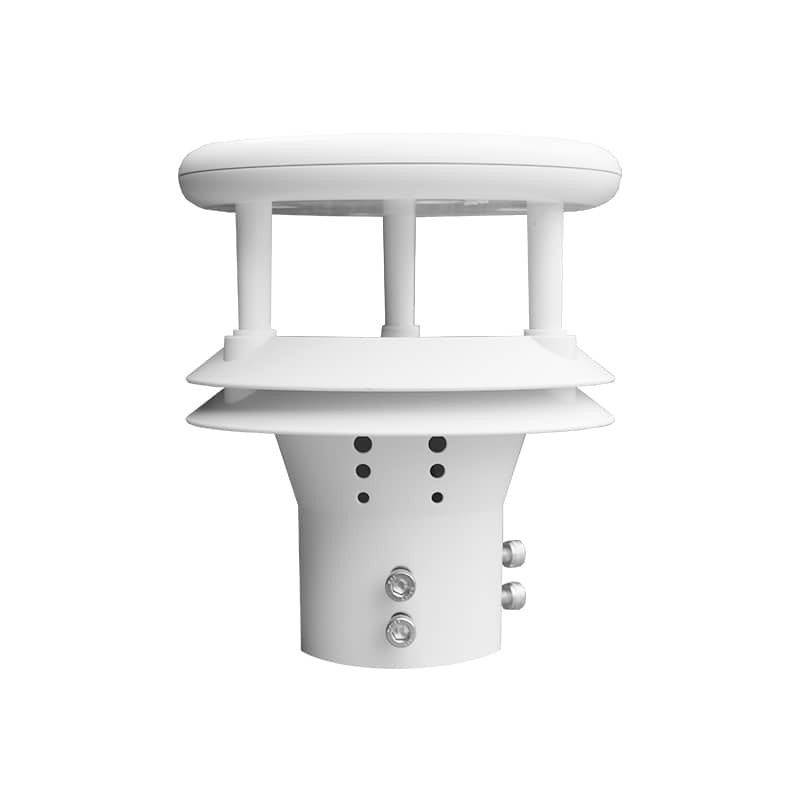
Ultrasonic anemometers calculate wind speed and direction using ultrasonic phase difference detection technology. They employ an integrated structure, eliminating mechanical wear and requiring no calibration or maintenance. They provide stable 24-hour monitoring and are suitable for various outdoor monitoring scenarios, including meteorology, wind power, traffic, and urban environments.
Ultrasonic anemometers are professional meteorological monitoring devices developed based on the principle of ultrasonic sensing. They primarily transmit continuously variable frequency ultrasonic signals and detect the relative phase difference between the transmitted signals to accurately calculate environmental wind speed and direction data. They are currently the mainstream equipment in the field of micro-meteorological monitoring. This device completely eliminates the mechanical rotating structure of traditional anemometers, fundamentally solving problems such as component wear, start-up delay, and circuit demodulation deviation inherent in traditional equipment. It also avoids measurement errors caused by temperature changes, significantly improving the accuracy and stability of monitoring data.
The mainstream WQX2 ultrasonic anemometer sensor on the market adopts a highly integrated integrated design, combining wind speed and direction monitoring functions into a single device with a simple and compact structure. The device features a concealed ultrasonic probe mounted on a top cover, effectively resisting interference from rain, snow accumulation, and wind obstruction, making it suitable for various complex outdoor environments. With no wind speed limitation, it can start monitoring at zero wind speed, accurately capturing data in light wind conditions to meet the needs of refined meteorological monitoring. Simultaneously, a built-in watchdog circuit provides automatic reset, ensuring stable system operation throughout and preventing equipment failures caused by complex outdoor conditions.
The ultrasonic anemometer boasts low overall power consumption and stable operation, supporting 24/7 online monitoring. It can simultaneously output wind speed and wind direction data via a standard digital communication interface, ensuring efficient and accurate data transmission. The device is easy to install, requiring no regular on-site maintenance or manual calibration, resulting in significantly lower maintenance costs than traditional monitoring equipment. Furthermore, the absence of mechanical component wear extends its service life. Thanks to its superior performance, the ultrasonic anemometer has been widely applied in meteorological observation, urban environmental monitoring, wind power generation, airports, bridges and tunnels, and marine vessels, adapting to diverse scenarios such as civilian monitoring, industrial maintenance, and engineering surveying. Its reliable monitoring results have earned widespread industry recognition and application.
The traditional meteorological monitoring stations have limited distribution, making it difficult to comprehensively and real-timely grasp the complex and changeable meteorological conditions. However, combining drones with meteorological instruments has unexpectedly become a solution to make up for...
Leakage current Measurement is a portable safety detection device suitable for both land and water use. With an IP68 protection rating, it can operate normally in underwater environments. Based on the principle of electromagnetic induction, the device acquires wide-angle AC field signals throu...
The visibility meter uses forward scattering to measure the total extinction coefficient of the air and calculate the current visibility. It has a range of 10km, a resolution of 1m, and an error of ±2% for distances ≤2km, ±5% for distances between 2km and 10km, and ±10% for distances great...
Portable Flow Meter is a velocity and flow rate detection instrument applied to rivers, open channels, pipelines and other working conditions. Utilizing ultrasonic detection technology, it features high measurement accuracy, good stability, little influence from environmental factors, no rotating pa...


 Skype
 whatsapp
 mail