Tianyi Sensor IOT Technology Co., Ltd
Sales Manager:Ms. Emily Wang
Cel,Whatsapp,Wechat:+86 15898932201
Email:info@fengtutec.com
Add:No. 155 Optoelectronic Industry Accelerator, Gaoxin District, Weifang, Shandong, China


Sales Manager:Ms. Emily Wang
Cel,Whatsapp,Wechat:+86 15898932201
Email:info@fengtutec.com
Add:No. 155 Optoelectronic Industry Accelerator, Gaoxin District, Weifang, Shandong, China
time:2026-07-21 10:50:18 source:Weather Station viewed:38 time
Based on the forward scattering method, Visibility and Present Weather Sensor calculates visibility by measuring the total extinction coefficient of air, and can identify various weather types such as fog, rain, snow, mixed precipitation, and clear skies. The instrument features an aluminum casing and a downward-facing lens design, making it waterproof, dustproof, and resistant to stray light interference, suitable for outdoor scenarios such as road traffic and meteorological observation.
The forward scattering Visibility and Present Weather Sensor is an atmospheric monitoring device based on optical principles. Its core working principle is that an infrared light pulse is emitted into the atmosphere by a transmitter, and a receiver receives the forward-scattered light from aerosol particles in the air at a specific angle (usually 42° or 45°). The sensor calculates the atmospheric extinction coefficient based on the intensity of the scattered light, and then converts the extinction coefficient into meteorological optical range (MOR), i.e., the current visibility value, using the Koschmieder equation. Compared to transmission-type visibility meters, this measurement method offers advantages such as compact structure and easy installation, and has been widely used in airports, highways, ports, and routine meteorological observations both domestically and internationally.
In terms of hardware design, the Visibility and Present Weather Sensor generally uses high-quality aluminum as its casing, which, after anodizing and painting, provides excellent waterproof, dustproof, and impact-resistant performance. The transmitting and receiving lenses are designed to face downwards, effectively reducing interference from stray light such as sunlight on the measurement signal. An integrated watchdog circuit ensures system stability and reliability during long-term outdoor operation. Both communication and power interfaces include surge protection to reduce damage from lightning strikes and static electricity. Power supply supports a wide voltage input from 12V to 24V, with a total power consumption of approximately 1W, and can be powered long-term using solar panels or batteries.
Functionally, the Visibility and Present Weather Sensor not only outputs visibility data but also has automatic weather phenomenon recognition capabilities. By analyzing the differences in scattered light intensity under various weather conditions, the sensor can identify weather types such as fog, rain, snow, mixed precipitation, and clear skies, with a recognition rate exceeding 95%. The digital interface supports RS485 or RS232 communication, using the standard MODBUS protocol, eliminating the need for additional protocol adaptation. The instrument can simultaneously output visibility values at 15-second, 1-minute, and 10-minute timescales, allowing users to directly read the appropriate data based on their needs.
In terms of technical parameters, the visibility range is from 10 km to 50 km, with a resolution of 1 meter. The measurement error is ±2% within 2 km, ±5% from 2 km to 10 km, and ±10% above 10 km. Repeatability is no more than 4%. The operating temperature range is -40℃ to 60℃, and the operating humidity is 0% to 100%RH. The overall dimensions are approximately 610 × 230 × 360 mm, and the weight is no more than 10 kg. These performance metrics enable the sensor to meet the practical application needs of multiple industries, such as road traffic monitoring, meteorological observation, and environmental protection.
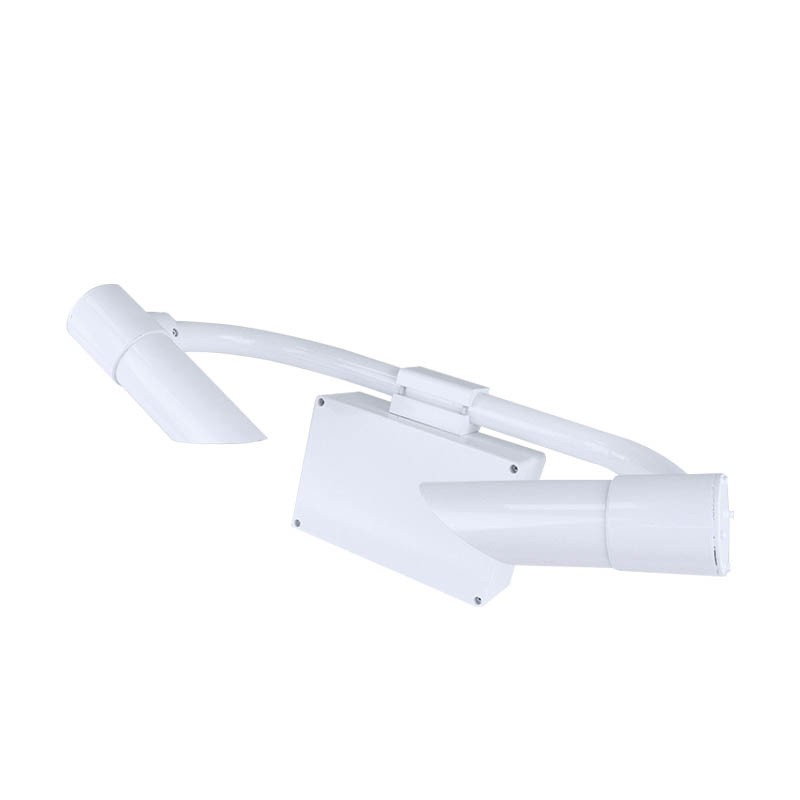
Radar rain detector is a precipitation measurement instrument that uses 24GHz Doppler radar technology. It identifies rain, snow, and hail types and measures rainfall intensity by analyzing the falling velocity and particle size of precipitation particles. Unaffected by foliage cover, it offers sensitive and rapid detection and is widely used in meteorology, hydrology, environmental protection, and flood control....
What are the negative oxygen ion monitors? One is a detector suitable for scenic spots, and the other is a handheld negative ion detector.For the negative ion detector in scenic spots, the FT-FZ1 Scenic Air Negative Oxygen Ion Monitor can be selected. This monitor can monitor the concentration of ne...
The traditional triangle odor bag method mainly relies on the subjective judgment of professional odor assessors, which is not only cumbersome and costly to operate, but also difficult to achieve real-time monitoring and traceability. The emergence of the Odor Online Monitor has overcome these short...
Shandong Fengtu has launched a marine anemometer that integrates six meteorological parameters (temperature, humidity, wind speed, wind direction, air pressure, and rainfall) into one unit. It uses ultrasonic principles for wind measurement, with a range of 0-60 m/s, an accuracy of ±0.1 m/s,...


 Skype
Skype
 whatsapp
 mail
mail