Tianyi Sensor IOT Technology Co., Ltd
Sales Manager:Ms. Emily Wang
Cel,Whatsapp,Wechat:+86 15898932201
Email:info@fengtutec.com
Add:No. 155 Optoelectronic Industry Accelerator, Gaoxin District, Weifang, Shandong, China


Sales Manager:Ms. Emily Wang
Cel,Whatsapp,Wechat:+86 15898932201
Email:info@fengtutec.com
Add:No. 155 Optoelectronic Industry Accelerator, Gaoxin District, Weifang, Shandong, China
time:2026-10-12 11:10:35 source:Weather Station viewed:1 time
The water level and rainfall monitoring system utilizes K-band planar radar microwave technology to simultaneously monitor water levels and rainfall via non-contact methods. Characterized by low power consumption and high stability, the system is immune to various environmental factors and is suitable for all-weather, online data collection and transmission across a wide range of water conservancy scenarios.
Designed specifically for the water conservancy industry, this system is a fully automated, online hydrological monitoring device. It relies on advanced K-band planar radar microwave technology to perform monitoring tasks, moving away from traditional contact-based methods to achieve precise, simultaneous, non-contact measurements of water levels and rainfall. Through built-in professional software algorithms, it performs real-time calculations and outputs standardized hydrological data, meeting the monitoring requirements of diverse water conservancy applications.
The system is highly versatile and suitable for deployment in environments such as rivers, agricultural irrigation canals, urban underground drainage networks, reservoirs, and lakes. It supports critical water conservancy operations, including flood warning, water resource management, and flash flood prevention and control. Capable of precise non-contact flow measurement, it provides reliable data to support water dispatching, flood control decision-making, and hydrological data analysis. Compared to traditional equipment, this system offers superior environmental adaptability; the monitoring process remains unaffected by external factors such as temperature fluctuations, sediment, pollutants, floating debris, haze, or wind. It maintains stable and accurate data output even in challenging hydrological environments characterized by corrosiveness or heavy foaming.
The system features a lightweight, compact design and is equipped with a planar array radar antenna that includes an automatic angle calibration function, ensuring simple and convenient installation without complex construction work. Dedicated configuration software allows personnel to flexibly adjust operating parameters based on specific site requirements, ensuring compliance with monitoring standards for various operating conditions. Powered by a combination of solar panels and rechargeable batteries, the system operates independently of the grid, making it ideal for complex monitoring scenarios—such as remote waters or off-grid field locations—and enabling continuous, unattended, automatic monitoring. In terms of monitoring performance, the water level and rainfall monitoring system offers high precision, achieving water level measurement accuracy of ±1 mm and rainfall measurement accuracy of ±0.2 mm, alongside high data resolution and flexible monitoring intervals. The system features low overall power consumption, high operational reliability, and minimal maintenance requirements, ensuring stable long-term operation. It effectively overcomes the limitations of traditional manual monitoring—such as low efficiency, data lag, and environmental constraints—thereby facilitating the intelligent and refined development of water conservancy and hydrological monitoring.
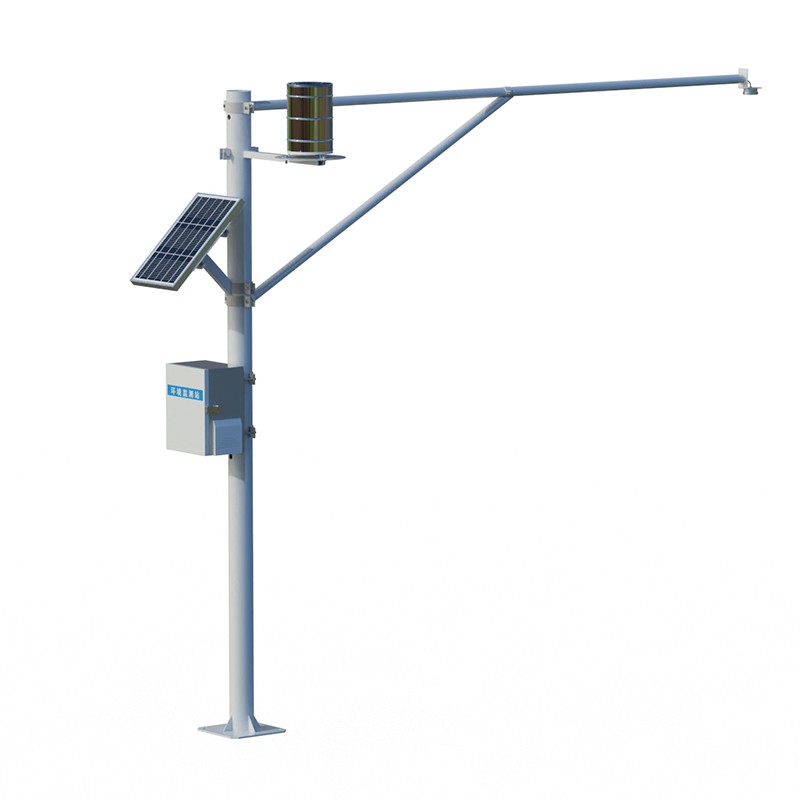
What are the display methods of the Negative Oxygen Ion Monitoring System?Liquid Crystal Display (LCD) is a relatively common display method. Many negative oxygen ion detection devices are equipped with LCD screens, such as small environmental monitoring stations. It can clearly present the negative...
Underwater Rescue Robot is equipped with a high-definition camera and imaging sonar, capable of transmitting real-time underwater footage back to the surface control station via either tethered or autonomous modes. With a maximum operational depth exceeding 300 meters, and outfitted with light...
Marine weather stations integrate six parameters—ambient temperature, relative humidity, wind speed, wind direction, atmospheric pressure, and optical rainfall—into a single unit, outputting data all at once via a digital communication interface. The equipment supports 24-hour continuous onl...
Leveraging the propagation characteristics of sound waves underwater, Water Rescue Equipment performs underwater detection through electro-acoustic conversion and signal processing. It provides scanned views, 3D visualizations, and underwater life detection capabilities for riverbeds and water...


 Skype
Skype
 whatsapp
 mail
mail