Tianyi Sensor IOT Technology Co., Ltd
Sales Manager:Ms. Emily Wang
Cel,Whatsapp,Wechat:+86 15898932201
Email:info@fengtutec.com
Add:No. 155 Optoelectronic Industry Accelerator, Gaoxin District, Weifang, Shandong, China


Sales Manager:Ms. Emily Wang
Cel,Whatsapp,Wechat:+86 15898932201
Email:info@fengtutec.com
Add:No. 155 Optoelectronic Industry Accelerator, Gaoxin District, Weifang, Shandong, China
time:2026-10-08 10:53:06 source:Weather Station viewed:15 time
Leveraging IoT technology, this monitoring system integrates multi-dimensional terminals—such as sensors for rainfall, water level, displacement, and ground cracks—to capture critical hazard data around the clock. Data is transmitted wirelessly to a central monitoring platform, providing a reliable foundation for early warning and prevention strategies against flash floods, landslides, and debris flows.
This equipment serves as a core hardware component of modern flood and geohazard prevention systems. Built on an IoT architecture, it integrates specialized monitoring terminals with supporting power supply and transmission units to create a comprehensive, continuous field monitoring network. The core system comprises stainless-steel rain gauges, data loggers, solar power systems, and mounting poles. It can also be configured with additional devices—such as displacement meters, crack monitors, mud-level sensors, and GNSS positioning units—to meet the specific needs of various geohazard scenarios. Designed for stability and ease of maintenance, the system is fully adapted to harsh, complex field environments.
The equipment features robust data acquisition and transmission capabilities, accurately capturing metrics such as rainfall status, interval rainfall, and cumulative rainfall (daily, weekly, monthly, and yearly), alongside real-time parameters like water levels, soil displacement, mountain fissures, and debris flow volume. All data is wirelessly transmitted to the IoT monitoring platform in real time. Personnel can access live data and historical records via the platform, which supports one-click export to Excel. This facilitates data analysis, risk assessment, and record-keeping, providing a quantitative basis for effective hazard prevention and control.
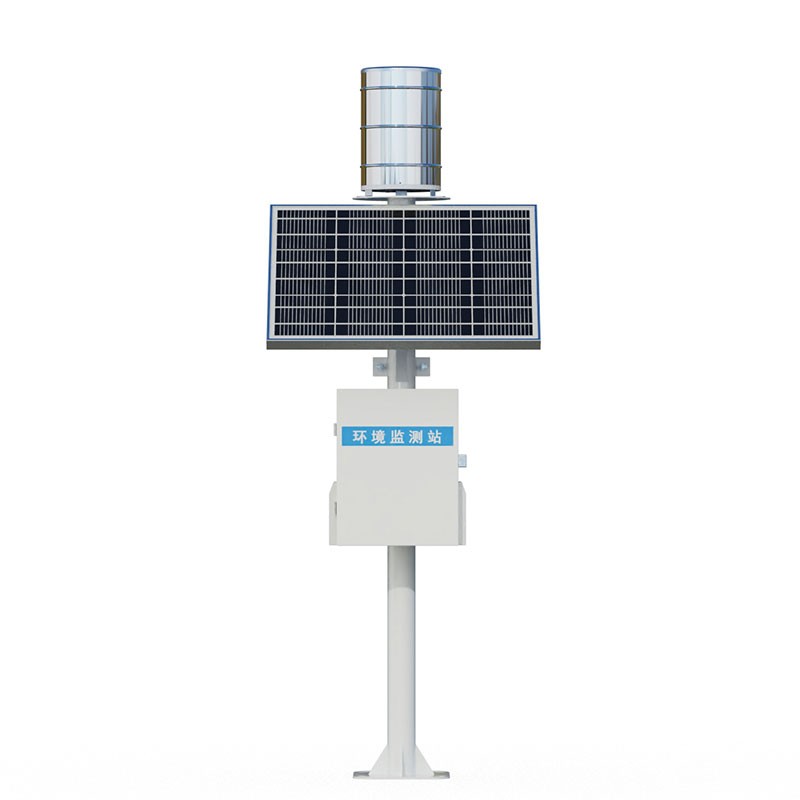
Traditional weather stations mostly use mechanical devices such as wind speed and direction indicators to measure meteorological elements. These devices have some limitations. For example, mechanical components are prone to wear and icing, requiring regular maintenance and calibration. Moreover, the...
In the daily operation and maintenance of photovoltaic power plants, testing equipment is a key tool to ensure power generation efficiency and system stability. Among them, the EL detector and I-V Curve Tracer are two widely used professional devices that evaluate the performance of photovoltaic mod...
Leveraging IoT technology, this monitoring system integrates multi-dimensional terminals—such as sensors for rainfall, water level, displacement, and ground cracks—to capture critical hazard data around the clock. Data is transmitted wirelessly to a central monitoring platform, providing a reliabl...
This instrument used to measure rainfall features a three-channel narrowband infrared detector and a pure sine wave signal source, resisting strong light interference. It achieves a rainfall resolution of 0.01mm and can connect to multiple external optical sensors. Its low power consumption ma...


 Skype
 whatsapp
 mail