Tianyi Sensor IOT Technology Co., Ltd
Sales Manager:Ms. Emily Wang
Cel,Whatsapp,Wechat:+86 15898932201
Email:info@fengtutec.com
Add:No. 155 Optoelectronic Industry Accelerator, Gaoxin District, Weifang, Shandong, China


Sales Manager:Ms. Emily Wang
Cel,Whatsapp,Wechat:+86 15898932201
Email:info@fengtutec.com
Add:No. 155 Optoelectronic Industry Accelerator, Gaoxin District, Weifang, Shandong, China
time:2026-09-30 10:49:50 source:Weather Station viewed:1 time
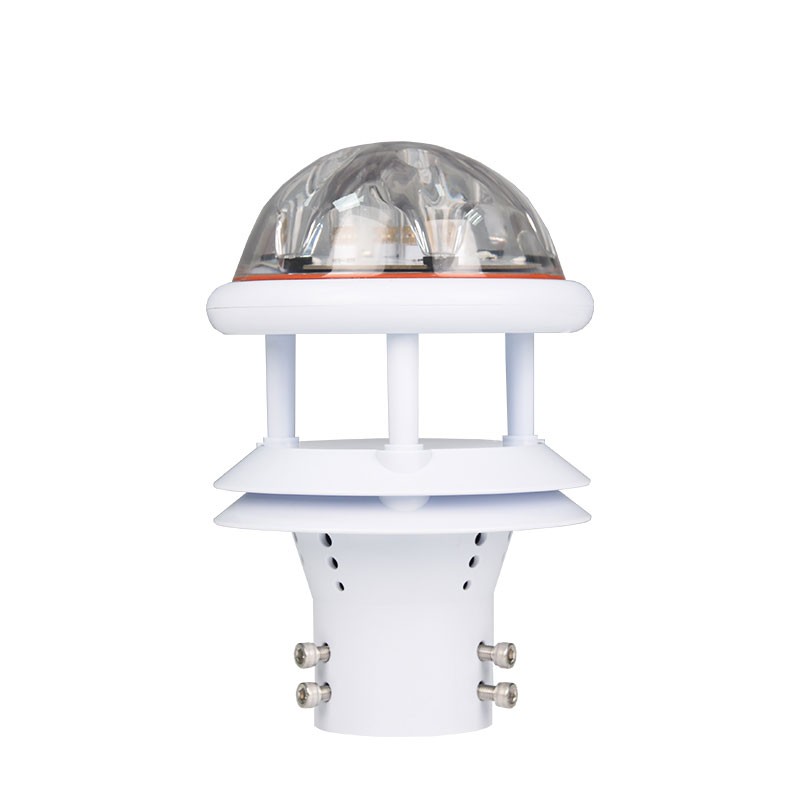
instrument used to measure rainfall This device achieves precise precipitation measurement based on optical detection principles. Equipped with a three-channel narrowband infrared detector and a pure sine-wave AC signal source, it offers high measurement accuracy and strong resistance to environmental interference. It supports compatibility with various optical devices, and its low power consumption makes it ideal for unattended field monitoring scenarios.
instrument used to measure rainfall This professional meteorological monitoring device utilizes optical detection technology. It calculates rainfall data by analyzing parameters such as precipitation particle size and fall velocity. Capable of accurately tracking cumulative rainfall on a minute, hourly, and daily basis, it serves as a superior alternative to traditional tipping-bucket rain gauges and is suitable for diverse high-precision rainfall monitoring applications. The device features a pure sine-wave infrared light source and a built-in narrowband filter, paired with a large 78 cm² rain-sensing surface; this configuration effectively eliminates interference from ambient light—such as intense sunlight—thereby resolving the issues of light sensitivity and data inaccuracy common in traditional equipment. Its high-transmittance rain-sensing cover allows direct sunlight to pass through and supports the integration of various optical sensors (measuring illuminance, UV radiation, total radiation, etc.), enabling multi-parameter monitoring in a single unit and significantly reducing equipment deployment costs and installation space requirements.
instrument used to measure rainfall The device boasts excellent hardware performance and environmental adaptability. Operating on a standard DC 12V power supply, it consumes only 0.12W with a 10mA operating current. This ultra-low power design ensures suitability for long-term, unattended field observation stations, eliminating the need for frequent servicing and enabling maintenance-free, long-term operation. It offers a rainfall resolution of 0.01 mm and a rainfall intensity monitoring range of 0–4 mm/min, with an overall measurement error of no more than ±4%, ensuring precise and stable data. Furthermore, the device is highly adaptable, capable of continuous operation in complex temperature and humidity conditions ranging from -40°C to 85°C and 0% to 100% RH, making it resilient against harsh outdoor environments characterized by extreme heat, cold, or high humidity. With multiple advantages—including high precision, interference resistance, easy compatibility, low power consumption, and a maintenance-free design—this device is now widely used across sectors such as meteorological observation, agricultural production, municipal operations and maintenance, and traffic monitoring; it serves as a core piece of equipment for precision outdoor rainfall monitoring.
In outdoor natural settings such as dense forests, mountain streams, vast rivers, lakes and seas, and around rushing waterfalls, people often feel the air is exceptionally fresh. The key reason behind this is that the air in these places contains a sufficient amount of negative oxygen ions. Essentia...
The core of the Odor Online Monitor lies in simulating human olfactory perception, enabling simultaneous monitoring of multiple malodorous pollutants. It is particularly suitable for 24/7 continuous monitoring in environments such as landfill sites, chemical industrial parks, and wastewater treatmen...
Vehicle-mounted weather instrument is a high-precision meteorological monitoring device designed for mobile platforms such as vehicles and ships. It can measure environmental temperature, relative humidity, wind speed, wind direction, atmospheric pressure, and piezoelectric rainfall data in real time....
Why measure the flow velocity of a river?First, it provides data support for water resources management. By mastering the river flow velocity, water resources can be rationally allocated to ensure the water demand for daily life and production.Second, it helps with flood control and disaster reducti...


 Skype
Skype
 whatsapp
 mail
mail