Tianyi Sensor IOT Technology Co., Ltd
Sales Manager:Ms. Emily Wang
Cel,Whatsapp,Wechat:+86 15898932201
Email:info@fengtutec.com
Add:No. 155 Optoelectronic Industry Accelerator, Gaoxin District, Weifang, Shandong, China


Sales Manager:Ms. Emily Wang
Cel,Whatsapp,Wechat:+86 15898932201
Email:info@fengtutec.com
Add:No. 155 Optoelectronic Industry Accelerator, Gaoxin District, Weifang, Shandong, China
time:2026-07-06 10:54:25 source:Weather Station viewed:36 time
Marine weather stations integrate six parameters—ambient temperature, relative humidity, wind speed, wind direction, atmospheric pressure, and optical rainfall—into a single unit, outputting data all at once via a digital communication interface. The equipment supports 24-hour continuous online monitoring and is suitable for ocean-going vessels, research vessels, and offshore platforms.
A marine weather station is a specialized meteorological observation device installed on ships to acquire real-time meteorological information under marine and navigation conditions. This equipment integrates the six standard meteorological parameters (ambient temperature, relative humidity, wind speed, wind direction, atmospheric pressure, and optical rainfall) into a highly integrated structure, enabling 24-hour continuous online monitoring of outdoor meteorological parameters. All six parameters are output to the user simultaneously via a digital communication interface. Some models also support the measurement of additional elements such as visibility, illumination, and PM2.5.
Technically, marine weather stations use ultrasonic anemometer technology instead of traditional mechanical anemometers, detecting wind speed and direction by emitting continuously variable frequency ultrasonic signals and measuring their relative phase. This design features no moving parts and zero wear, avoiding measurement errors caused by mechanical wear. The temperature and humidity sensors and the barometric pressure sensor are integrated into the same housing, resulting in a compact and small overall structure. The equipment casing is typically made of ASA engineering plastic or 316 stainless steel, capable of withstanding the harsh high-salt, high-humidity marine environment.
The marine weather station's standard data output is an RS485 communication interface, supporting the MODBUS protocol. Depending on actual needs, RS232, USB, or Ethernet interfaces are optional, all supporting real-time data reading. Users can use these interfaces to output six meteorological parameters simultaneously to the ship's navigation system, data acquisition unit, or host computer without additional conversion. The interfaces employ an industrial-grade protection design, ensuring stable and reliable communication under conditions of vibration, salt spray, and drastic temperature changes.
In terms of data processing, the marine weather station acquires the ship's heading and speed information through a built-in heading and speed measurement module. After processing by the microcomputer within the main unit, the true wind direction and speed relative to the ground can be calculated. This function is crucial for ship navigation safety because the ship's own speed directly affects the measurement results of relative wind speed and direction. Only after true wind correction can accurate meteorological data be obtained.
Marine weather stations are used on a wide range of vessels, including oceanographic research vessels, oceanographic survey vessels, transport ships, fishing boats, and various surface ships. In the China Meteorological Administration's comprehensive marine meteorological support project, multiple sets of ocean-going shipborne automatic weather stations have been successfully deployed on ocean-going fishing vessels and refrigerated transport ships, transmitting meteorological data to the meteorological department every 5 minutes. These devices provide vital data support for maritime weather forecasting, effectively improving the monitoring, early warning, and service capabilities for marine hazardous weather. The equipment requires no manual operation, enabling long-term continuous online monitoring, reducing maintenance costs, and providing reliable meteorological data for ship route optimization and navigation safety decisions.
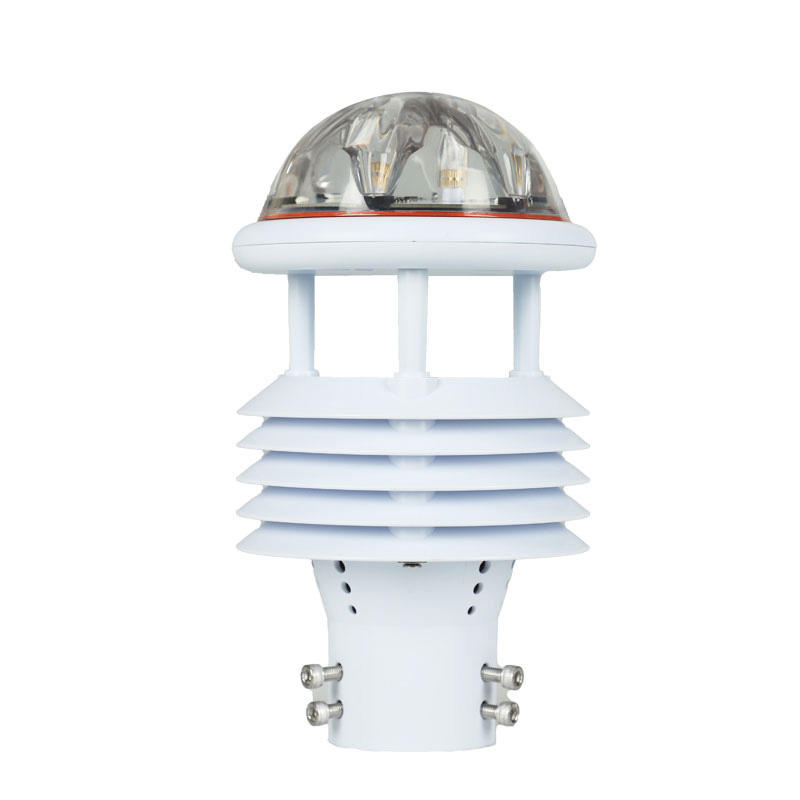
instrument used to measure rainfall utilizes a three-channel narrowband infrared detector and a pure sine wave AC signal source to measure precipitation based on infrared optical principles. It supports the real-time scanning of raindrop size and count, offering a resolution of 0.01 mm, a rain...
The Portable Weather Station is a professional device specifically designed for environmental monitoring. It is not only easy to install and operate with straightforward instructions but also delivers highly accurate measurement data. As a reliable observation system, it can simultaneously monitor m...
You may not know that the occurrence and spread of many plant diseases are related to pathogenic spores. Spores are the reproductive units of fungal pathogens, which are tiny in size and numerous in quantity. They can be widely transmitted through media such as wind, rain, and insects. Once spores l...
Portable Flow Meter is a velocity and flow rate detection instrument applied to rivers, open channels, pipelines and other working conditions. Utilizing ultrasonic detection technology, it features high measurement accuracy, good stability, little influence from environmental factors, no rotating pa...


 Skype
Skype
 whatsapp
 mail
mail