Tianyi Sensor IOT Technology Co., Ltd
Sales Manager:Ms. Emily Wang
Cel,Whatsapp,Wechat:+86 15898932201
Email:info@fengtutec.com
Add:No. 155 Optoelectronic Industry Accelerator, Gaoxin District, Weifang, Shandong, China


Sales Manager:Ms. Emily Wang
Cel,Whatsapp,Wechat:+86 15898932201
Email:info@fengtutec.com
Add:No. 155 Optoelectronic Industry Accelerator, Gaoxin District, Weifang, Shandong, China
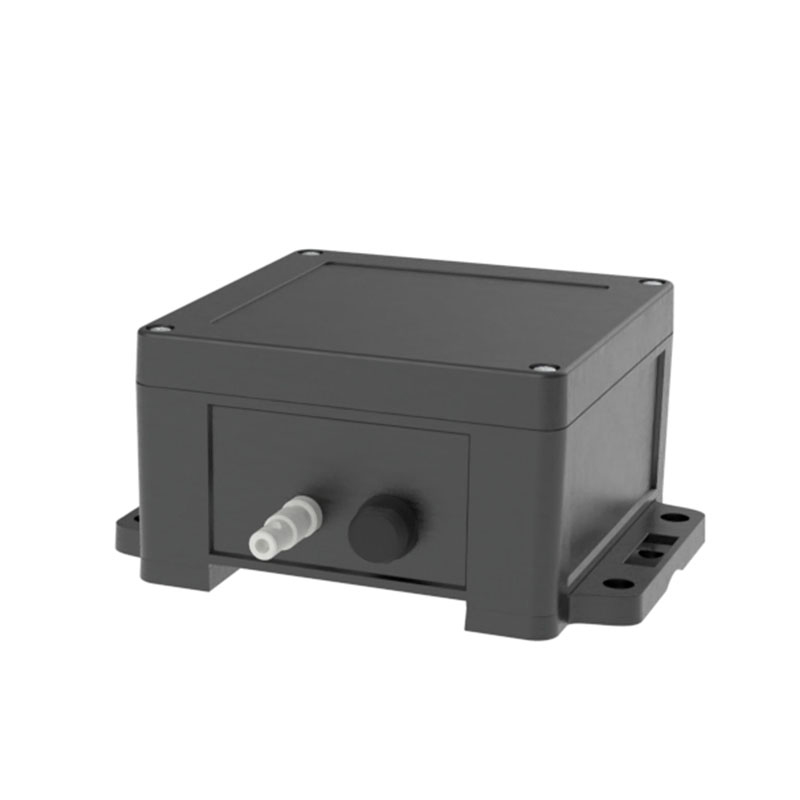
Model:FT-LF1
Brand:tianyi
1.Introduction to Crack Detection Sensor Products
Crack Detection Sensor is designed to detect changes in surface cracks in structural components such as buildings, bridges, pipelines, concrete, etc.This product is widely used in many monitoring fields such as geological disasters, geotechnical engineering, construction engineering, transportation, water conservancy, and municipal affairs.It is especially suitable for accurate monitoring of relative displacements such as surface cracks, unloading cracks, houses or structural cracks.
In geological disaster monitoring, slight changes in surface cracks can be captured in real time to provide key data for disaster warnings such as landslides and collapses; in geotechnical engineering, the development trend of unloading cracks can be effectively monitored to ensure project safety;
In the field of construction engineering, it is possible to accurately detect the displacement of houses or structural cracks, providing a scientific basis for the health diagnosis and maintenance of buildings;
In transportation, water conservancy and municipal engineering, it can also play an important role to ensure the long-term and stable operation of infrastructure.
Through high-precision monitoring data, users can take timely response measures, reduce risks, and ensure project and personnel safety.
2.Technical parameters of Crack Detection Sensor
| Range | 0-1000mm |
| Accuracy | ±0.02%FS |
| Response time | 1s |
| Housing material | ABS |
| Power supply voltage | 12-24VDC (0.4W@12V) |
| Communication method | modbus-485 |
The intelligent meteorological system is a highly integrated, low-power, and quickly installable automatic meteorological observation device. It requires no debugging and can be deployed immediately. It is used for continuous data collection of elements such as temperature, humidity, wind spee...
3D radar life detector integrates Ultra-Wideband (UWB) radar, millimeter-wave radar, and biomedical engineering technologies. By utilizing the Doppler effect to capture human breathing and heartbeat signals, it can penetrate non-metallic walls up to 50 cm thick, enabling 3D spatial localization and...
Underwater sonar imaging sounder is a portable underwater detection device integrating sonar technology and video recording. It generates high-resolution underwater topographic images, 3D models, and target location information by emitting sound waves into the water and receiving the echoes. It is suitable for single-person outdoor operations such as underwater search and rescue, topographic mapping, and engineering surveys....
These instruments utilize the forward scattering method to calculate the total extinction coefficient of air, accurately converting it into atmospheric visibility values. They can automatically identify various weather phenomena, are highly protective, consume little power, and are adaptable t...


 Get a Free Quote
 Skype
Skype
 whatsapp
 mail
mail