Tianyi Sensor IOT Technology Co., Ltd
Sales Manager:Ms. Emily Wang
Cel,Whatsapp,Wechat:+86 15898932201
Email:info@fengtutec.com
Add:No. 155 Optoelectronic Industry Accelerator, Gaoxin District, Weifang, Shandong, China


Sales Manager:Ms. Emily Wang
Cel,Whatsapp,Wechat:+86 15898932201
Email:info@fengtutec.com
Add:No. 155 Optoelectronic Industry Accelerator, Gaoxin District, Weifang, Shandong, China
time:2026-06-22 10:32:58 source:Weather Station viewed:66 time
This system employs a twelve-element integrated sensor to simultaneously monitor parameters such as wind speed, wind direction, temperature, humidity, air pressure, optical rainfall, and PM2.5, PM10, CO, NO2, SO2, and O3. The equipment requires no debugging, can be quickly deployed, and is suitable for meteorological, agricultural, environmental, marine, airport, port, and scientific research fields.
The unattended meteorological system is a highly integrated, low-power, quickly installable, and easy-to-use high-precision automatic meteorological observation device for field monitoring. It uses a twelve-element integrated sensor to perform real-time observation of meteorological elements such as wind speed, wind direction, temperature, humidity, air pressure, optical rainfall, PM2.5, PM10, CO, NO2, SO2, and O3, achieving continuous online monitoring of outdoor meteorological parameters 24 hours a day. The sensor housing is made of imported ASA material, effectively resisting environments such as salt spray, with a protection level of IP65 or higher.
In terms of technical design, the equipment requires no debugging and can be quickly deployed. Compared to traditional ultrasonic weather stations, this product overcomes the need for high-precision timers and avoids measurement inaccuracies caused by sensor start-up delays, demodulation circuit delays, and temperature changes. The top cover features a concealed ultrasonic probe design, preventing interference from rain and snow accumulation and wind obstruction. The device detects wind speed and direction by measuring the relative phase of the emitted continuously variable frequency ultrasonic signals. It outputs twelve parameters to the user simultaneously via a digital communication interface. Data storage capacity is no less than 500,000 records, with a power consumption of only 1.5W. The 12000mAh lithium battery pack provides at least 50 hours of continuous use on a single charge, includes a power display, and weighs no more than 5kg. One person can complete the deployment in under two minutes.
For data transmission, the device comes standard with GPRS and offers optional RJ45, Ethernet, 4-20mA, LoRa transparent transmission, 4G transparent transmission, Bluetooth, and 485 to USB transmission methods. The device supports standalone PC software for data reception, storage, viewing, and analysis, and also supports an Android app for receiving data via Bluetooth. The two-meter carbon steel support frame allows for direct sensor connection without the need for a flange.
In terms of application areas, unmanned meteorological systems are widely used in meteorology, agriculture, forestry, environmental protection, marine science, airports, ports, scientific research, and educational institutions. Regarding applications in extreme environments, the unmanned atmospheric background observation experiment conducted by the Chinese Academy of Meteorological Sciences at Lenghu (4306 meters above sea level) in Qinghai Province has made key progress, initially achieving unmanned automated monitoring, sampling, calibration, and data transmission for the atmospheric background observation experimental device. In terms of power supply, the "Polar Sentinel" monitoring station deployed by the Chongzhou Meteorological Bureau in uninhabited mountainous areas relies on a solar power system, aerospace-grade lithium-ion battery packs, and intelligent energy management algorithms to dynamically switch operating modes. In terms of operation and maintenance, the AI meteorological environment monitoring system developed by the Huangshi Meteorological Bureau, based on intelligent image recognition and model analysis, can achieve 24-hour unmanned monitoring and early warning information dissemination. These practices demonstrate that unmanned meteorological systems are moving from technology verification to large-scale application.
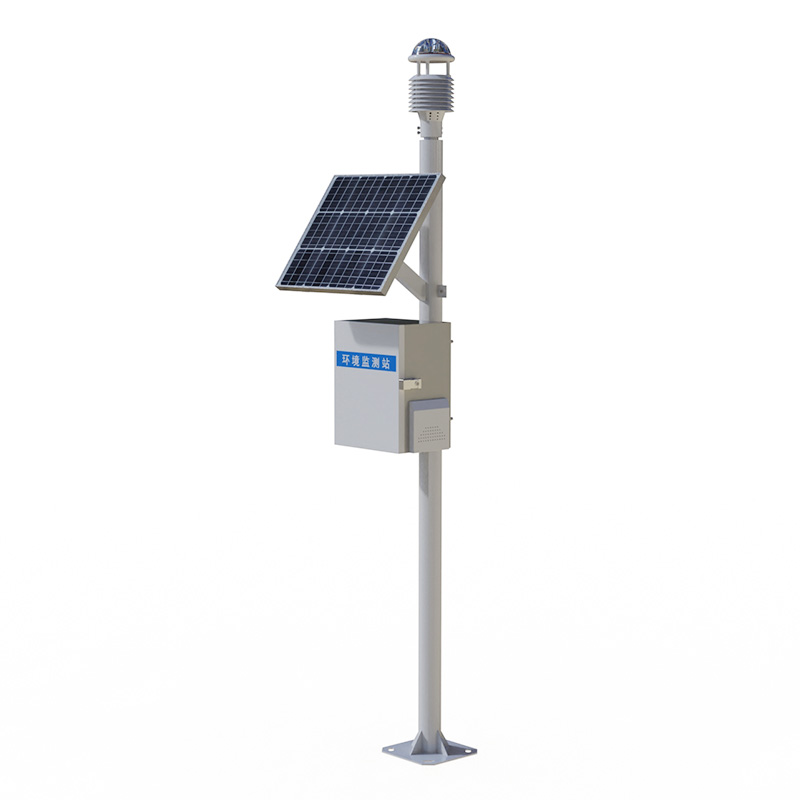
To meet the needs of air pollution prevention and control, environmental protection authorities require more refined and efficient air quality supervision. However, traditional national standard monitoring stations, despite providing high data accuracy, face limitations such as high construction cos...
This fully automated online hydrological monitoring device, based on K-band planar radar technology, can simultaneously measure water level, flow velocity, flow rate, and rainfall. Employing a non-contact measurement method, it is unaffected by silt and sewage corrosion. Its built-in intellige...
Developed based on the principles of charge induction and MEMS technology, this lightning warning system utilizes a combined electric field differential and threshold-based algorithm to effectively prevent false alarms caused by adverse weather conditions—such as rain, strong winds, and blowi...
A soil moisture monitoring system is a comprehensive station that conducts real-time monitoring of soil moisture and related environmental parameters. Equipped with high-precision sensors, it adopts technologies such as Frequency Domain Reflectometry (FDR) and Time Domain Reflectometry (TDR) to accu...


 Skype
Skype
 whatsapp
 mail
mail