Tianyi Sensor IOT Technology Co., Ltd
Sales Manager:Ms. Emily Wang
Cel,Whatsapp,Wechat:+86 15898932201
Email:info@fengtutec.com
Add:No. 155 Optoelectronic Industry Accelerator, Gaoxin District, Weifang, Shandong, China


Sales Manager:Ms. Emily Wang
Cel,Whatsapp,Wechat:+86 15898932201
Email:info@fengtutec.com
Add:No. 155 Optoelectronic Industry Accelerator, Gaoxin District, Weifang, Shandong, China
time:2026-07-13 11:09:46 source:Weather Station viewed:41 time
Meteorological stations are equipped with a variety of instruments to measure meteorological elements such as temperature, humidity, wind speed, wind direction, atmospheric pressure, and precipitation. Key instruments include platinum resistance temperature sensors, capacitive humidity sensors, cup anemometers, wind vanes, tipping-bucket rain gauges, and capacitive pressure sensors; some stations also feature specialized detection equipment like cloud radars and wind profilers.
Meteorological stations serve as infrastructure for acquiring weather data, with their core functions relying on the coordinated operation of various observation instruments. Based on the targets of observation, these instruments are broadly categorized into surface observation instruments and upper-air detection instruments. Surface instruments measure standard meteorological elements—such as temperature, humidity, pressure, wind, and precipitation—within the atmosphere near the ground.
For temperature measurement, platinum resistance sensors are widely used. Since the resistance of the platinum element changes with temperature, the temperature can be calculated by measuring this resistance value. These sensors are housed in a louvered screen (Stevenson screen) approximately 1.2 meters above the ground to shield them from direct solar radiation. Humidity is measured using capacitive humidity sensors, which employ a capacitor with an organic polymer film as the dielectric medium; changes in relative humidity alter the dielectric constant, allowing the change in capacitance to be converted into a voltage output.
Wind speed and direction are typically measured using cup anemometers and wind vanes. The wind speed sensor consists of three cups that rotate on a vertical axis supported by ball bearings; these are generally installed in open areas at a height of ten meters above the ground. The direction indicated by the tip of the wind vane represents the wind direction. Precipitation is measured using a tipping-bucket rain gauge, which calculates rainfall amounts by recording the number of times the bucket tips. Atmospheric pressure is measured using capacitive pressure sensors, which detect pressure changes by monitoring the resulting variations in capacitance.
With advancements in meteorological observation technology, the range of instruments at weather stations has expanded significantly. In addition to standard observation instruments, some stations are equipped with specialized equipment such as weather phenomenon sensors, lightning location systems, laser ceilometers, and forward-scatter visibility sensors. The weather phenomenon instrument integrates a forward-scatter visibility sensor, a precipitation monitoring sensor, and various sensors for measuring temperature, humidity, wind direction, and wind speed. For upper-air meteorological sounding, a GPS radiosonde works in conjunction with a ground-based receiving system to measure comprehensive meteorological parameters—including temperature, pressure, humidity, and wind—from the surface up to an altitude of 35 km. Equipment such as cloud radars, wind profilers, and microwave radiometers is used to detect cloud structure, wind speed and direction at various altitudes, and the vertical distribution of atmospheric temperature and humidity. Data collected by these instruments is aggregated by a data acquisition unit and transmitted via a communication module to a meteorological center for processing and analysis.
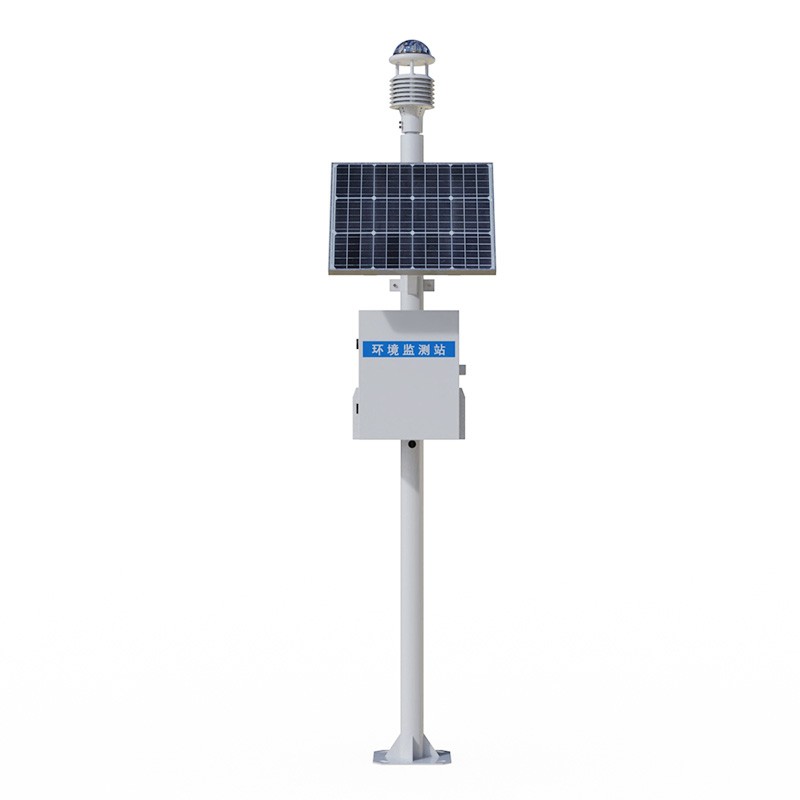
As a densely - populated public place, the air quality in scenic spots directly affects the tourist experience and ecological value. The negative oxygen ion concentration, as a core indicator for measuring air quality, has made its monitoring system a standard configuration in the construction of sm...
Based on the forward scattering method, Visibility and Present Weather Sensor calculates visibility by measuring the total extinction coefficient of air, and can identify various weather types such as fog, rain, snow, mixed precipitation, and clear skies. The instrument features an aluminum ca...
Underwater Rescue Robot Designed for diverse aquatic environments—including rivers, lakes, reservoirs, and open seas—this system features high-definition imaging and multi-dimensional sensor arrays capable of real-time underwater video transmission. Leveraging robust hardware and multiple movement...
Miniature rain sensor device uses a PVDF piezoelectric film as its rain-sensing device. Based on the piezoelectric effect, it remotely measures precipitation, precipitation intensity, and the start and end times of precipitation. It is widely used in meteorological monitoring, hydrology and wa...


 Skype
Skype
 whatsapp
 mail
mail