Tianyi Sensor IOT Technology Co., Ltd
Sales Manager:Ms. Emily Wang
Cel,Whatsapp,Wechat:+86 15898932201
Email:info@fengtutec.com
Add:No. 155 Optoelectronic Industry Accelerator, Gaoxin District, Weifang, Shandong, China


Sales Manager:Ms. Emily Wang
Cel,Whatsapp,Wechat:+86 15898932201
Email:info@fengtutec.com
Add:No. 155 Optoelectronic Industry Accelerator, Gaoxin District, Weifang, Shandong, China
time:2026-03-20 11:43:29 source:Weather Station viewed:290 time
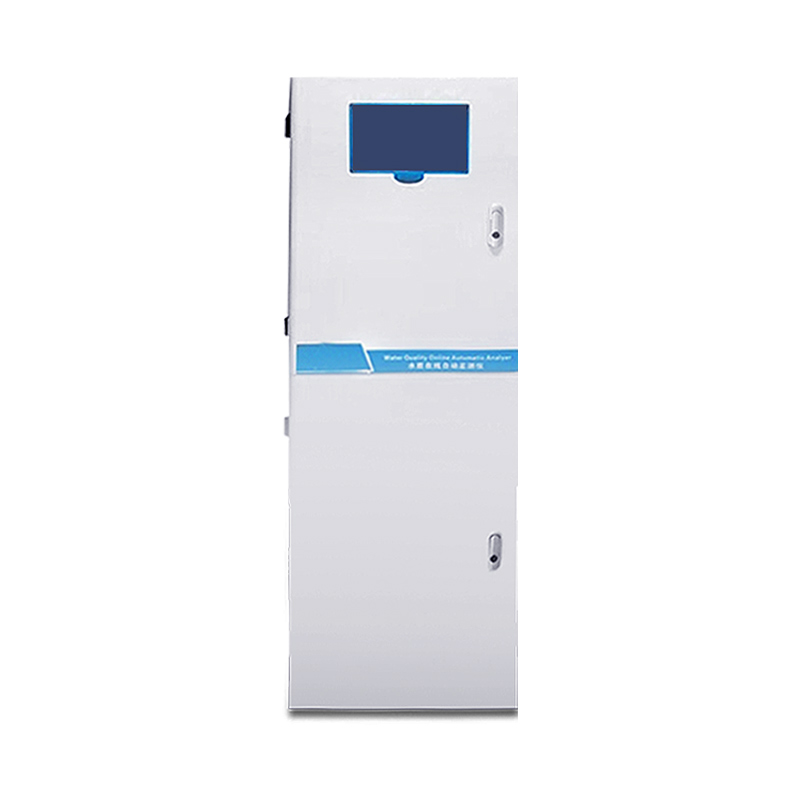
COD Analyzer employs the dichromate method to determine the Chemical Oxygen Demand (COD) in water bodies. Its measurement range covers selectable options of 0–200 mg/L, 0–500 mg/L, and 0–1000 mg/L. The indicated value error is ≤ ±3%, the detection limit is 10 mg/L, and the repeatability is ≤ ±3%. The device features a single measurement cycle of 39 minutes, generates only 6 mL of waste liquid per measurement, and utilizes reagents sufficient to support 3 months of operation. It is ideally suited for online automatic water quality monitoring applications within the fields of environmental protection, water conservancy, municipal services, and scientific research.
COD Analyzer is an online automatic water quality monitoring instrument based on the principles of the dichromate method, designed primarily for the continuous determination of COD in water bodies. The device utilizes a technical approach that combines high-temperature digestion with colorimetric analysis. Water samples undergo digestion at a recommended temperature of 165°C, utilizing potassium dichromate as the oxidant, silver sulfate as the catalyst, and mercuric sulfate to mask interference from chloride ions. Upon completion of the digestion process, photometric analysis is performed to measure the change in absorbance of hexavalent or trivalent chromium, thereby calculating the COD value of the water sample.
The measurement range offers three selectable options—0–200 mg/L, 0–500 mg/L, and 0–1000 mg/L—and can be customized to meet specific user requirements. The indicated value error is maintained within ±3%, the detection limit is 10 mg/L, and the repeatability metric also meets a standard of ±3%. The memory effect does not exceed ±3%, and the deviation observed in comparative tests using actual water samples falls within a range of ±8%. The constant-temperature digestion duration is 900 seconds, and the impact of voltage fluctuations on measurement results does not exceed ±5%. The duration of a single measurement cycle is 39 minutes, while the calibration cycle can be scheduled at any desired interval according to operational needs.
Regarding reagent consumption, the device features a low-dosage design; a supply of 500 mL of reagents is sufficient to support approximately 3 months of continuous operation. Each measurement generates only 6 mL of waste liquid, thereby effectively reducing the burden of waste disposal during operation and maintenance. The maintenance interval is no less than 720 hours, and the total monthly maintenance workload can be kept within 2 hours. The display output configuration features a 10.1-inch color LCD touchscreen, supporting the real-time display of measured values as well as historical data retrieval. Data can be exported and saved to a USB flash drive via the USB interface, facilitating on-site data copying and subsequent analysis. Signal output options include RS485, RS232, and USB interfaces; the standard configuration also includes two channels of 4–20 mA analog output and two channels of digital input/output.
For installation, the device must be placed in a temperature-controlled indoor environment. The recommended ambient temperature range is 5°C to 28°C, with a relative humidity not exceeding 90% (non-condensing). Power supply requirements specify an AC voltage of 220 V (with an allowable fluctuation of ±22 V) and a frequency of 50 Hz (with an allowable fluctuation of ±0.5 Hz); the rated current is 5 A, and the maximum power consumption is 150 W. The instrument is available in two cabinet size specifications: 600 mm (L) × 450 mm (W) × 300 mm (H) and 700 mm (L) × 450 mm (W) × 300 mm (H), allowing for selection based on the available cabinet space at the installation site.
In terms of application fields, the environmental protection sector utilizes this device primarily for the real-time monitoring of wastewater discharge outlets at key pollution sources. The water conservancy sector employs it for water quality early warning and monitoring in surface waters, rivers, and lakes. The municipal sector uses it for water quality control at the influent and effluent points of sewage treatment plants, while the scientific research and education sectors utilize it for the continuous monitoring of organic pollutant loads in water bodies during water treatment process R&D and water quality studies. The device is adaptable to a wide range of water quality monitoring scenarios, meeting the online analysis requirements for various water sample types, including industrial wastewater, domestic sewage, and surface water.
In the development process of smart agriculture, various advanced technologies and equipment are continuously updating agricultural production modes. As a core tool, the soil moisture monitoring station is deeply integrating into the modern agricultural production system.Soil moisture, i.e., the soi...
Tianyi specializes in the research, development and production of meteorological monitoring equipment, with profound technical strength and rich experience in the field of Automatic Farmland Weather Station. The weather stations produced by the company feature high-precision sensors and are made of...
Underwater search and rescue robot is a high-performance underwater detection device integrating sonar scanning and high-definition video imaging. It uses sonar for large-area scanning and positioning, combined with high-definition video for detailed observation, providing scanned and 3D views of riverbeds and water bodies. It accurately identifies the outlines and locations of underwater targets and is widely used in underwater surveying and exploration....
Total Phosphorus Analyzer employs the ammonium molybdate spectrophotometric method for the online or automated monitoring of total phosphorus content in water. It is applicable to the monitoring of surface water, municipal sewage, and industrial wastewater. Featuring a brand-new photoelectric...


 Skype
Skype
 whatsapp
 mail
mail