Tianyi Sensor IOT Technology Co., Ltd
Sales Manager:Ms. Emily Wang
Cel,Whatsapp,Wechat:+86 15898932201
Email:info@fengtutec.com
Add:No. 155 Optoelectronic Industry Accelerator, Gaoxin District, Weifang, Shandong, China


Sales Manager:Ms. Emily Wang
Cel,Whatsapp,Wechat:+86 15898932201
Email:info@fengtutec.com
Add:No. 155 Optoelectronic Industry Accelerator, Gaoxin District, Weifang, Shandong, China
time:2026-07-01 11:04:48 source:Weather Station viewed:40 time
The atmospheric electric field meter is a lightning monitoring device based on the principle of induced charge in a conductor. It uses a field-grounded sensor to measure the intensity and polarity changes of the atmospheric electric field. The device's measurement range covers -30kV/m to 30kV/m, with a detection radius of 15 kilometers. It can provide early warnings of thunderstorm activity 5 to 30 minutes in advance and is applied in meteorological stations, petrochemical plants, power facilities, and other scenarios.
The atmospheric electric field meter is a high-precision lightning monitoring and early warning device used to measure the intensity and changes of the atmospheric electric field. This device works based on the principle that a conductor generates induced charge in an electric field. When charge separation occurs in clouds, the ground electric field will change accordingly, and its intensity is related to the accumulation and distribution of charge in the clouds. By measuring changes in the ground atmospheric electric field, changes in the upper-level cloud electric field can be inferred, allowing for forecasting of the risk of lightning strikes.
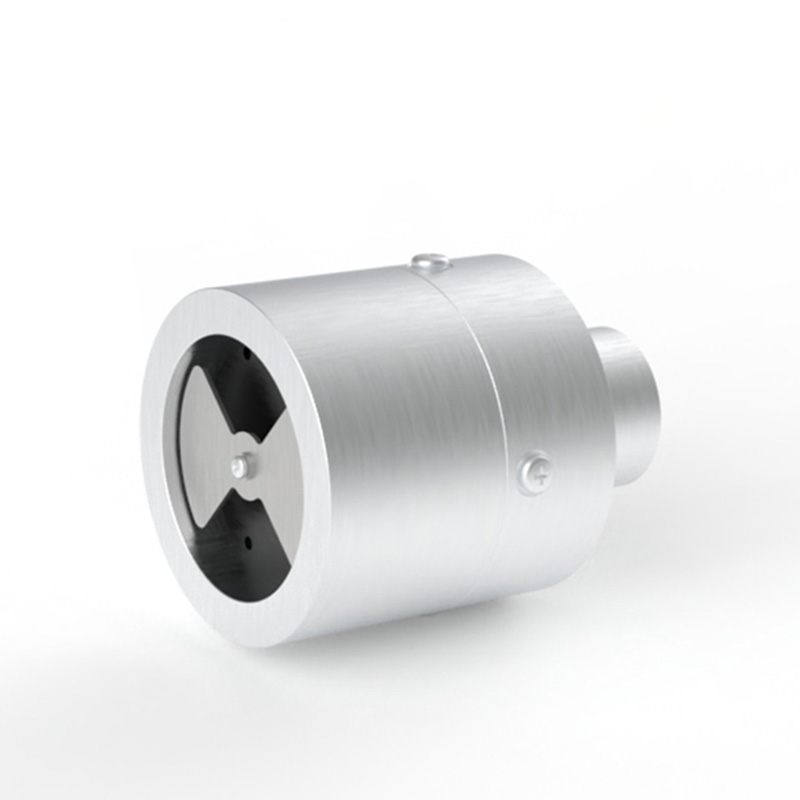
The atmospheric electric field meter is mainly designed using the field-grounded principle and consists of a stator (induction plate) and a rotor (grounding shield). The rotor, driven by a motor, alternately exposes and shields the electric field. As the moving plate rotates, the stationary plate is alternately exposed to the atmospheric electric field, generating an alternating electrical signal whose magnitude is proportional to the strength of the atmospheric electric field. The device mainly consists of an electric field sensor, a data processing system, and a communication module. The sensor probe is made of stainless steel and features a waterproof and moisture-proof design, allowing it to operate normally in harsh weather conditions such as rain, snow, and hail. The signal processing circuit amplifies the weak induced signal through multiple stages and determines the polarity of the electric field.
In terms of technical parameters, the atmospheric electric field meter has a measurement range covering -30kV/m to 30kV/m, a resolution of 20V/m, and a detection radius of approximately 15 kilometers. The device ensures time synchronization via a GPS module and supports MODBUS protocol communication using a 485 interface. Some products also integrate meteorological sensors and solar power components, transmitting data to a cloud platform via a 4G network for storage, display, and alarm functions.
In the field of meteorological monitoring, the atmospheric electric field meter can be widely used in meteorological stations to continuously monitor lightning activity within a region. By analyzing changes in the atmospheric electric field, meteorological departments can predict the probability and trend of thunderstorms and issue timely lightning warnings. For locations vulnerable to lightning strikes, such as petrochemical plants, communication base stations, power facilities, and high-rise buildings, atmospheric electric field meters serve as crucial monitoring tools for lightning protection. When the detected atmospheric electric field strength exceeds a preset threshold, the device can trigger an alarm, alerting staff to take protective measures. Atmospheric electric field meters have applications in lightning monitoring, airport safety, and power system protection; a typical example is the construction of the lightning monitoring network in Ningdu Industrial Park.
COD Analyzer complies with the national standard HJ828-2017 and employs the potassium dichromate oxidation spectrophotometric method. It enhances detection accuracy through dilution injection and chloride ion masking technology. The equipment boasts strong anti-interference capabilities, conve...
The FT-SQ6 electronic weather station is a professional meteorological measurement tool that integrates portability, accuracy, and durability, and it is also a reliable piece of equipment in the field of special firefighting. Its compact design and lightweight body make portability its main advantag...
In water monitoring work, chlorophyll measurement is a crucial part. As the core substance for photosynthesis in aquatic plants, the chlorophyll content can directly reflect the quantity of phytoplankton in the water. By measuring chlorophyll, staff can determine the degree of water eutrophication —...
Agricultural monitoring system provides precise guidance for agricultural production through comprehensive monitoring of soil moisture, crop growth, pest and disease infestations, and disasters.Soil Moisture Monitoring focuses on soil water status. Imbalances in soil moisture directly affect crop gr...


 Skype
Skype
 whatsapp
 mail
mail