Tianyi Sensor IOT Technology Co., Ltd
Sales Manager:Ms. Emily Wang
Cel,Whatsapp,Wechat:+86 15898932201
Email:info@fengtutec.com
Add:No. 155 Optoelectronic Industry Accelerator, Gaoxin District, Weifang, Shandong, China


Sales Manager:Ms. Emily Wang
Cel,Whatsapp,Wechat:+86 15898932201
Email:info@fengtutec.com
Add:No. 155 Optoelectronic Industry Accelerator, Gaoxin District, Weifang, Shandong, China
time:2026-11-02 10:29:51 source:Weather Station viewed:1 time
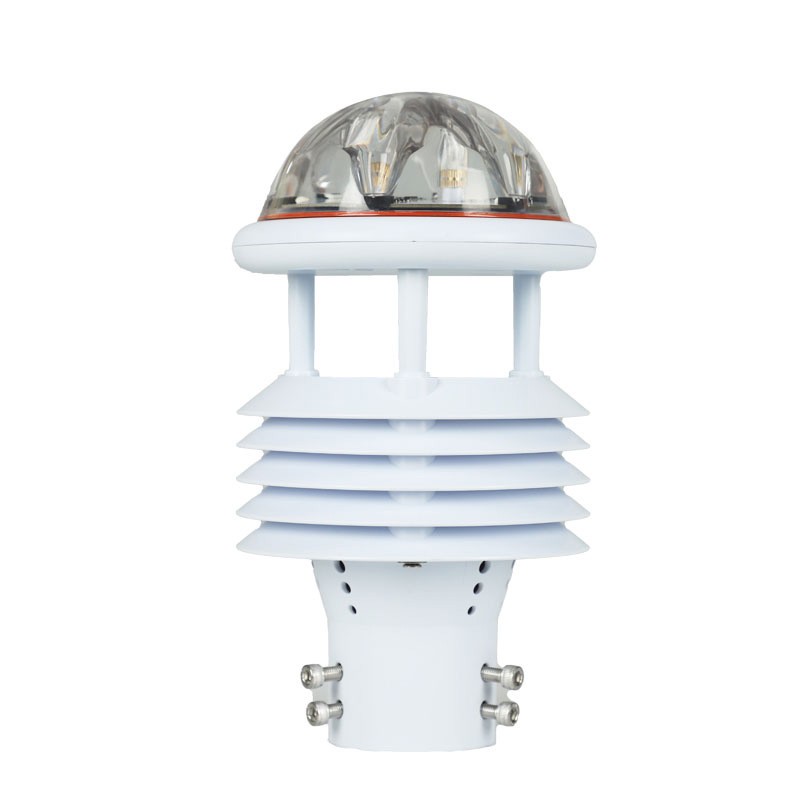
Military meteorological support requires sensors that can be rapidly deployed in field conditions and provide a continuous stream of reliable data. One such solution is a sensor that utilizes an ultrasonic phase-shift method to integrate six key parameters—wind speed, wind direction, temperature, humidity, atmospheric pressure, and precipitation—into a single, compact unit. By transmitting all parameters simultaneously via a digital interface, it offers an efficient, space-saving method for capturing real-time battlefield weather data.
Traditional ultrasonic wind measurement relies on high-precision timers to detect the time-of-flight difference of ultrasonic pulses, placing stringent demands on circuit timing. In contrast, this military-grade sensor employs continuous, variable-frequency ultrasonic signals, calculating wind speed and wind direction based on relative phase shifts. This approach bypasses the limitations imposed by timer precision; delays in sensor startup or demodulation circuitry no longer translate directly into measurement errors, and the impact of temperature fluctuations on the speed of sound is significantly mitigated through phase comparison. The sensor covers a wind speed range of 0 to 60 meters per second with a resolution of 0.01 m/s, while wind direction is measured with an accuracy of ±2 degrees and a resolution of 1 degree—a level of data granularity sufficient for ballistic corrections and meteorological assessments in field operations.
The integration of these six parameters is another highly practical feature. Temperature is measured using the diode junction voltage method, humidity via capacitive sensing, atmospheric pressure through piezoresistive elements, and precipitation via an optical sensor (covering a range of 0 to 4 millimeters per minute). While each channel operates independently, they share a common housing and communication link, eliminating the need for external, discrete sensor arrays during continuous outdoor operation. For military applications that require frequent relocation or temporary setup, reducing the number of cables and mounting structures minimizes exposure time and lowers the risk of total system failure caused by loose connectors or the malfunction of an individual component.
The system’s all-weather capability is demonstrated by its resilience in conditions involving rain, snow, and low visibility. The optical precipitation sensor is immune to the blockages that can affect mechanical tipping-bucket rain gauges, and the ultrasonic transducers—lacking any moving parts—are not susceptible to bearing wear or freezing-related jams. The system outputs six parameters via a digital interface; when connected to a command system or field meteorological terminal, a single handshake is sufficient to retrieve the complete data frame, eliminating the need for individual sensor addressing and time synchronization.
In terms of battlefield meteorological data flow, this level of integration reduces the intermediate stages of data aggregation. The speed at which artillery positions, field airfields, or temporary command posts can obtain real-time data—covering wind, temperature, humidity, pressure, and precipitation—directly influences the timeliness of firing solution adjustments and decision-making for aircraft takeoffs and landings. By consolidating six fundamental meteorological elements into a single, rapidly deployable data-acquisition node, this architecture lowers the complexity of frontline deployment while maintaining high precision standards.
Online Automatic Ammonia Nitrogen Monitor is a specialized instrument designed for determining ammonia nitrogen concentrations using the salicylate spectrophotometric method; it can also be customized to utilize the Nessler method. Employing a brand-new photoelectric quantitative technology, t...
Displacement monitor utilizes a non-invasive laser-based detection method to provide continuous, long-range monitoring of displacement in structural components—such as walls, columns, and elements of dilapidated buildings. It triggers both audible/visual and wireless alarms upon detecting displacem...
In today's intertwined context of agricultural modernization and ecological conservation needs, dynamic changes in soil moisture directly impact crop growth, water resource utilization, and ecosystem stability. Automatic Soil Monitoring Systems are becoming the link connecting farmland managemen...
In the field of wind power generation, accurate measurement of wind speed and direction is essential for wind farm site selection, wind turbine power characteristic research, and generator set power control.Traditional mechanical anemometers suffer from issues such as wear and aging of moving parts,...


 Skype
 whatsapp
 mail