Tianyi Sensor IOT Technology Co., Ltd
Sales Manager:Ms. Emily Wang
Cel,Whatsapp,Wechat:+86 15898932201
Email:info@fengtutec.com
Add:No. 155 Optoelectronic Industry Accelerator, Gaoxin District, Weifang, Shandong, China


Sales Manager:Ms. Emily Wang
Cel,Whatsapp,Wechat:+86 15898932201
Email:info@fengtutec.com
Add:No. 155 Optoelectronic Industry Accelerator, Gaoxin District, Weifang, Shandong, China
time:2026-03-18 14:06:58 source:Weather Station viewed:225 time
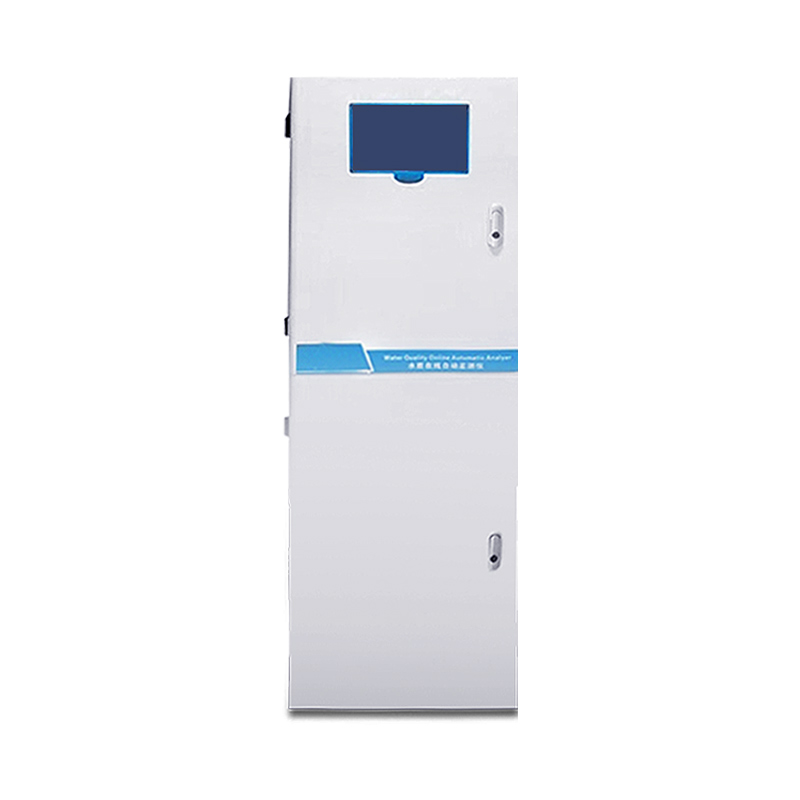
Online Automatic Ammonia Nitrogen Monitor is a specialized instrument designed for determining ammonia nitrogen concentrations using the salicylate spectrophotometric method; it can also be customized to utilize the Nessler method. Employing a brand-new photoelectric quantitative technology, the instrument remains unaffected by interferences such as high chromaticity, high suspended solids content, and excessive bubbles. It boasts high reliability, exceptional accuracy, and strong anti-interference capabilities, making it widely applicable in the fields of water quality monitoring and environmental protection for the precise measurement of ammonia nitrogen levels in wastewater, drinking water, and surface water.
Online Automatic Ammonia Nitrogen Monitor is a dedicated device for the real-time monitoring of ammonia nitrogen concentrations in water, playing a pivotal role in environmental monitoring and water quality management. The instrument primarily relies on the salicylate spectrophotometric method for detection, while also offering a customizable option for the Nessler reagent colorimetric method to meet the diverse testing requirements of various users and application scenarios. In an alkaline medium and in the presence of sodium nitroprusside, ammonium ions react with salicylate and hypochlorite ions to form a water-soluble blue compound. This substance exhibits maximum absorbance at a wavelength of 697 nm; by applying photoelectric colorimetry based on the Lambert-Beer law, the ammonia nitrogen content within a water sample can be accurately calculated. The addition of specific masking agents effectively eliminates interference from cations—such as calcium and magnesium—thereby ensuring the accuracy of the measurement results.
The innovative photoelectric quantitative technology constitutes the core technical advantage of the Online Automatic Ammonia Nitrogen Monitor. Compared to traditional detection equipment, this technology utilizes a three-stage precision photoelectric metering system that enables rapid and precise reagent extraction, significantly mitigating the impact of peristaltic pump tube aging on measurement accuracy. The dual-beam photometric design effectively eliminates interference from external factors, while the precise photoelectric quantification system enables the micro-dosing of reagents, thereby reducing operating costs. For complex water samples characterized by high chromaticity, high suspended solids, or excessive bubbles, the instrument features automatic chromaticity and turbidity compensation algorithms; these algorithms fully account for actual on-site water conditions to ensure that monitoring results are authentic and reliable. Furthermore, precise temperature compensation algorithms and ambient light elimination measures ensure that the instrument maintains consistent accuracy throughout all seasons—spring, summer, autumn, and winter.
In terms of intelligent operation and maintenance, the Online Automatic Ammonia Nitrogen Monitor is equipped with automatic calibration and predictive diagnostic capabilities. The instrument features a configurable automatic calibration cycle—defaulting to once every seven days—capable of performing both zero-point and span calibrations autonomously. An intelligent diagnostic system monitors for conditions such as tubing blockages, leaks, reagent depletion, system anomalies, and hardware malfunctions, automatically triggering and uploading corresponding alarms. A robust power-loss protection design ensures that upon power restoration, all operational data is automatically recovered; the instrument then automatically purges any residual fluid and resumes its active working state. The device’s high-capacity storage allows for the retention of over five years' worth of measurement data and system logs, providing a comprehensive and transparent overview of the equipment's operational status.
The instrument is designed to operate autonomously and continuously for extended periods without human supervision, based on specific on-site configuration requirements. Measurement modes can be configured for interval-based sampling, continuous monitoring, or hourly sampling, with time intervals fully adjustable from 1 to 24 hours. An automatic cleaning function periodically flushes the tubing system, effectively preventing reagent crystallization and eliminating cross- contamination between samples. The system's remote control capabilities facilitate automatic alarming and status reporting for critical events, including malfunctions, power outages, and reagent or sample depletion. Furthermore, remote operation and maintenance tools—such as dedicated WeChat Mini Programs—support remote diagnostics and fault reporting, making the management and maintenance of the instrument significantly simpler and more convenient.
The application scope of the Online Automatic Ammonia Nitrogen Monitor instrument spans a wide array of fields, including surface waters (such as rivers, lakes, and reservoirs), source water protection zones, municipal tap water supplies, aquaculture waters, wastewater treatment plants, and industrial/mining effluent discharge points. In the realm of environmental monitoring, it serves to dynamically track ammonia nitrogen pollution levels in rivers and lakes, as well as to provide real-time online surveillance of pollution discharge outlets. Within the municipal water sector, it is ideally suited for monitoring ammonia nitrogen concentrations in both raw water intakes and treated water outputs at water treatment plants, as well as for optimizing operational processes within wastewater treatment facilities. Regarding industrial wastewater, the instrument facilitates compliance monitoring for ammonia nitrogen discharge standards across various industries, including chemical manufacturing, pharmaceuticals, and livestock farming. In the context of agricultural non-point source pollution monitoring, it enables the real-time regulation and management of ammonia nitrogen concentrations in agricultural irrigation waters and aquaculture environments. Finally, for emergency response and early warning scenarios, the instrument plays a critical role in the rapid screening and trend analysis of ammonia nitrogen concentrations during sudden water pollution incidents.
Online Turbidity Analyzer mainly consists of water temperature and turbidity sensors, enabling real-time online monitoring of water turbidity and temperature. It is widely used in municipal water supply, drinking water treatment, sewage treatment, industrial production, and livestock farming,...
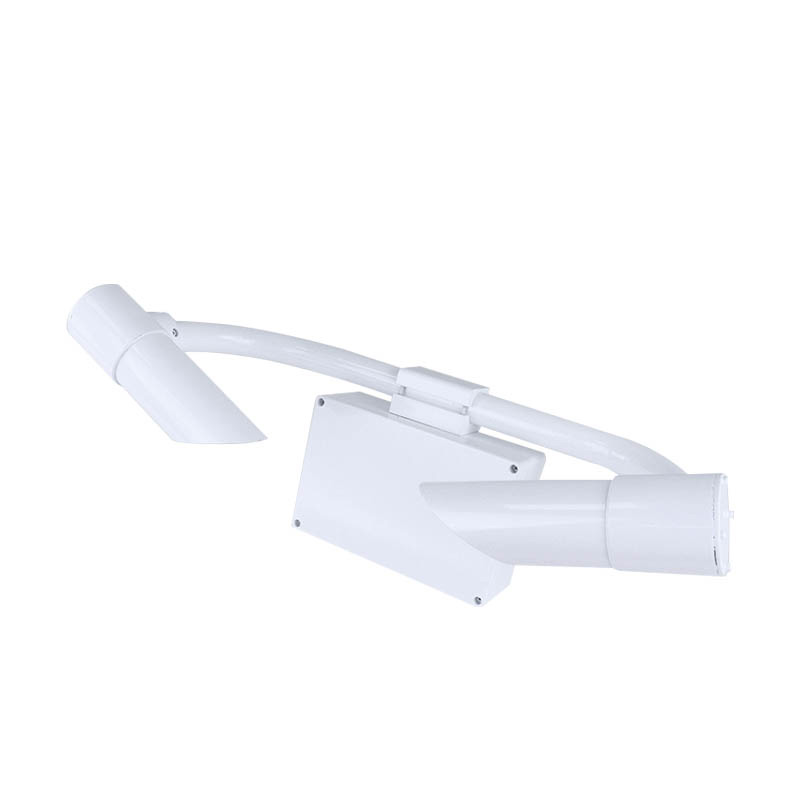
These monitors calculate the total extinction coefficient using the forward scattering method. The device is portable and lightweight, equipped with a high-brightness touchscreen and data storage module. It boasts long battery life, strong protective features, and is suitable for visibility mo...
Shandong Fengtu, based on sensor and BeiDou positioning technology, utilizes differential RTK technology to achieve millimeter-level displacement monitoring. It can conduct monitoring for various engineering projects, including dams, bridges, and slopes. Shandong Fengtu spec...
Cultural relics carry the memories of human civilization and are precious non-renewable resources. Meteorology, as an important part of the natural environment, has an intricate connection with the protection of cultural relics.Meteorological conditions are directly related to the preservation...


 Skype
Skype
 whatsapp
 mail
mail