Tianyi Sensor IOT Technology Co., Ltd
Sales Manager:Ms. Emily Wang
Cel,Whatsapp,Wechat:+86 15898932201
Email:info@fengtutec.com
Add:No. 155 Optoelectronic Industry Accelerator, Gaoxin District, Weifang, Shandong, China


Sales Manager:Ms. Emily Wang
Cel,Whatsapp,Wechat:+86 15898932201
Email:info@fengtutec.com
Add:No. 155 Optoelectronic Industry Accelerator, Gaoxin District, Weifang, Shandong, China
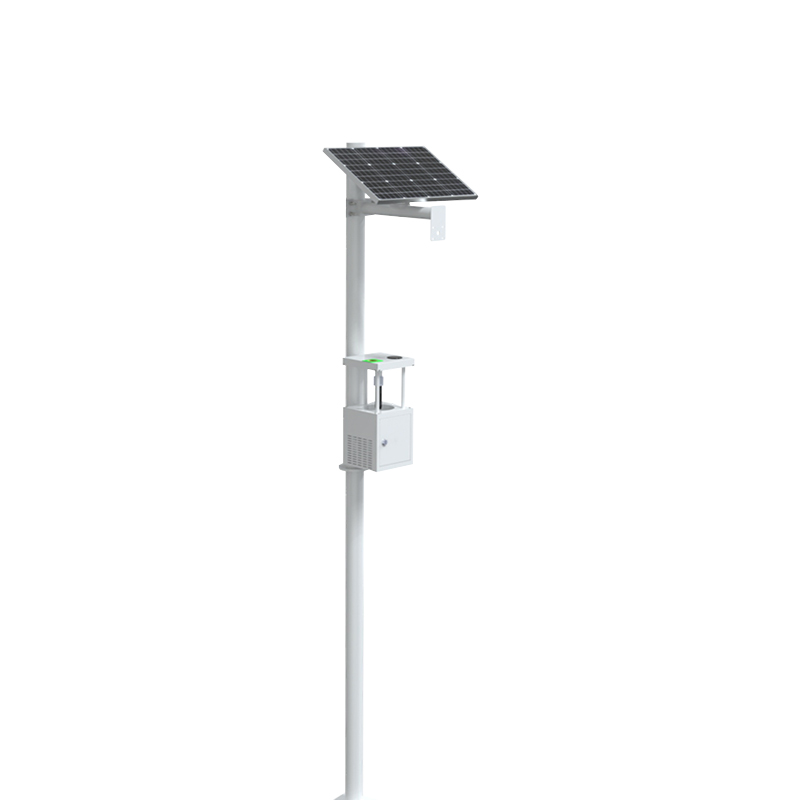
Model:FT-FD2
Brand:tianyi
1.Solar insecticidal lamp product overview
Solar insecticidal lamp uses the latest solar technology, is chemical-free, can effectively control pests and reduce the use of pesticides.Solar insecticidal lamp is a physical insect-extinguishing device that uses light waves to lure adult insects to suck the light, and then the fan rotates to generate a negative pressure airflow to suck the insects into the collector, allowing them to dry and dehydrate, achieving the purpose of insect killing.The Solar insecticidal lamp developed by our company has improved the light source and insecticidal methods, broken through the ability to kill small pests with conventional insecticidal lamps, and greatly improved the pest killing efficiency.The device uses solar panels as the power supply, stores power during the day and provides power for insecticide lamps at night, luring pests to flutter at the light source.The product consists of insect-induced light source, insect-killing components, insect-collection components, support components, etc.It has the characteristics of simple structure, easy installation, strong operability, many types of insecticides, wide range of insecticides, safe, environmentally friendly, and non-toxic.This product is widely used in agriculture, forestry, warehousing, fish ponds, etc., and can effectively prevent various lepidoptera pests.
2.Functional features of Solar insecticidal lamp
1.When the sunlight intensity and rainfall are used to control whether the equipment is working, if it is detected or in the daytime state, the equipment is standby; when it is detected, it is rainy and in the dark state, the equipment is working normally.
2.Use a multi-spectrum insect-induced light source with wavelengths of 320nm-680nm to trap multiple types of pests at the same time.
3.Using high-power fans can greatly improve the number and efficiency of flukes.
4.Use new polycrystalline solar panels, which have high energy conversion and are environmentally friendly.
3.Solar insecticidal lamp technical parameters
| Light source parameters | wavelength | 320nm-680nm |
| power | 15W | |
| Solar panel parameters | power | 30W |
| size | 505*430mm | |
| Fan parameters | powered by | 12V |
| power | 4W | |
| The actual power of the whole machine | ≤15W | |
| Pole parameters | diameter | 76mm |
| length | 3m | |
| Data upload method | 4G | |
| Platform display content | Rainfall status, light status, insect-inducing lamp status, fan status, battery parameters | |
| Service life span | ≥3 years | |
| Solar power supply system battery life | 2 to 3 consecutive days | |
Traditional air quality monitoring stations (national and provincial control points) use extremely sophisticated and expensive equipment, resulting in very high construction and operational costs. Consequently, a city typically has only a handful of such stations. Due to the limited number of statio...
The weather sensor employs the forward-scatter method to measure the total atmospheric extinction coefficient and calculate visibility. It covers a range of 2 km to 50 km and identifies weather phenomena such as fog, rain, and snow with an accuracy rate of at least 95%, making it widely used i...
Total Phosphorus Analyzer employs the ammonium molybdate spectrophotometric method for the online or automated monitoring of total phosphorus content in water. It is applicable to the monitoring of surface water, municipal sewage, and industrial wastewater. Featuring a brand-new photoelectric...
Debris flow is a common sudden geological disaster in mountainous areas. Triggered by heavy rains and melting snow and ice, it carries a large amount of solid materials such as sediment and rocks, flowing rapidly with strong impact force and a wide range of destruction. It often causes severe damage...


 Get a Free Quote
 Skype
Skype
 whatsapp
 mail
mail