Tianyi Sensor IOT Technology Co., Ltd
Sales Manager:Ms. Emily Wang
Cel,Whatsapp,Wechat:+86 15898932201
Email:info@fengtutec.com
Add:No. 155 Optoelectronic Industry Accelerator, Gaoxin District, Weifang, Shandong, China


Sales Manager:Ms. Emily Wang
Cel,Whatsapp,Wechat:+86 15898932201
Email:info@fengtutec.com
Add:No. 155 Optoelectronic Industry Accelerator, Gaoxin District, Weifang, Shandong, China
time:2025-12-23 10:59:15 source:Weather Station viewed:392 time
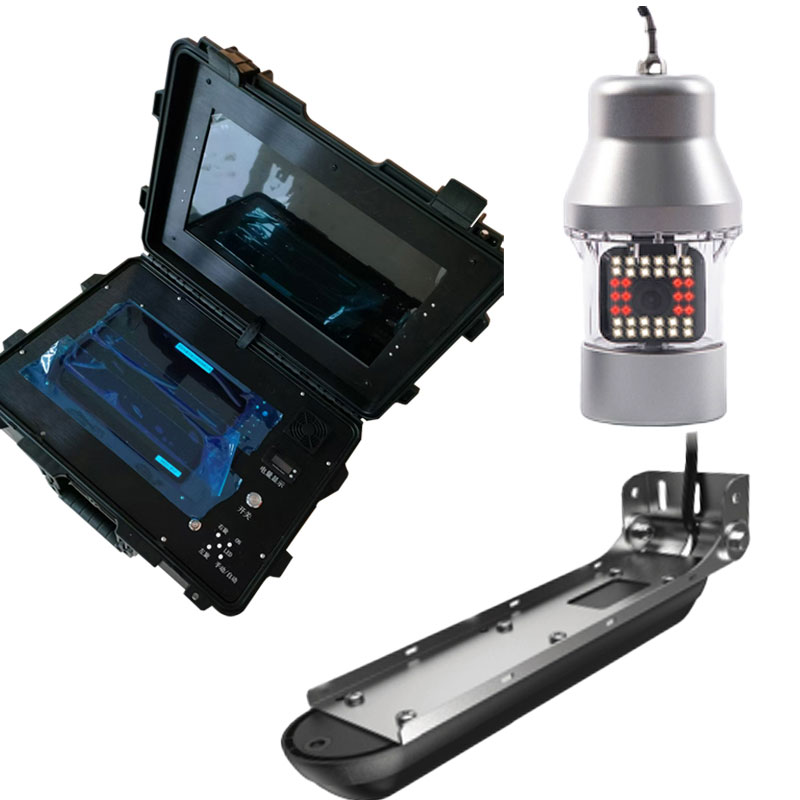
Underwater search and rescue robot is a high-performance underwater detection device integrating sonar scanning and high-definition video imaging. It uses sonar for large-area scanning and positioning, combined with high-definition video for detailed observation, providing scanned and 3D views of riverbeds and water bodies. It accurately identifies the outlines and locations of underwater targets and is widely used in underwater surveying and exploration.
Underwater search and rescue robot is a high-performance integrated detection device specifically designed for underwater environments. Its core design concept is to integrate two mainstream underwater detection technologies—sonar detection and optical video detection—into a single system, achieving a seamless workflow from large-scale searching to close-range, detailed observation of underwater targets.
Underwater search and rescue robot typically follows an efficient two-stage process. The first stage is sonar scanning. The device emits sound pulses into the surrounding water and receives echo signals reflected back from the riverbed, underwater objects, or organisms. By processing these signals, the system can generate large-scale 2D underwater topographic profiles, 2D planar scan views, and even construct 3D models of the underwater topography through data stitching. This acoustic imaging method is not limited by water visibility and can operate effectively in murky or dark waters, quickly locating suspicious targets or areas of interest.
The second stage is video confirmation and detailed observation. After initial sonar positioning, the device can activate its onboard high-definition camera unit. This camera is typically equipped with a high-intensity supplemental light to cope with low underwater lighting conditions. Operators can maneuver the device closer to the target and directly observe the detailed features, surface condition, surrounding environment, and aquatic biological activity of underwater objects through real-time high-definition video feeds. This combined "sonar scan, video viewing" mode significantly improves the efficiency of detection operations and the accuracy of confirmation.
In terms of functional output, the device can provide a variety of data results. In addition to basic real-time sonar images and video streams, its specialized software can generate digital topographic models of riverbeds, outline maps of underwater structures, and depth sounding maps of specific areas, and supports the measurement of distance and size of detected targets and their location calibration.
Therefore, Underwater search and rescue robot is widely used in multiple professional fields. In underwater engineering and surveying, it is used to inspect the integrity and siltation of underwater structures such as dams, bridge piers, pipelines, and cables. In search and rescue and public safety, it is used to locate underwater debris and evidence or to conduct underwater search and rescue operations. In fisheries and ecological research, it is used to assess underwater habitats and observe fish distribution and behavior. In scientific research and archaeology, it is used for underwater topographic mapping and underwater site exploration.
In summary, Underwater search and rescue robot, through the synergy of acoustic and optical technologies, overcomes the limitations of single detection methods, providing operators with more comprehensive and reliable underwater sensing capabilities. It is a powerful and highly practical key piece of equipment in modern underwater operations.
As a crucial component of the power system, transmission lines undertake the important task of efficiently transmitting the electrical energy generated by power plants to various regions. By constructing a vast transmission network, electrical energy can travel over long distances to meet the electr...
Audio and video life detection device is an emergency rescue device integrating audio acquisition and video imaging functions. It obtains images, sounds, and infrared thermal images of trapped individuals through a rotatable probe. The device supports a 180-degree observation range, offering good visibility, high reliability, and ease of operation, making it suitable for rapid search and rescue operations in earthquakes, landslides, building collapses, and other scenarios....
With the improvement of people's living standards, there is growing emphasis on health and the ecological environment. Among various ecological indicators, negative oxygen ions have become an important symbol for measuring air quality, as they can positively influence the body's physiologica...
Water rescue robot is a novel, flat-panel, modular rescue device. It features a split-structure design—comprising an upper power module and a lower section made of soft, anti-collision buoyant material—and is capable of automatically righting itself if capsized. With a top speed of 48 km/h a...


 Skype
Skype
 whatsapp
 mail
mail