Tianyi Sensor IOT Technology Co., Ltd
Sales Manager:Ms. Emily Wang
Cel,Whatsapp,Wechat:+86 15898932201
Email:info@fengtutec.com
Add:No. 155 Optoelectronic Industry Accelerator, Gaoxin District, Weifang, Shandong, China


Sales Manager:Ms. Emily Wang
Cel,Whatsapp,Wechat:+86 15898932201
Email:info@fengtutec.com
Add:No. 155 Optoelectronic Industry Accelerator, Gaoxin District, Weifang, Shandong, China
time:2026-02-26 13:07:22 source:Weather Station viewed:331 time
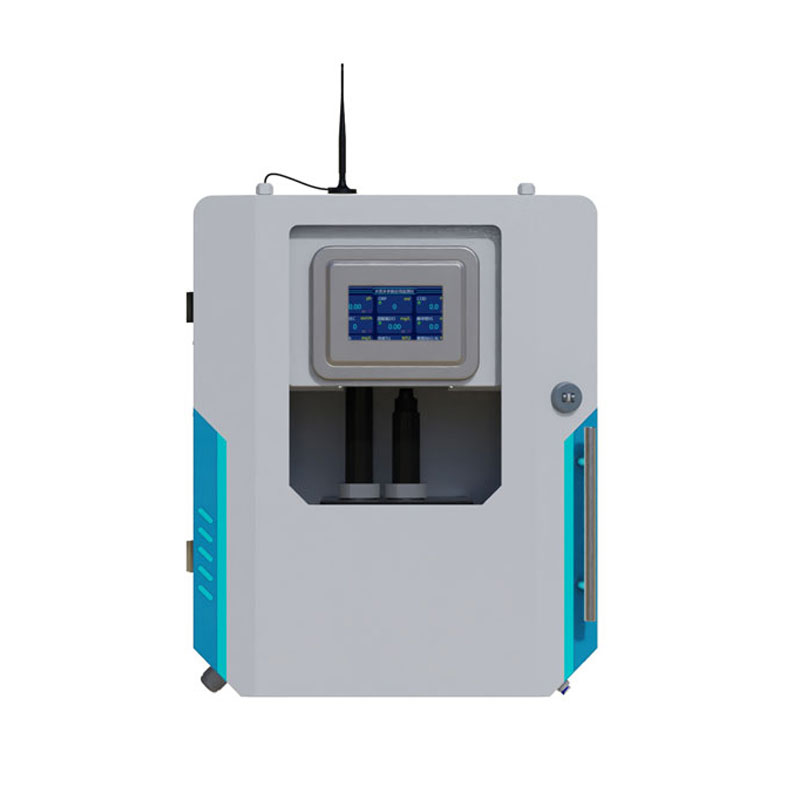
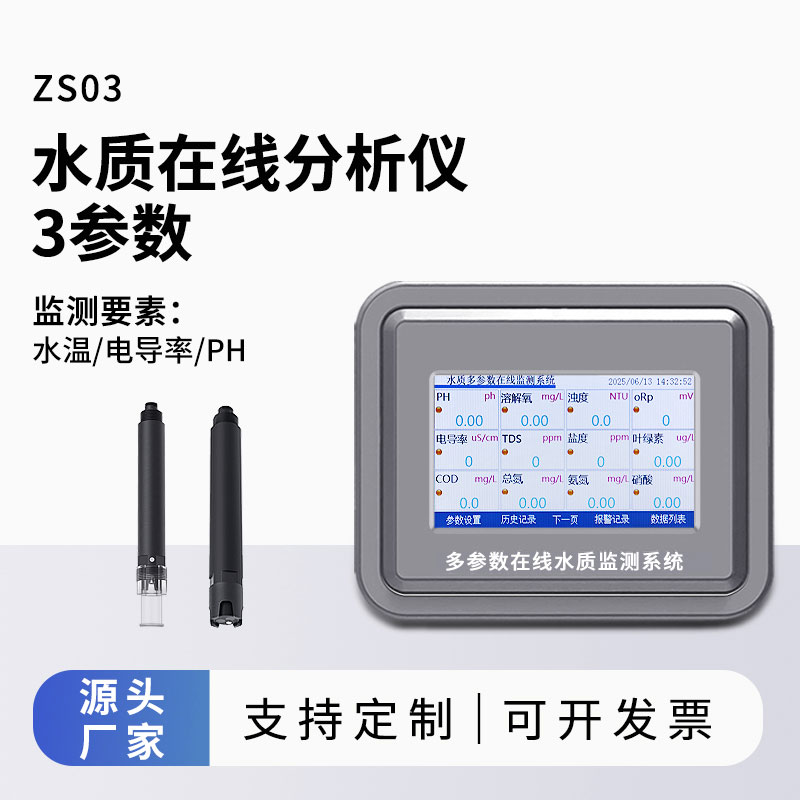
Water Quality Monitor Equipment consists of an analytical testing unit comprised of sensors for residual chlorine, pH, water temperature, turbidity, and conductivity. It can be widely used for online water quality monitoring in scenarios such as waterworks, water supply networks, secondary water supply systems, end-user systems, swimming pools, and direct drinking water systems, covering three modes: online monitoring, laboratory testing, and portable testing.
Water Quality Monitor Equipment is an instrument specifically designed for monitoring water quality in secondary water supply systems. Its core component is the analytical testing unit, mainly composed of a residual chlorine sensor, a pH sensor, a water temperature sensor, a turbidity sensor, and a conductivity sensor. These sensors are fixed to the flow tank via threads or tight-fitting fasteners and employ measurement principles such as electrode methods, electrochemical methods, and scattered light methods to monitor the water quality in real time. The residual chlorine sensor has a measurement range of 0~5.00 mg/L, the pH sensor 0~14, the turbidity sensor 0~40 NTU, the conductivity sensor 0~5000 uS/cm, and the water temperature sensor 0~50℃, meeting the requirements for various indicators in secondary water supply quality monitoring.
This equipment can be widely used in online water quality monitoring scenarios such as urban or rural waterworks, water supply networks, secondary water supply systems, end-user points, indoor swimming pools, large-scale water purification equipment, and direct drinking water systems. In water supply systems, the equipment is typically installed in secondary water supply pump rooms, water tanks, etc., and is suitable for pipe pressure environments of less than 0.3 MPa at the end of the water supply. As an indispensable online analysis device in water plant production process control, water conservancy and water affairs management, and health supervision, this equipment can provide reliable data support for water management departments.
Secondary water supply quality monitoring covers three application scenarios. First, it enables online monitoring of secondary water supply. The equipment is installed in pump rooms or pipelines and transmits data remotely to a management platform via IoT technology, achieving 24/7 online monitoring. Second, it supports laboratory testing of secondary water supply. Regular sampling and analysis in a laboratory allow for comprehensive testing of more indicators. Third, it enables portable testing of secondary water supply. Portable testing instruments are used to quickly measure water quality parameters on-site, suitable for temporary testing and emergency response.
Functionally, the equipment has multi-parameter real-time monitoring capabilities, continuously capturing key water quality parameters in the secondary water supply process. The system analyzes data through intelligent algorithms, automatically triggering an early warning mechanism when parameters exceed preset thresholds, notifying management personnel via audible and visual alarms, SMS, or app push notifications. The equipment supports remote data transmission and cloud management, allowing management personnel to view water quality dynamics anytime via mobile phone or computer, ensuring timely monitoring of water quality safety throughout the entire supply chain from the end point to the user. Furthermore, the system has data processing and storage functions, generating water quality test reports that meet national drinking water hygiene standards, providing reliable assurance for water management, hygiene supervision, and residents' healthy drinking water. Through the above functions, Water Quality Monitor Equipment effectively ensures water supply quality and safety, reduces operation and maintenance costs, and promotes the transformation of water supply management from passive response to proactive prevention.
The Landslide Early Warning and Monitoring System employs GNSS and Differential RTK technologies to acquire surface displacement data with millimeter-level precision. By integrating data such as displacement and rainfall, the system automatically issues early warning alerts without the need fo...
Visibility and Present Weather Sensor uses the forward scattering method to measure the total extinction coefficient of air, with a range of up to 30 kilometers. It is widely used in road traffic, meteorology, and other industries. The instrument features weather phenomenon recognition, low po...
Shandong Fengtu IoT Technology Co., Ltd., established in 2017 and located in Weifang High-tech Zone, has launched the FT-SQ2 handheld anemometer, weighing approximately 0.5 kg. It measures both wind speed and direction, with a data storage capacity of 40,000 records. The suggested retail price...
Radar water level gauges utilize K-band planar radar technology to perform non-contact measurements of water levels and rainfall. With a measurement range of 0.1 to 40 meters, an accuracy of ±5 mm, and a resolution of 1 mm, these devices are widely deployed in water conservancy monitoring fie...


 Skype
Skype
 whatsapp
 mail
mail