Tianyi Sensor IOT Technology Co., Ltd
Sales Manager:Ms. Emily Wang
Cel,Whatsapp,Wechat:+86 15898932201
Email:info@fengtutec.com
Add:No. 155 Optoelectronic Industry Accelerator, Gaoxin District, Weifang, Shandong, China


Sales Manager:Ms. Emily Wang
Cel,Whatsapp,Wechat:+86 15898932201
Email:info@fengtutec.com
Add:No. 155 Optoelectronic Industry Accelerator, Gaoxin District, Weifang, Shandong, China
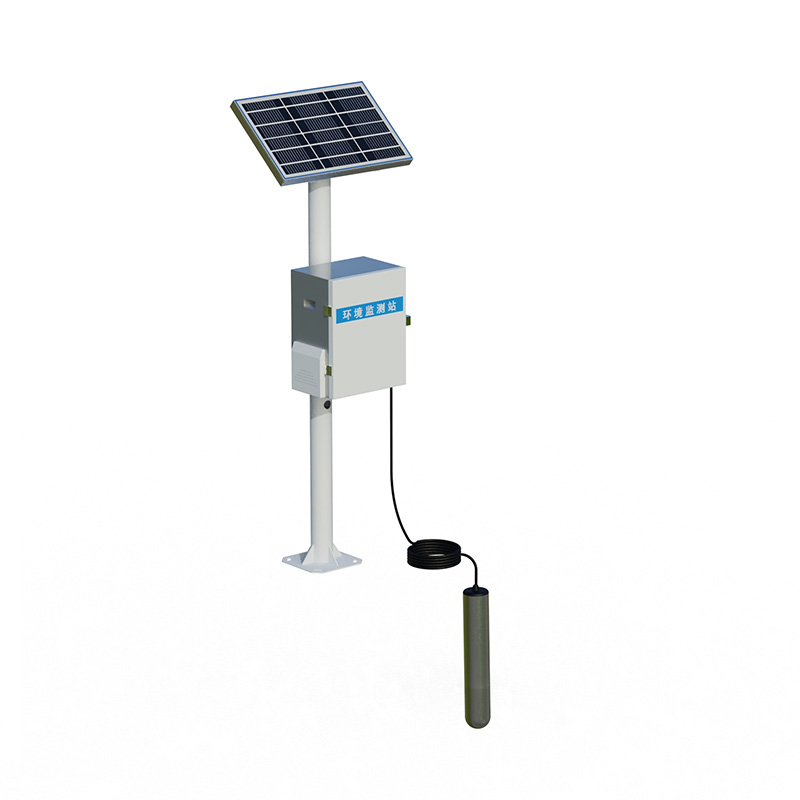
Model:FT-SL1
Brand:tianyi
Seepage Monitoring detects water seepage under dams to detect and manage water seepage through dams and foundations to ensure dam safety.
Seepage Monitoring primarily consists of on-site testing equipment and remote monitoring equipment.
On-site testing equipment, including weir gauges and triangular weirs, measures reservoir seepage and monitors flow rates.
Remote monitoring equipment, also known as a remote monitoring terminal, collects data from on-site testing equipment and transmits this information to the monitoring center via wireless transmission.
Seepage Monitoring Introduction
The weir gauge uses a magnetostrictive sensor for liquid level measurement. It features high resolution, excellent stability, reliable performance, fast response, linear measurement, resistance to wear, and a long service life. The weir gauge measures the water head above the weir and then calculates the flow rate based on empirical formulas for weir channels (such as triangular, trapezoidal, and rectangular weirs).
Seepage Monitoring Structure and Principle
The water weir meter consists of a magnetic rod, a floating ball, a measuring circuit and a stainless steel casing.When the water level in the weir flume changes, it will drive the float to produce a liquid level difference. The host computer uses the current liquid level minus the calibrated base value to obtain the actual water level on the weir, and then calculates the flow rate according to the weir flume type.
Seepage Monitoring Product Features
High precision and resolution
Excellent stability and fast response
Minimal temperature drift
Standard MODBUS protocol and wide compatibility
Seepage Monitoring Specifications and parameters
| Measurement range | 0~600mm |
| Sensitivity | 0.01mm |
| Measurement accuracy | ≤0.1%F.S |
| Working voltage | DC12V (0.5W@12V) |
| Output signal | RS485-MODBUS protocol |
| Protection level | IP67 |
| Case material | 304 Stainless Steel |
| Dimensions | Φ89×850mm |
Shandong Fengtu IoT Technology Co., Ltd., established in 2017 and located in Weifang High-tech Zone, has launched the FT-SQ2 handheld anemometer, weighing approximately 0.5 kg. It measures both wind speed and direction, with a data storage capacity of 40,000 records. The suggested retail price...
Against the backdrop of climate change, extreme rainfall events are becoming increasingly frequent, posing severe challenges to flood control and drought relief work. As an important technical means to address these challenges, the rainfall monitoring station is playing an increasingly significant r...
Visibility and Present Weather Sensor uses the forward scattering method to measure the total extinction coefficient of air and calculate visibility. It can identify various weather phenomena such as fog, rain, snow, mixed precipitation, and clear skies, with a recognition rate of over 95%. It...
In today's society, with the acceleration of the processes of industrialization and urbanization, air quality issues have received increasing attention from people. There is a wide variety of pollutants in the air. Among them, the "four gases" (carbon monoxide, sulfur dioxide, nitrogen...


 Get a Free Quote
 Skype
Skype
 whatsapp
 mail
mail