Tianyi Sensor IOT Technology Co., Ltd
Sales Manager:Ms. Emily Wang
Cel,Whatsapp,Wechat:+86 15898932201
Email:info@fengtutec.com
Add:No. 155 Optoelectronic Industry Accelerator, Gaoxin District, Weifang, Shandong, China


Sales Manager:Ms. Emily Wang
Cel,Whatsapp,Wechat:+86 15898932201
Email:info@fengtutec.com
Add:No. 155 Optoelectronic Industry Accelerator, Gaoxin District, Weifang, Shandong, China
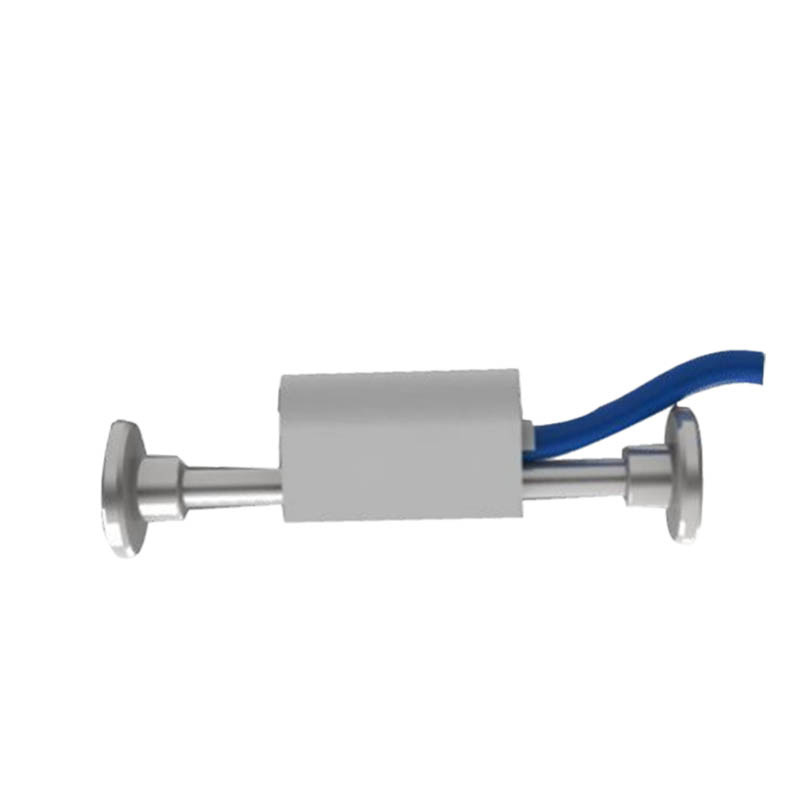
Model:FT-YB2
Brand:tianyi
1.Embedded strain gauge product overview
Embedded strain gauge can be directly embedded in concrete and is usually used for strain measurement of foundations, piles, bridges, dams, and tunnel linings.This vibrating strain gauge is an embedded strain gauge.It can be buried in beams, piles, pile foundations, support, hydraulic buildings, linings, piers and bedrocks of various concrete structures for a long time to monitor their stress and strain.The built-in simulated temperature sensor can measure the temperature of the layout point simultaneously and is used for temperature correction of the embedded strain gauge.
2.Embedded strain gauge application scenarios
Bridges, tunnels, rail transit, water conservancy, buildings
3.Embedded strain gauge product features
1.Adopt imported steel string design, with the advantages of high sensitivity and accuracy, good linearity and stability
2.Use hydraulic cables to meet the long-term monitoring environment for hydraulic buildings.
3.Built-in temperature sensor for easy temperature compensation
4.Stainless steel shell design, with characteristics such as compression resistance and radial force resistance
4.Embedded strain gauge technical parameters
Gauge distance L: 100mm
Resolution: ≤0.2% FS
Temperature measurement accuracy: ±0.5℃
Water pressure resistance: ≥0.2 Mpa
Insulation resistance: ≥50MΩ
Temperature measurement range: -20℃~+70℃
Dimensions: 174*26*38mm
Strain measurement range: Tensile: 3000με; Compression: 3000με
Weather Phenomenon Sensor employs the forward-scatter method to measure the total atmospheric extinction coefficient, thereby calculating current visibility. It is capable of identifying various weather phenomena—including fog, rain, snow, mixed precipitation, and clear conditions—and provid...
Weighing Rain Gauge converts precipitation weight into water depth with an accuracy of 0.1mm, suitable for rain, snow, and mixed precipitation. The equipment features independent internal and external grounding, a stainless steel protective casing to resist wind disturbance, eliminating the ne...
The wireless transmission technology of Multiparameter Weather Sensors enables remote real-time transmission of meteorological data through communication methods such as LoRa, ZigBee, and GPRS. Traditional wired sensors suffer from cumbersome cabling, which limits installation locations. In contrast...
Marine weather stations integrate six parameters—ambient temperature, relative humidity, wind speed, wind direction, atmospheric pressure, and optical rainfall—into a single unit, outputting data all at once via a digital communication interface. The equipment supports 24-hour continuous onl...


 Get a Free Quote
 Skype
Skype
 whatsapp
 mail
mail