Tianyi Sensor IOT Technology Co., Ltd
Sales Manager:Ms. Emily Wang
Cel,Whatsapp,Wechat:+86 15898932201
Email:info@fengtutec.com
Add:No. 155 Optoelectronic Industry Accelerator, Gaoxin District, Weifang, Shandong, China


Sales Manager:Ms. Emily Wang
Cel,Whatsapp,Wechat:+86 15898932201
Email:info@fengtutec.com
Add:No. 155 Optoelectronic Industry Accelerator, Gaoxin District, Weifang, Shandong, China
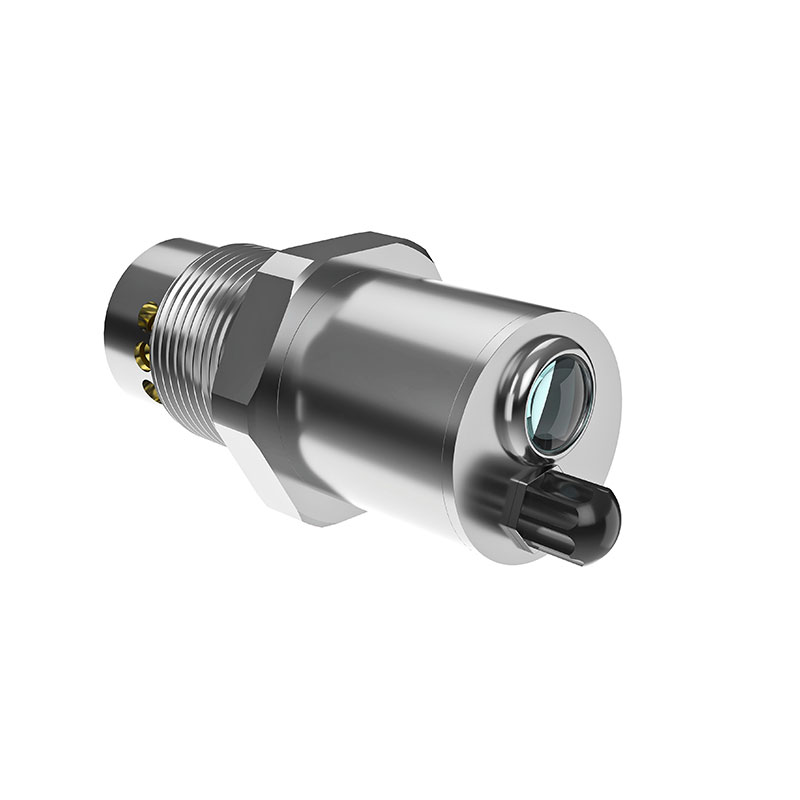
Model:QM-6800
Brand:tianyi
1、Oil Pressure Sensor Product Introduction
Oil Pressure Sensor is used to accurately measure oil pressure, while simultaneously monitoring parameters such as trace moisture, free water, and fluid level.Oil Pressure Sensor is used for real-time, online monitoring of lubricating oil health and level. Continuous monitoring of oil condition improves condition-based maintenance efficiency, optimizes oil change cycles, and reduces reliance on offline analysis.
Oil leakage is a major cause of abnormal equipment wear; oil level monitoring provides timely alarms for abnormal oil levels.
Oil Pressure Sensor integrates electrochemical impedance spectroscopy (EIS) technology to detect oil impedance spectra, ultrasonic viscosity monitoring technology to detect oil viscosity and density, and micro-water monitoring technology to detect trace amounts of water and water activity. It can also monitor dissolved water and free water, thus obtaining the oil's health status. Based on our years of experience in online oil monitoring, it analyzes the oil health index. It assesses the wear and tear of lubricating oil additives, monitors the degree of oil aging, and determines the oil contamination status.
Oil Pressure Sensor helps users improve the health management of equipment assets, assisting in maintenance decisions based on real-time monitoring results and preventing abnormal wear and corrosion caused by oil aging and contamination.
2、Oil Pressure Sensor Features
Wide range of applications, suitable for all lubricating oils
Simultaneous measurement of multiple parameters allows for timely detection of lubricating oil contamination and aging, helping users optimize oil change intervals.
Includes pressure monitoring; real-time oil level monitoring prevents abnormal equipment wear caused by excessive or insufficient oil.
No customer-defined free water calibration required; sensor features automatic calibration.
Big data oil analysis algorithms help customers solve diagnostic challenges; includes built-in health index analysis.
24/7 uninterrupted monitoring provides timely feedback on oil status.
Strong compatibility; compatible with CAN-J1939 and RS485-Modbus RTU.
Suitable for monitoring under high-speed flow conditions; viscosity interference resistance is stronger than similar sensors; robust and durable.
Integrated structural design with alarm indicator lights for easy on-site inspection.
3、Oil Pressure Sensor Application areas
Lubricating oil is the "blood" of critical equipment. Lubricating oil failure directly leads to abnormal wear of mechanical structures and critical functional components, a major cause of large equipment failures and serious accidents.
Oil Pressure Sensor can continuously monitor the aging and contamination levels of the oil in the hydraulic system 24 hours a day, providing real-time feedback on the oil's operating status. This helps users avoid or mitigate equipment failures caused by lubricating oil failure.
Oil Pressure Sensor can be widely used in industries such as power, mining, cement, shipbuilding, military, industrial manufacturing, papermaking, petrochemicals, transportation, metallurgy, aviation, oil fields, and ports, for applications such as wind turbine gearboxes, aircraft/helicopter gearboxes, hydraulic transmission systems, machining centers, steam turbines, gearboxes, and gasoline/diesel engines.
4、Oil Pressure Sensor Technical parameters
Dielectric Constant
Dielectric Constant: 1~10;
Dielectric Constant Accuracy: ±0.01 (Absolute Accuracy);
Water Activity
Measurement Range: 0…1aw
Measurement Accuracy
0…0.6; ±0.02aw
0.6…0.9; ±0.03aw
0.9…1; ±0.04aw
Response Time (Typical): <1 minute
Dissolved Water Content
Measurement Range: 0…10000ppm, 0~1% (Applicable to mineral transformer oil)
Measurement Accuracy: ±10%
Free Water Content:
Measurement Range (Absolute Accuracy): 0~5% (±0.1%), 5%~phase reversal point (±2%), 0~100%
Temperature Stability: 0.01% water/℃ Resolution: 100ppm
Viscosity Parameters:
Dynamic Viscosity: 1~10000CP; Accuracy: 2%
Kinematic Viscosity: 1~12000CST; Accuracy: 2%
Density Parameters:
Measuring Range: 600kg/m³~1300kg/m³
Accuracy: 2%
Pressure and Level:
Pressure Range: 0~100kPa……0~2MPa
Overload Pressure: 1.5 times full-scale pressure
Accuracy: ±0.5%F.S. BFSL@25℃
Total Error: ±1.0%F.S. (including calibration error and temperature drift)
Level Range: 0~1000mm (customizable)
Accuracy: ±0.5%F.S. BFSL@25℃
Temperature
Measurement Range: −40...120°C
Accuracy (at+25°C): ±0.2°C
Operating Temperature: −40...+85°C
Storage Temperature: −40...+85°C
Permissible Oil Temperature: −40...+120°C
Health Index: 0~100 (Health level and alarm points can be customized according to customer needs)
Output
Digital Signal: RS485 MODBUS-RTU (RS232 optional) Analog Signal: 4~20 mA, 0~20 mA Resistance load < 500Ω
Other
Mechanical interface: G1
Pressure range up to 10Mpa
Material: Hard anodized aluminum (top cable exit), stainless steel (side cable exit) (material optional)
Protection rating IP67
Power supply DC 9V-36V
Power supply current < 5mA + load current
Transmitter weight < 300g
Total package weight < 570g
Cable specification M8 4-core
Cable length 2 meters
Complies with standards CE certification EN 61326-1 EN 61326-2-3 ICES-003 B
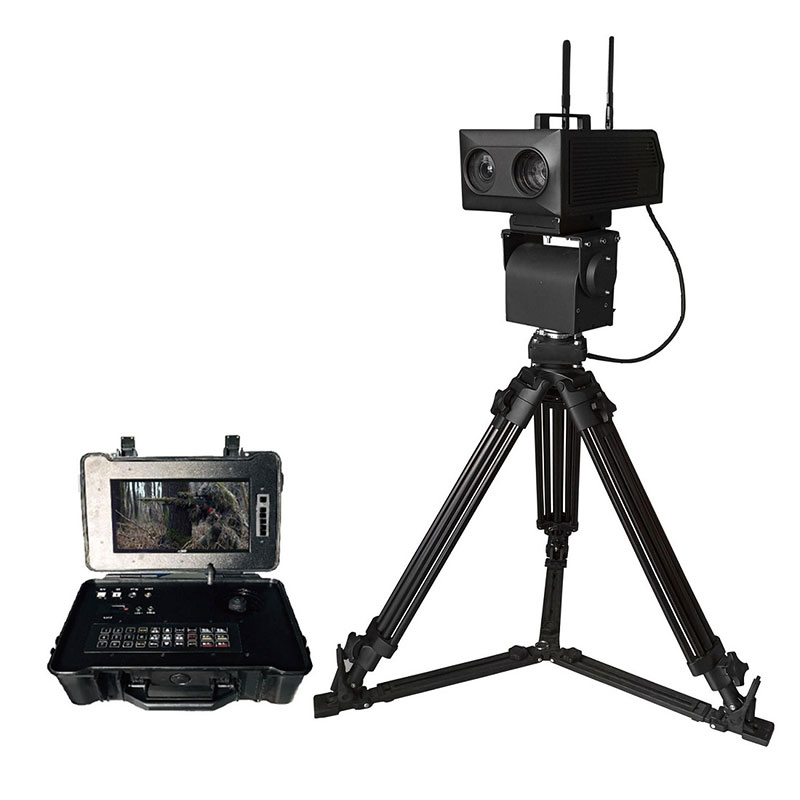
Underwater sonar imaging sounder is a portable underwater detection device integrating sonar technology and video recording. It generates high-resolution underwater topographic images, 3D models, and target location information by emitting sound waves into the water and receiving the echoes. It is suitable for single-person outdoor operations such as underwater search and rescue, topographic mapping, and engineering surveys....
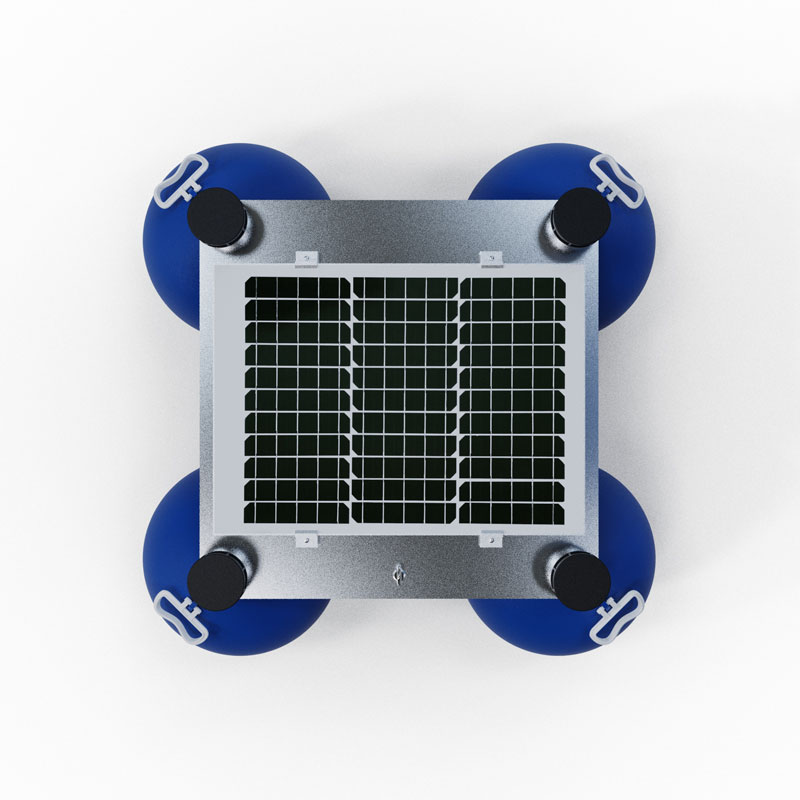
Water quality monitor system for drink water is a micro-system for water supply monitoring built on the Internet of Things (IoT). It collects and stores water quality curve data, is compatible with pipe pressure conditions up to 0.3 MPa, and serves online monitoring in various drinking water s...
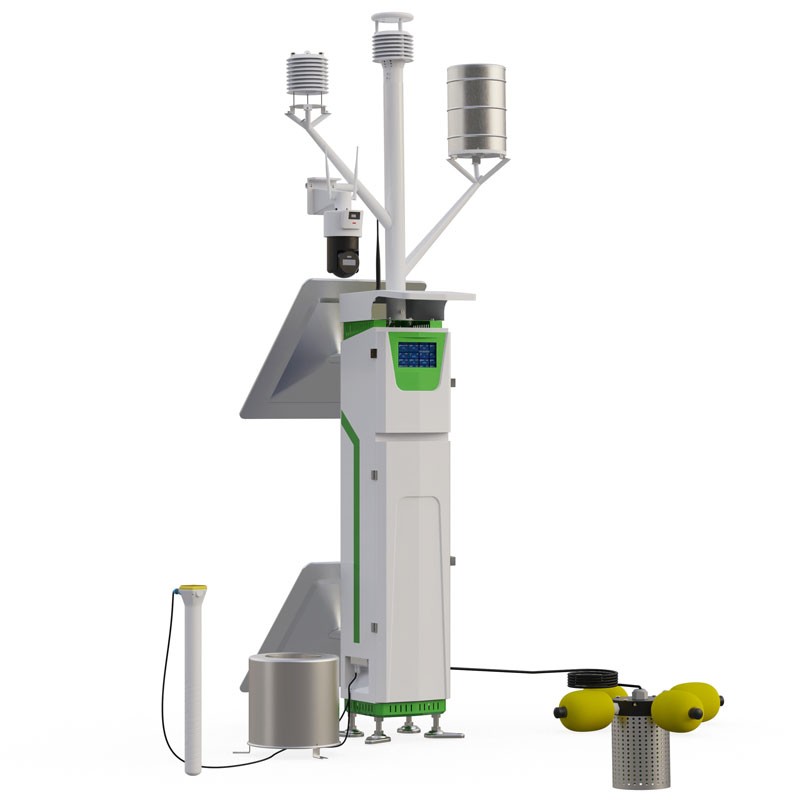
Nowadays, with the rapid development of industry, the pollution problem in industrial parks has attracted much attention. Traditional environmental monitoring methods can no longer meet the needs of refined supervision of pollution in industrial parks. However, the emergence of Air quality monitorin...
For a long time, air quality indicators have mostly been negative pollutants such as PM2.5 and sulfur dioxide. In contrast, negative oxygen ions, known as "air vitamins" beneficial to human health, serve as important positive indicators for measuring air freshness and ecological constructi...


 Get a Free Quote
 Skype
 whatsapp
 mail