Tianyi Sensor IOT Technology Co., Ltd
Sales Manager:Ms. Emily Wang
Cel,Whatsapp,Wechat:+86 15898932201
Email:info@fengtutec.com
Add:No. 155 Optoelectronic Industry Accelerator, Gaoxin District, Weifang, Shandong, China


Sales Manager:Ms. Emily Wang
Cel,Whatsapp,Wechat:+86 15898932201
Email:info@fengtutec.com
Add:No. 155 Optoelectronic Industry Accelerator, Gaoxin District, Weifang, Shandong, China
time:2026-11-11 10:48:30 source:Weather Station viewed:4 time
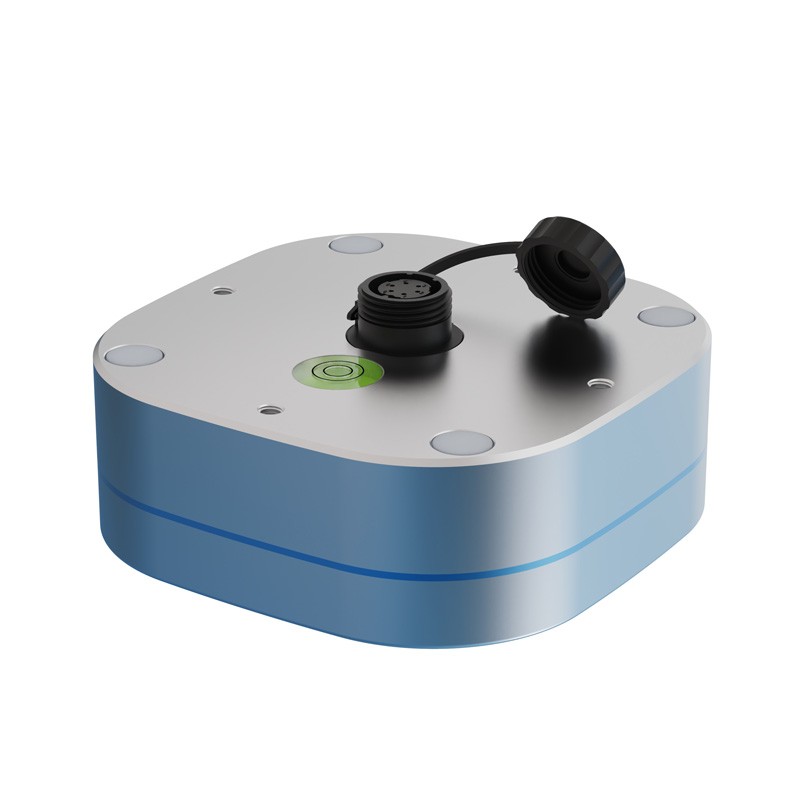
Radar water level gauges utilize Frequency-Modulated Continuous Wave (FMCW) technology to perform non-contact water level measurements. These devices feature a compact, space-saving design and are well-suited for applications such as monitoring water levels in lakes and rivers, providing early warnings for flash floods, managing reservoirs, and tracking liquid levels in sewage pipeline networks. They offer high measurement accuracy, low power consumption, and robust resistance to environmental interference, with operating frequencies ranging from 76 to 79.9 GHz and a measurement range of 0.1 to 40 meters.
The combination of the 80 GHz frequency band and FMCW technology represents the current industry standard for radar water level gauges. A beam angle of approximately 10 degrees helps minimize interference caused by reflections from shoreline debris or the walls of a well or shaft. In terms of accuracy, these devices typically feature a margin of error within ±1 mm and a resolution of 1 mm. With a refresh rate of once per second, they effectively meet the requirements for real-time data in water level monitoring. Designed for energy efficiency, the units have a typical operating current of 20 mA and support a 10–24 V DC power supply, making them ideal for long-term, solar-powered operation at remote field sites.
A primary advantage of the non-contact installation method is that the device does not physically interact with the water. In environments such as sewage networks or rivers with high sediment loads, submersible sensors are prone to issues like siltation, corrosion, or entanglement; radar water level gauges, however, are installed above the water surface, thereby avoiding these maintenance challenges. In confined spaces like utility manholes, the narrow-beam design helps the device ignore "false echoes" from structures such as ladders or pipes, ensuring it can reliably lock onto the reflection signal from the water surface.
Environmental adaptability is a critical factor when deploying radar water level gauges. With an operating temperature range of -40°C to 80°C, these devices are capable of functioning in diverse outdoor conditions—from the harsh winters of the north to the hot summers of the south. Furthermore, they feature an IP68-rated enclosure, ensuring protection against heavy rainfall or the high-humidity conditions often found inside manholes or shafts. For flash flood early-warning scenarios, the device must maintain data continuity during rapid water-level fluctuations; a 1-second refresh rate provides sufficient temporal resolution.
Dimensions and weight directly influence installation costs. With a footprint of 94 mm × 94 mm, a thickness of 42.5 mm, and a weight of 185 g, the unit can be mounted and adjusted by a single person, eliminating the need for heavy lifting equipment or the construction of large, specialized foundations. This is particularly advantageous for retrofitting existing hydrological stations or installing units within utility manholes, as it minimizes the need for extensive civil engineering work.
The technical specifications and structural design of this radar water-level gauge are tailored for long-term, unattended field deployment. Its use of a high-frequency band—which enables a narrow beam and millimeter-level precision—distinguishes it from lower-frequency radar products, while its low power consumption and compact form factor effectively address the practical constraints related to power supply and installation.
The traditional triangle odor bag method mainly relies on the subjective judgment of professional odor assessors, which is not only cumbersome and costly to operate, but also difficult to achieve real-time monitoring and traceability. The emergence of the Odor Online Monitor has overcome these short...
The Series power supply supporting UAV inspection is a special supporting equipment for UAV inspection of photovoltaic power plants, also known as Series power supply or UAV string power supply. Its core function is to convert alternating current into direct current and input it into the battery pan...
Meteorological stations are equipped with a variety of instruments to measure meteorological elements such as temperature, humidity, wind speed, wind direction, atmospheric pressure, and precipitation. Key instruments include platinum resistance temperature sensors, capacitive humidity sensors...
When camping in the wild, the weather conditions are crucial to the camping experience. The Handheld Weather meter can really show its prowess at this time, helping us to understand weather changes in advance and make preparations accordingly.After we arrive at the camping site, we first take...


 Skype
 whatsapp
 mail