Tianyi Sensor IOT Technology Co., Ltd
Sales Manager:Ms. Emily Wang
Cel,Whatsapp,Wechat:+86 15898932201
Email:info@fengtutec.com
Add:No. 155 Optoelectronic Industry Accelerator, Gaoxin District, Weifang, Shandong, China


Sales Manager:Ms. Emily Wang
Cel,Whatsapp,Wechat:+86 15898932201
Email:info@fengtutec.com
Add:No. 155 Optoelectronic Industry Accelerator, Gaoxin District, Weifang, Shandong, China
time:2026-11-10 10:29:54 source:Weather Station viewed:3 time
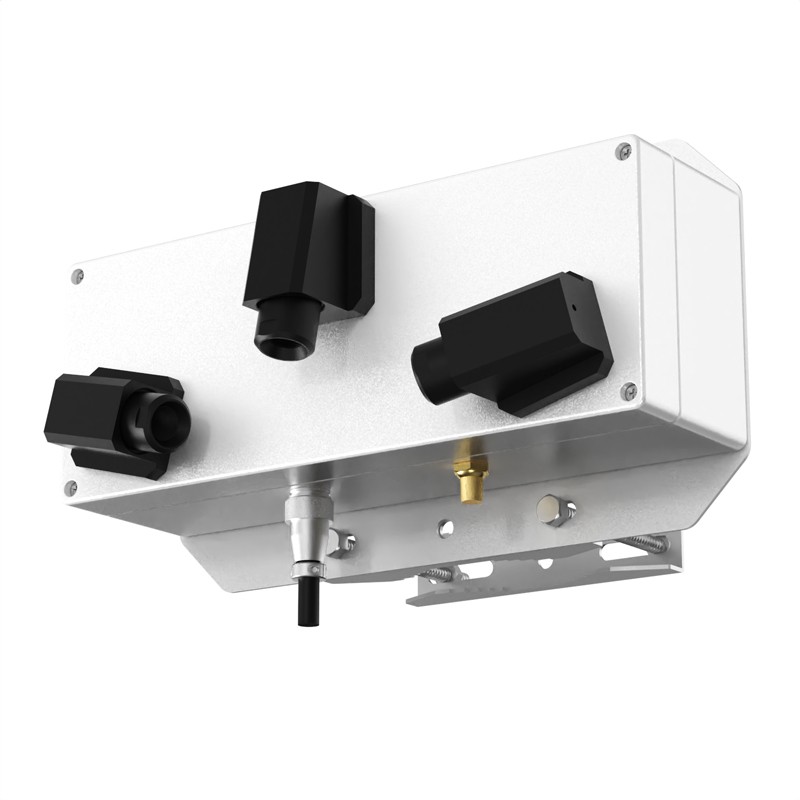
Visibility sensors serve as the core sensing components in road weather monitoring systems, operating on the principle of infrared forward scattering. By measuring the intensity of light scattered by suspended particles in the air, these sensors calculate atmospheric visibility. They are also capable of identifying weather phenomena, such as rain, snow, fog, and haze. Utilizing fully digital data acquisition and microprocessor-based computation, the sensors offer rapid response times, enabling them to quickly detect changes in particulate matter—for instance, during the sudden onset of dense, localized fog or a rapid shift to rain or snow. The units feature a high-strength, waterproof, and dustproof design, making them suitable for long-term outdoor operation. In practical applications, they are primarily used for real-time visibility monitoring on expressways, national and provincial highways, and at tunnel entrances and exits, replacing manual observation with automated weather condition identification. When low visibility or adverse weather is detected, the data can be integrated with variable message signs and lane signals to issue speed limit warnings, providing a basis for traffic management and control.
From a technical perspective, the effectiveness of a forward-scattering visibility sensor hinges on the choice of scattering angle and the sophistication of its signal processing. Many standard units utilize a forward-scattering angle of approximately 42° to capture scattered light, applying the Koschmieder equation to convert the extinction coefficient into meteorological optical range. More advanced, intelligent designs sample the ratio of forward-scattered light to emitted light intensity at high frequencies. By analyzing the step-like changes in scattering values over time, these systems can determine the type and descent velocity of precipitation particles. This allows for the adjustment of phase functions based on specific weather conditions, thereby improving measurement accuracy during precipitation. Structurally, the sensors typically consist of a transmitter, a receiver, and a control processor; they are equipped with heating elements to prevent condensation on optical lenses, as well as features to monitor lens contamination. Data transmission is generally handled via RS-485 or RS-232 interfaces, allowing for seamless integration into existing traffic weather monitoring platforms.
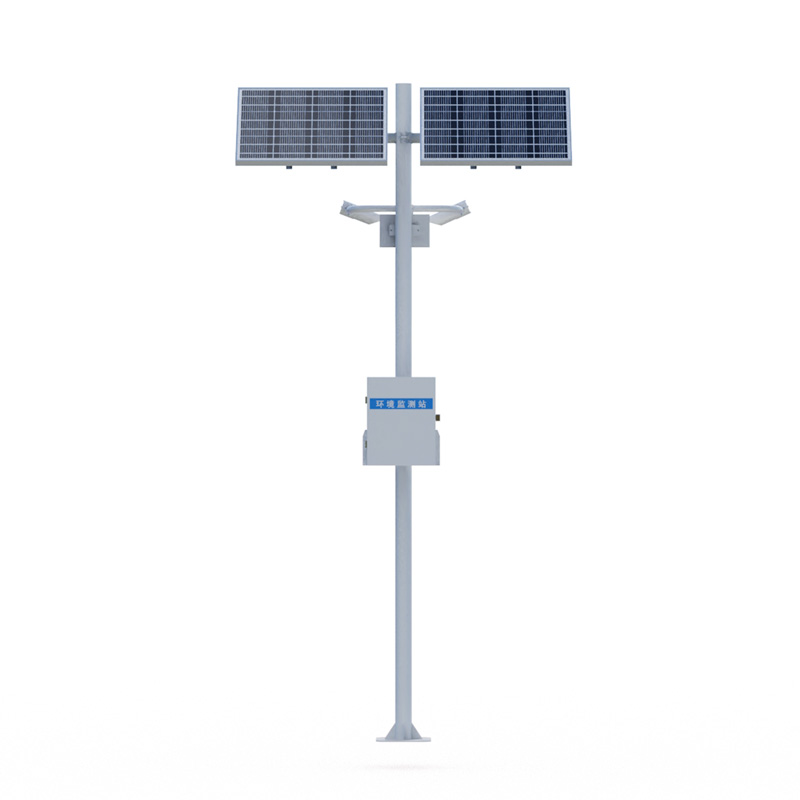
In field deployments, the installation location and maintenance strategy of a visibility sensor directly affect data continuity. Sensors are typically mounted on poles approximately two meters above the ground, positioned away from obstructions or heat sources that could interfere with readings. Some models also support solar power configurations, which are ideal for remote outdoor locations and help reduce the costs associated with laying cables. In terms of current industry application, visibility sensors have evolved beyond standalone measurement units; they now function as nodes within road weather monitoring networks. By working in tandem with road surface condition sensors, temperature and humidity monitors, and other instruments, they transmit minute-by-minute data to traffic cloud platforms, thereby supporting road network management and emergency response operations. For areas such as tunnel entrances and exits, as well as bridge sections, the continuous collection of visibility data helps identify segments prone to localized, dense fog—providing a quantitative basis for implementing speed limits and issuing warnings. Ultimately, the value of this equipment lies in its ability to translate atmospheric optical measurements into actionable traffic management data, enabling authorities to shorten their response times during periods of low visibility.
In outdoor natural settings such as dense forests, mountain streams, vast rivers, lakes and seas, and around rushing waterfalls, people often feel the air is exceptionally fresh. The key reason behind this is that the air in these places contains a sufficient amount of negative oxygen ions. Essentia...
The portable visibility monitor uses the forward scattering method to measure the total extinction coefficient of air and calculate visibility. Its integrated, portable design is compact and lightweight, making it widely applicable in emergency response, road traffic, and meteorological scenar...
Total Nitrogen Analyzer utilizes the resorcinol method and photoelectric quantitative technology. Its integrated design allows for rapid sampling and testing, boasts strong anti-interference capabilities, and enables real-time monitoring of total nitrogen content in water. It is widely used in...
Firefighting infrared thermal imagers are suitable for dense smoke and dark fire environments. Relying on comprehensive functions, they search for trapped personnel and locate concealed fire sources. Reliable hardware parameters ensure the smooth progress of various emergency search and rescue...


 Skype
 whatsapp
 mail