Tianyi Sensor IOT Technology Co., Ltd
Sales Manager:Ms. Emily Wang
Cel,Whatsapp,Wechat:+86 15898932201
Email:info@fengtutec.com
Add:No. 155 Optoelectronic Industry Accelerator, Gaoxin District, Weifang, Shandong, China


Sales Manager:Ms. Emily Wang
Cel,Whatsapp,Wechat:+86 15898932201
Email:info@fengtutec.com
Add:No. 155 Optoelectronic Industry Accelerator, Gaoxin District, Weifang, Shandong, China
time:2026-11-09 10:15:05 source:Weather Station viewed:3 time
Water level monitoring methods vary significantly depending on the environment. River and open-channel settings present challenges such as floating debris, sediment, and fluctuating weather conditions, whereas deep underground wells involve high pressure, high humidity, and the accumulation of silt. To address these diverse requirements, the Fengtu (风途) series of water level monitoring equipment offers two distinct technical approaches: non-contact radar sensing and submersible pressure sensing, allowing for optimal installation and operation based on specific site conditions.
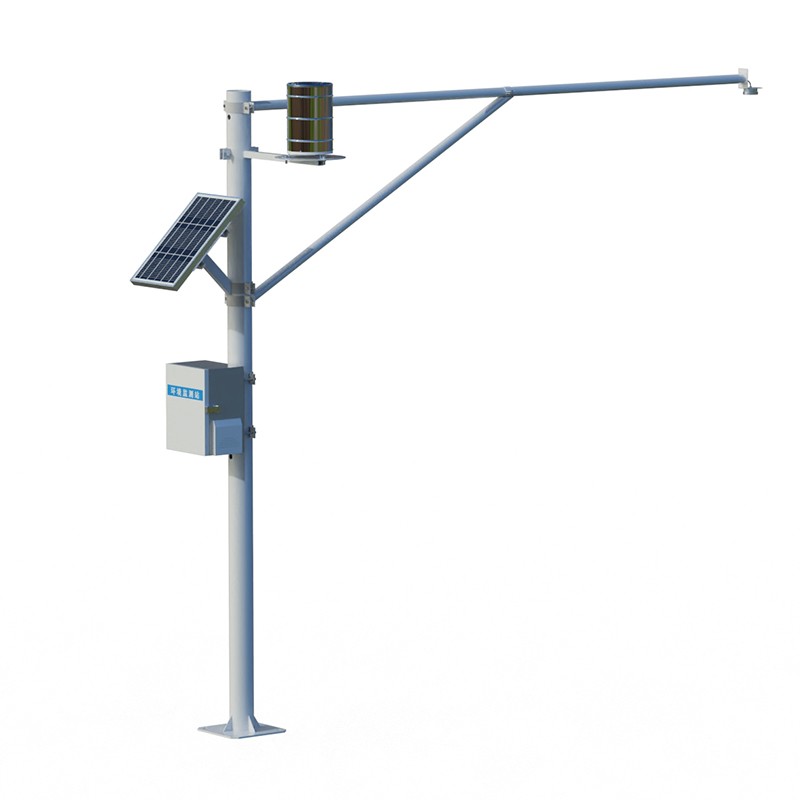
The FT-SW2 utilizes K-band planar radar technology to measure the distance to the water surface without physical contact. Installed above a channel, the device emits radar beams toward the water surface and calculates the water level based on the reflected signals; it also integrates rainfall monitoring capabilities. Because this method involves no direct contact with the water, data accuracy remains unaffected by sediment, floating debris, or pollutants. With a measurement range of 0.1 to 40 meters and an accuracy of ±5 millimeters, the device is powered by a combination of solar panels and rechargeable batteries, making it ideal for long-term, unattended operation in rivers, irrigation channels, and flood-warning sites.
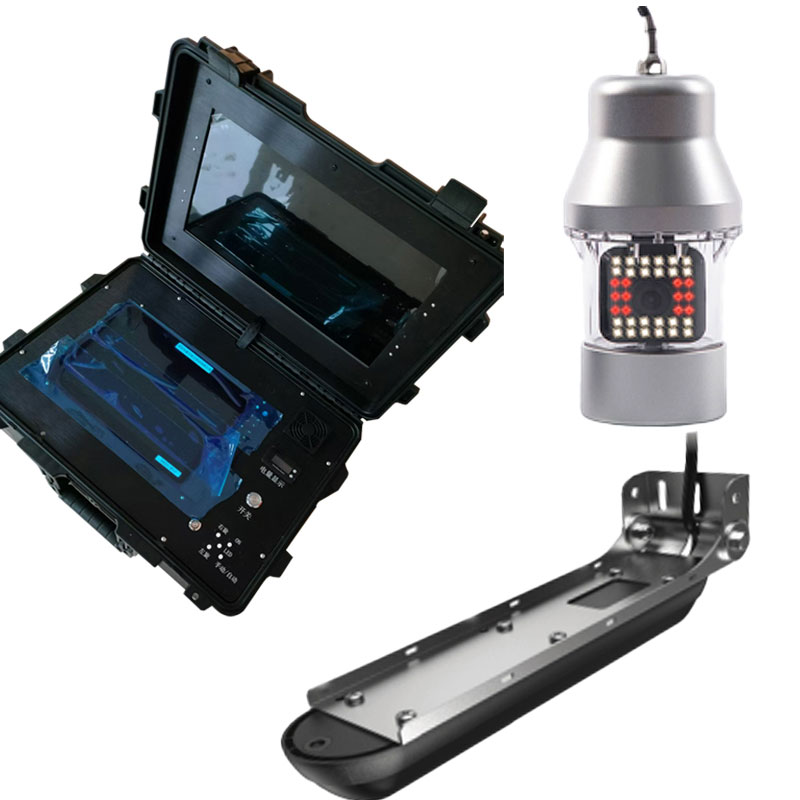
The FT-DSW4 is designed for deep underground wells and mining environments, employing a submersible hydrostatic pressure measurement principle. The sensor probe is lowered to a specific depth within the well, where a diffused-silicon piezoresistive element detects the pressure of the water column, which is then converted into a water level reading. This device offers a measurement range of 100 to 400 meters, features an IP68 ingress protection rating, and utilizes a vented cable design to withstand long-term submersion. To account for surface fluctuations and the presence of silt or impurities, the device incorporates an automatic correction algorithm to smooth out data volatility, while the fluid-inlet ports feature a sloped design to minimize the risk of clogging. It supports RS485 signal output for long-distance data transmission, making it well-suited for routine monitoring in deep mine shafts or groundwater observation wells.
The FT-DM1 serves a different purpose, focusing on the monitoring of water accumulation on urban roads. The device is designed for flush-mount installation, embedded into an opening in the road surface so that its top sits level with the ground, ensuring it does not obstruct the movement of vehicles or pedestrians. It utilizes an ultrasonic sensor to calculate water depth by measuring the time interval between the emission of a signal and the reception of its echo from the water surface; it has a measurement range of up to 1.5 meters and a resolution of 1 millimeter. Powered by an internal lithium-thionyl chloride battery, the device can operate for over five years when no water is present, transmitting data via LoRa wireless signals to a nearby host unit or platform. This deployment method is ideal for locations requiring unobtrusive monitoring, such as underpasses, low-lying road sections, and the entrances to underground parking garages.
In terms of measurement principles, non-contact radar-based systems offer the advantage of eliminating maintenance burdens associated with direct contact with water, making them well-suited for long-term, automated monitoring in open water bodies. Submersible pressure sensors, by contrast, provide a wide measurement range within the confined spaces of deep wells, with their protective design ensuring durability under harsh underwater conditions. The core value of flush-mounted ultrasonic devices lies in their space-saving, unobtrusive nature and long battery life—addressing the specific need for discreet installation and minimal maintenance in urban flood monitoring. Each of these three types of equipment is suited to different site constraints; therefore, selection should be primarily based on actual installation conditions and the expected range of water level fluctuations.
The wireless climate sensor integrates monitoring functions for 12 parameters: PM2.5, PM10, CO, SO2, NO2, O3, as well as temperature, humidity, wind speed and direction, atmospheric pressure, and optical rainfall. It uses ultrasonic wind measurement, has no starting wind speed limit, and comes...
The 3D ultrasonic anemometer utilizes ultrasonic measurement technology and features an all-metal construction devoid of any moving parts; it is capable of simultaneously measuring wind direction in both horizontal and vertical planes while outputting wind speed components along the X, Y, and...
rainfall measuring equipment is a high-precision rainfall observation instrument that measures precipitation using a tipping-bucket mechanism. It features a rain-catching aperture with a diameter of Φ200 mm, a resolution of 0.2 mm, and a measurement error not exceeding ±2%. Capable of digita...
Why Does Wind Power Generation Easily Encounter Icing Issues?First, wind farms are mostly located in areas with abundant wind resources such as mountains and coastal regions, where harsh climatic conditions (high humidity, low temperatures) easily lead to weather phenomena like clouds, fog, and free...


 Skype
 whatsapp
 mail