Tianyi Sensor IOT Technology Co., Ltd
Sales Manager:Ms. Emily Wang
Cel,Whatsapp,Wechat:+86 15898932201
Email:info@fengtutec.com
Add:No. 155 Optoelectronic Industry Accelerator, Gaoxin District, Weifang, Shandong, China


Sales Manager:Ms. Emily Wang
Cel,Whatsapp,Wechat:+86 15898932201
Email:info@fengtutec.com
Add:No. 155 Optoelectronic Industry Accelerator, Gaoxin District, Weifang, Shandong, China
time:2026-11-05 10:35:01 source:Weather Station viewed:2 time
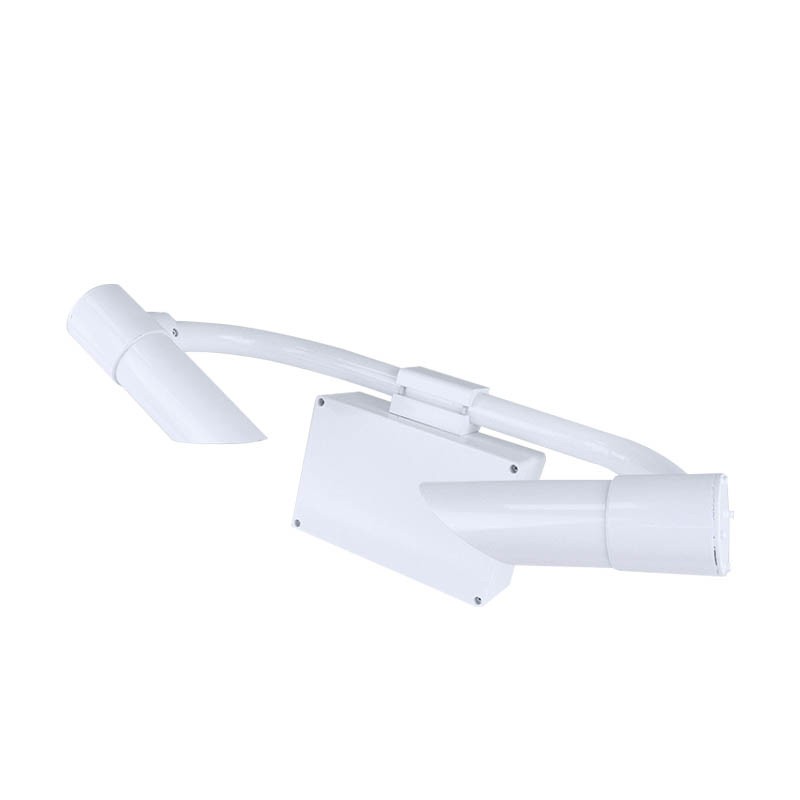
Designed with a cast-aluminum housing, this weather phenomenon sensor balances structural strength with portability, making it well-suited for installation along highways or on mobile, vehicle-mounted platforms. The device utilizes laser-based technology to measure visibility and offers optional modules for identifying weather phenomena and detecting rainfall. It can distinguish between various precipitation intensities—such as drizzle, light, moderate, and heavy rain—and identify conditions including rain, snow, mist, and dense fog. The optical lenses feature an automatic heating control system, ensuring operational capability in low-temperature environments, with a power supply range of 12 to 30V DC.
Changes in meteorological conditions on highways directly impact driving safety. Sudden events—such as localized patches of dense fog, intense downpours, or rapid snowfall—can alter road conditions in a very short time, a scenario where traditional manual observation often fails to provide continuous coverage. In such contexts, the value of this weather phenomenon sensor lies not in replacing full-scale meteorological stations, but in providing real-time data on visibility and precipitation types at critical points along a route, all at a lower deployment cost. The use of cast-aluminum keeps the unit’s weight manageable, meeting the structural requirements for long-term outdoor fixed installation while also allowing for temporary deployment or mobile, vehicle-based observation. Its compact dimensions offer greater flexibility in selecting installation locations, reducing reliance on existing roadside infrastructure.
In terms of measurement capabilities, the sensor series covers a visibility range from 10 meters to 10 kilometers, with the potential for further extension. Accuracy within the standard operating range is maintained at ±2% to ±5%, while accuracy beyond 10 kilometers is ±10%. For traffic-related meteorological services, this level of data is sufficient to identify and categorize low-visibility events. Regarding precipitation, the device can output four distinct intensity levels and differentiate between rain, snow, and various fog conditions. An optional rainfall detection module further enhances the system by measuring both precipitation intensity and cumulative totals, allowing the same unit to be adapted to diverse operational requirements.
Operational stability in outdoor environments is a core consideration for equipment of this nature. The automatic heating control module for optical lenses is designed for frigid conditions, preventing frost or fog from persistently interfering with the optical path. Supporting a wide input voltage range of 12–30V DC, the unit is compatible with the DC power infrastructure commonly found along highways and is well-suited for integration with solar-powered battery systems. The design prioritizes simplicity and reliability by minimizing moving parts; routine maintenance is largely limited to cleaning and inspecting the optical windows. For equipment deployed in remote areas or on mobile platforms, the combination of low power consumption and a wide input voltage range reduces the requirements for external power supply infrastructure.
Data provided by weather phenomenon sensors ultimately informs decision-making in road management. Whether to impose speed limits when visibility drops, initiate snow-clearing operations as precipitation types shift, or assess whether cumulative rainfall is approaching drainage capacity thresholds—such judgments require stable, location-specific, real-time observations. By striking an optimal balance between a lightweight design and the ruggedness of a cast-aluminum housing, the equipment can be deployed exactly where data is most needed, rather than being confined to a central station.
A Portable Weather Station is a device that can be carried around and automatically complete meteorological data collection, mainly used for meteorological monitoring in field, emergency and other scenarios. It integrates the core functions of traditional weather stations in a compact structure, and...
In high-risk industries such as chemical plants, production safety is not only crucial for business operations but also directly related to personnel safety and environmental protection. These locations often contain flammable and explosive gases or dust, where conventional weather monitoring equipm...
Present weather and visibility sensor is a professional meteorological observation device based on the forward scattering principle. It calculates real-time visibility by measuring the total extinction coefficient of the air, enabling automated identification and recording of weather phenomena...
Piezoelectric Rain Gauge employs a PVDF piezoelectric film as its rain-sensing element, utilizing an embedded AI neural network to distinguish rain droplet signals and prevent false triggers caused by interference from grit, dust, vibration, and similar factors. The device features a completel...


 Skype
 whatsapp
 mail