Tianyi Sensor IOT Technology Co., Ltd
Sales Manager:Ms. Emily Wang
Cel,Whatsapp,Wechat:+86 15898932201
Email:info@fengtutec.com
Add:No. 155 Optoelectronic Industry Accelerator, Gaoxin District, Weifang, Shandong, China


Sales Manager:Ms. Emily Wang
Cel,Whatsapp,Wechat:+86 15898932201
Email:info@fengtutec.com
Add:No. 155 Optoelectronic Industry Accelerator, Gaoxin District, Weifang, Shandong, China
time:2026-08-11 11:09:50 source:Weather Station viewed:23 time
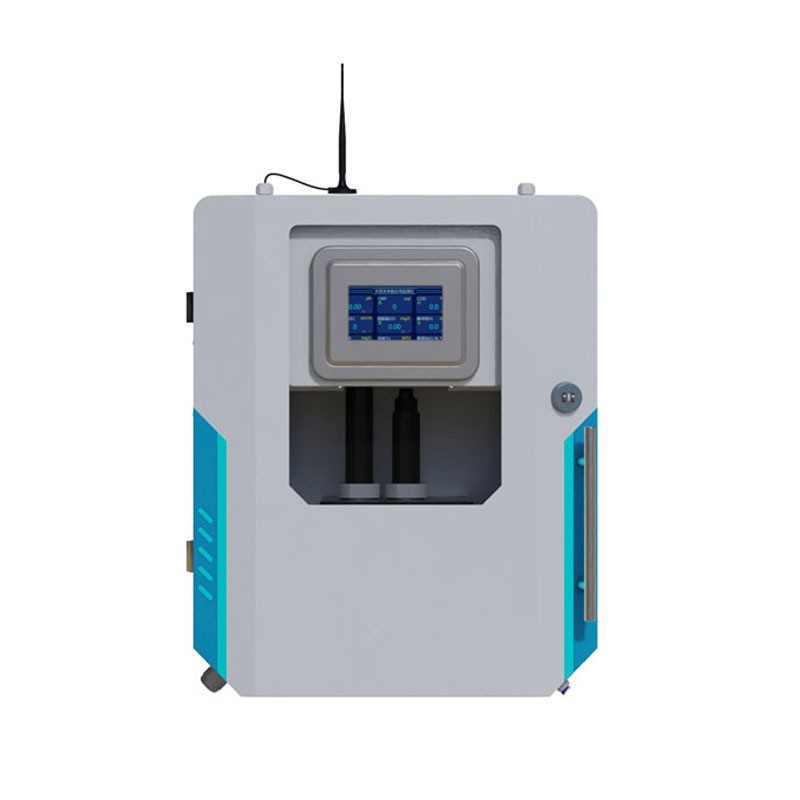
Water quality monitor system for drink water is a micro-system for water supply monitoring built on the Internet of Things (IoT). It collects and stores water quality curve data, is compatible with pipe pressure conditions up to 0.3 MPa, and serves online monitoring in various drinking water scenarios.
Water quality monitor system for drink water is a water quality monitoring micro-system built on IoT technology. The equipment can complete sensor data acquisition, real-time numerical display, and retrieval and viewing of historical water quality curves. The entire hardware consists of four main components: a flow stabilization and venting unit, an analysis and monitoring sensor unit, a system control unit, and a remote communication unit. It is equipped with a complete power supply module and network communication components. Staff can receive and analyze the data transmitted from various monitoring systems in real time on a cloud platform, achieving remote management.
Water quality monitor system for drink water is specifically adapted to pipe pressure environments less than 0.3 MPa at the end of the water supply network. The hardware structure has been optimized for operating conditions, and can stably handle water samples delivered from the pipeline network, avoiding interference from unstable water flow and water pressure fluctuations on sensor detection accuracy. This equipment integrates five essential drinking water control indicators—turbidity, pH, conductivity, water temperature, and residual chlorine—in one unit, eliminating the cumbersome process of deploying multiple independent detectors and reducing subsequent equipment maintenance workload. It is suitable for monitoring sites that require long-term unattended operation.
Water quality monitor system for drink water can be deployed inside urban and rural waterworks, at nodes in water supply networks, in secondary water supply pump rooms in residential areas, and at the end-points of residential water supply. It can also be installed and used in indoor swimming pool water circulation systems, at the outlets of large water purification equipment, and in direct drinking water supply terminals. Water management departments, waterworks maintenance personnel, and health supervision staff can rely on the continuous water quality data transmitted by the instrument to monitor the daily water supply quality and promptly detect abnormal fluctuations in water pH, residual chlorine content, and turbidity.
Stable remote transmission capabilities allow water quality monitoring to go beyond on-site observation. Managers can access long-term water quality change curves at any time, identify potential hazards in the water supply system, and provide objective data support for water plant production control, pipeline maintenance, and water quality supervision. It has become a practical online analysis device for drinking water safety management.
The visibility meter uses the forward scattering method to calculate the total extinction coefficient of air, accurately acquiring atmospheric visibility data. The device is portable, durable, and features storable and transferable data, stable operation, and is suitable for atmospheric monito...
The 3D ultrasonic anemometer utilizes ultrasonic measurement technology and features an all-metal construction devoid of any moving parts; it is capable of simultaneously measuring wind direction in both horizontal and vertical planes while outputting wind speed components along the X, Y, and...
Atmospheric Visibility Sensor Utilizing the forward-scattering method to measure the total atmospheric extinction coefficient, this device accurately calculates meteorological optical range and visibility values. It features excellent protective capabilities, ultra-low power consumption, and stable...
Anemometer sensors are categorized into two main types based on their operating principles: mechanical and ultrasonic. Mechanical sensors feature structures such as wind cups or propellers, while ultrasonic sensors rely on the time-of-flight method for measurement. Different models are suited...


 Skype
Skype
 whatsapp
 mail
mail