Tianyi Sensor IOT Technology Co., Ltd
Sales Manager:Ms. Emily Wang
Cel,Whatsapp,Wechat:+86 15898932201
Email:info@fengtutec.com
Add:No. 155 Optoelectronic Industry Accelerator, Gaoxin District, Weifang, Shandong, China


Sales Manager:Ms. Emily Wang
Cel,Whatsapp,Wechat:+86 15898932201
Email:info@fengtutec.com
Add:No. 155 Optoelectronic Industry Accelerator, Gaoxin District, Weifang, Shandong, China
time:2026-07-16 10:47:40 source:Weather Station viewed:35 time
Visibility and Present Weather Sensor uses the forward scattering method to measure the total extinction coefficient of air, with a range of up to 30 kilometers. It is widely used in road traffic, meteorology, and other industries. The instrument features weather phenomenon recognition, low power consumption, and lightning protection, and can operate stably in environments ranging from -40 to 60℃.
Visibility and Present Weather Sensor uses the forward scattering method to measure the total extinction coefficient of air, estimating current visibility by calculating the intensity or attenuation of scattered light. The sensor has a range of 30 kilometers, a resolution of 1 meter, and a measurement error of ±2% within 2 kilometers, ±5% between 2 and 10 kilometers, and ±10% above 10 kilometers. This measurement principle allows it to be widely used in road traffic, meteorological observation, highways, ships, drilling platforms, waterways, ports, wind power generation, and automatic weather stations.
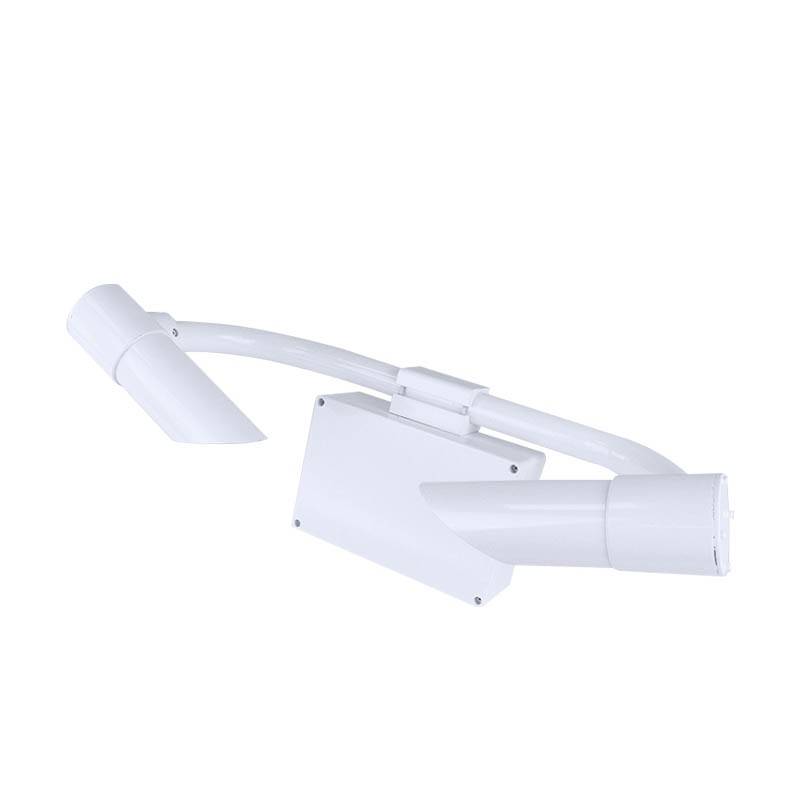
Visibility and Present Weather Sensor has a high-quality aluminum casing, anodized and painted, providing excellent waterproof, dustproof, and impact-resistant properties. The transmitting and receiving lenses are designed to face downwards, effectively reducing interference from sunlight and other stray light on the measurement results. The device has a built-in weather phenomenon recognition function, capable of identifying fog, rain, snow, mixed precipitation, and clear skies with a recognition rate exceeding 95%. A built-in watchdog circuit ensures the reliability and stability of the device during long-term outdoor operation. Both the communication and power interfaces include surge protection, effectively reducing damage from lightning strikes and static electricity.
The Visibility and Present Weather Sensor supports a wide voltage range of 12 to 24V, with a total power consumption of approximately 1W, exhibiting extremely low power consumption. It can be powered long-term using solar panels or batteries. The digital interface supports RS485 or RS232, employing the standard MODBUS protocol, requiring no additional protocol adaptation. The instrument can output visibility values at 15-second, 1-minute, and 10-minute time intervals, which users can directly read without configuration. The device operates in a temperature range of -40 to 60℃ and a humidity range of 0 to 100%RH. The overall dimensions are 610×230×360mm, and the weight does not exceed 10kg. When installing, choose an open, flat, and unobstructed ground. The installation height should be greater than 1.5m and less than 3m, and the receiver should be facing away from a strong light source.
Entering the high - standard farmland demonstration area, 25 newly installed Solar insecticidal lamps are neatly arranged in the fields. These devices consist of silver lamp poles, black solar panels, and green lamp housings. They absorb solar energy and store electricity during the day, and at nigh...
The growth of crops is closely linked to soil conditions. Harnessing the "advantages of the land" and carrying out crop cultivation in line with local conditions are core measures to increase crop yields. In agricultural production, links such as the selection of spring sowing timing, dete...
Anemometer can measure wind speed, wind direction, temperature, humidity, atmospheric pressure, light intensity, radiation, and runway temperature in real time. It is equipped with SOS distress signals, an electronic compass, weather forecasting, and GNSS positioning. It supports wireless tran...
In a tea plantation base, there is an Agricultural Weather Stations for the tea garden microclimate. Composed of devices such as cameras, digital displays, and smart agricultural monitoring sensors, it serves as the "smart brain" of the tea garden.The core, Agricultural Weather Stations, c...


 Skype
Skype
 whatsapp
 mail
mail