Tianyi Sensor IOT Technology Co., Ltd
Sales Manager:Ms. Emily Wang
Cel,Whatsapp,Wechat:+86 15898932201
Email:info@fengtutec.com
Add:No. 155 Optoelectronic Industry Accelerator, Gaoxin District, Weifang, Shandong, China


Sales Manager:Ms. Emily Wang
Cel,Whatsapp,Wechat:+86 15898932201
Email:info@fengtutec.com
Add:No. 155 Optoelectronic Industry Accelerator, Gaoxin District, Weifang, Shandong, China
time:2025-11-03 08:54:14 source:Weather Station viewed:456 time
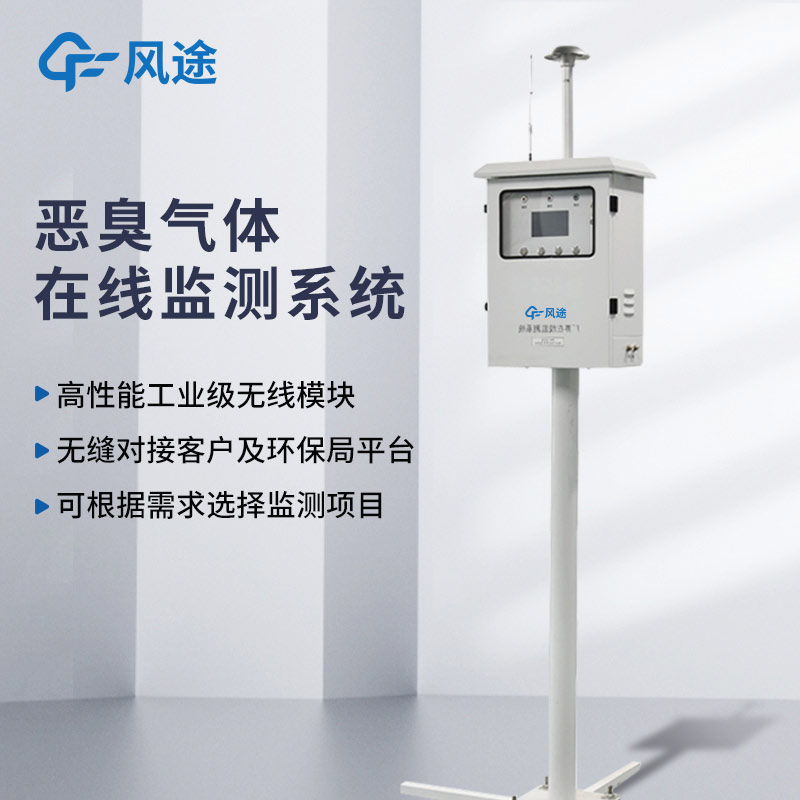
The traditional triangle odor bag method mainly relies on the subjective judgment of professional odor assessors, which is not only cumbersome and costly to operate, but also difficult to achieve real-time monitoring and traceability. The emergence of the Odor Online Monitor has overcome these shortcomings.
It achieves 24-hour continuous monitoring of factory boundaries or regional environments through the collaborative work of sensor array technology, IoT data transmission, and big data analysis platforms. Once the monitoring data exceeds the preset threshold, the system immediately issues an alarm through the platform or SMS, and can link with the sample retention system to automatically collect gas samples at that time for subsequent laboratory precision analysis to accurately trace the source of pollution.
The system is currently widely used in garbage disposal sites, sewage treatment plants, chemical parks, breeding farms and other places prone to odor, helping enterprises and environmental protection departments establish a closed-loop management mechanism of "monitoring-early warning-traceability-governance" to enhance the predictability and accuracy of environmental supervision.
Detection Items
Comprehensive evaluation of odor intensity: The system collects concentration signals of various gases through an array sensor, combined with a built-in odor intensity model, directly outputting dimensionless odor concentration OU values, enabling machine monitoring results to correlate with human olfactory perception.
The system can conduct qualitative and quantitative analysis of typical malodorous substances specified in national standards, mainly including:
Sulfur compounds, such as hydrogen sulfide, methyl mercaptan, dimethyl sulfide, dimethyl disulfide, etc., which come from sewage treatment, garbage disposal sites, etc.
Nitrogen compounds, such as ammonia, trimethylamine, etc., commonly found in farms, chemical plants and food processing industries.
Volatile organic compounds, such as styrene, TVOC, etc., mainly from chemical, spraying and other industries.
Environmental and meteorological parameters: To more accurately analyze the diffusion pattern and traceability of odors, the system usually integrates a meteorological monitoring module to simultaneously measure parameters such as temperature, humidity, wind speed, wind direction and atmospheric pressure. These data help build odor diffusion models and predict pollution impact ranges.
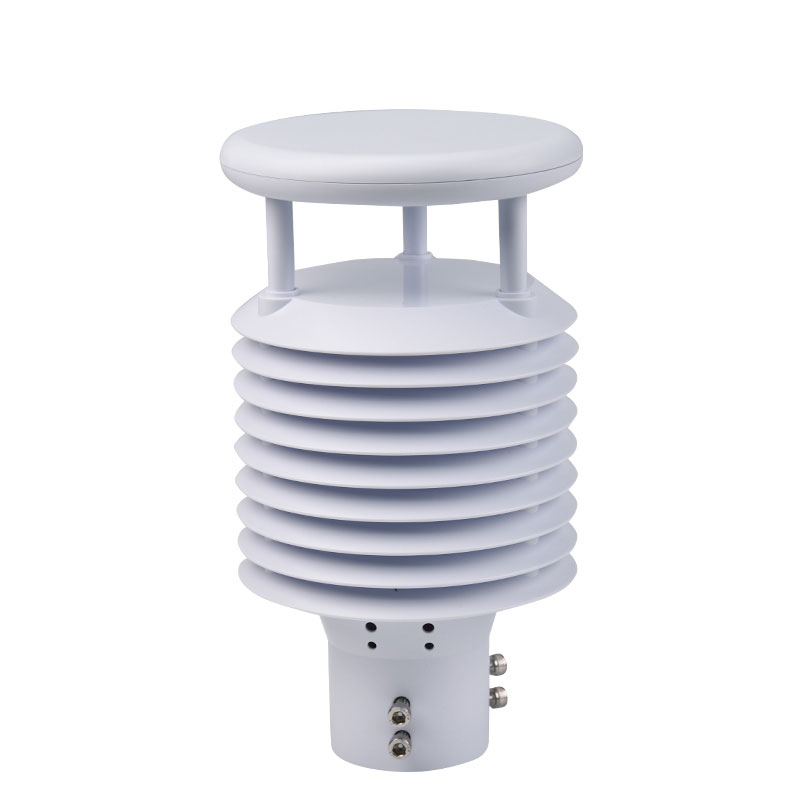
A miniature sensor is a highly integrated meteorological monitoring device. By integrating multiple miniaturized sensors and processing units, it can realize real-time monitoring and data collection of multiple meteorological elements. The device typically integrates core components such as temperat...
Precision Snow/Rain Gauge is capable of monitoring all types of precipitation—including liquid, solid, and mixed solid-liquid phases. It features a real-time precipitation intensity measurement range of 6 to 1800 mm/h and a cumulative precipitation range of 0.2 to 1500 mm, with an RS485 inter...
The Visibility sensor utilizes the forward-scatter method to measure the total atmospheric extinction coefficient. With a measurement range of up to 20 kilometers, it features segmented error calibration and is designed for use in road traffic management, meteorological observation, and emerge...
The water level and rainfall monitoring system utilizes K-band planar radar microwave technology to simultaneously monitor water levels and rainfall via non-contact methods. Characterized by low power consumption and high stability, the system is immune to various environmental factors and is suitab...


 Skype
Skype
 whatsapp
 mail
mail