Tianyi Sensor IOT Technology Co., Ltd
Sales Manager:Ms. Emily Wang
Cel,Whatsapp,Wechat:+86 15898932201
Email:info@fengtutec.com
Add:No. 155 Optoelectronic Industry Accelerator, Gaoxin District, Weifang, Shandong, China


Sales Manager:Ms. Emily Wang
Cel,Whatsapp,Wechat:+86 15898932201
Email:info@fengtutec.com
Add:No. 155 Optoelectronic Industry Accelerator, Gaoxin District, Weifang, Shandong, China
time:2026-11-04 10:29:21 source:Weather Station viewed:1 time
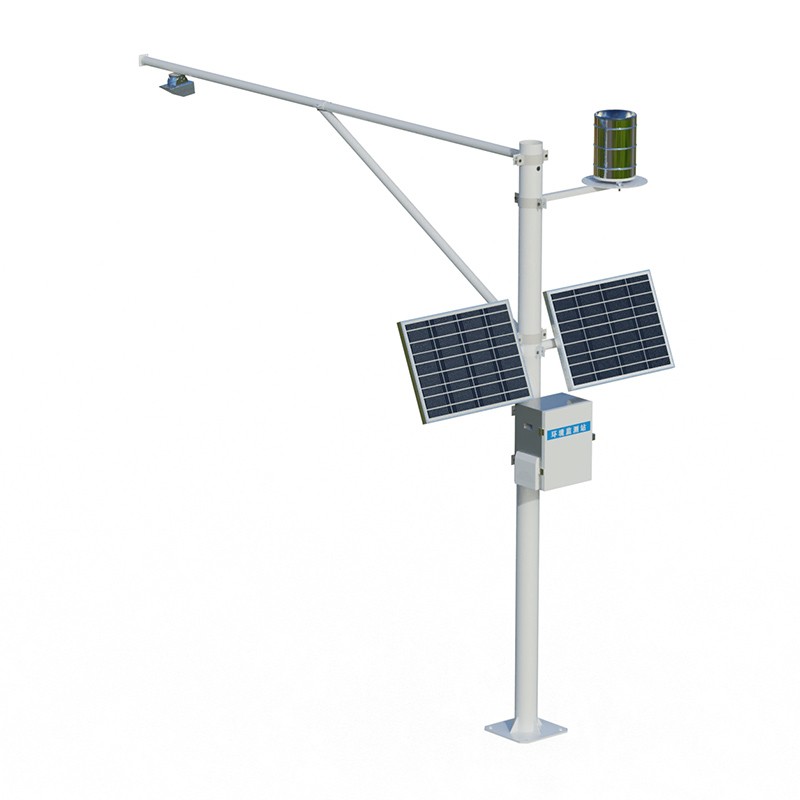
Radar-based hydrological monitoring systems are online devices capable of simultaneously collecting data on water level, flow velocity, discharge, and rainfall within channels. Utilizing K-band planar radar technology, these systems acquire surface flow velocity and water level data without physical contact with the water. Built-in algorithms then convert this information into real-time and cumulative cross-sectional discharge. Because the sensors do not come into direct contact with the water, they are protected from wear or clogging caused by sediment, floating debris, or pollutants, which significantly reduces the need for routine maintenance. The equipment is highly energy-efficient and supports power supply via a combination of solar panels and batteries, making it ideal for long-term, autonomous operation in remote field locations lacking access to the electrical grid.
For water level monitoring, the system offers a measurement range of 0.1 to 40 meters, with an accuracy of ±5 mm and a resolution of 1 mm; data collection intervals can be configured as needed, ranging from 1 to 5,000 minutes. Flow velocity measurement covers a range of 0.15 to 15 meters per second, with an accuracy of ±2% and a resolution of 0.01 meters per second. Rainfall is monitored using a rain gauge with a 200 mm collection aperture, capable of measuring rainfall intensity from 0 to 4 mm per minute, with an accuracy of ±0.2 mm and a resolution of 0.2 mm. Together, these parameters meet the essential requirements for the simultaneous acquisition of water level, flow velocity, discharge, and rainfall data in applications such as river channels, irrigation canals, underground drainage networks, and flood warning systems.
In terms of practical deployment, these monitoring systems are compact and can be installed—via mounting brackets or suspension—on bridges or culverts without requiring modifications to the channel cross-section or the construction of dedicated stilling wells; installation does not disrupt the normal flow of water. The measurements remain unaffected by fluctuations in temperature, water vapor, or pressure, ensuring continuous data output even under adverse weather conditions. For irrigation canals or drainage network nodes that require long-term monitoring of cross-sectional flow, this non-contact radar-based approach offers a cost-effective solution that provides a comprehensive range of data.
As a crucial component of the power system, transmission lines undertake the important task of efficiently transmitting the electrical energy generated by power plants to various regions. By constructing a vast transmission network, electrical energy can travel over long distances to meet the electr...
The Series power supply supporting UAV inspection is a special supporting equipment for UAV inspection of photovoltaic power plants, also known as Series power supply or UAV string power supply. Its core function is to convert alternating current into direct current and input it into the battery pan...
Radar water level gauges utilize K-band planar radar technology to perform non-contact measurements of water levels and rainfall. With a measurement range of 0.1 to 40 meters, an accuracy of ±5 mm, and a resolution of 1 mm, these devices are widely deployed in water conservancy monitoring fie...
Recommend Several Excellent Water Quality MonitorsI. Portable Multi-parameter Detector (FT-SS07)It covers all parameters and supports the detection of 12 parameters such as water temperature, conductivity, pH, ammonia nitrogen, dissolved oxygen, COD, turbidity, etc. It adopts all-digital elect...



 Skype
 whatsapp
 mail