Tianyi Sensor IOT Technology Co., Ltd
Sales Manager:Ms. Emily Wang
Cel,Whatsapp,Wechat:+86 15898932201
Email:info@fengtutec.com
Add:No. 155 Optoelectronic Industry Accelerator, Gaoxin District, Weifang, Shandong, China


Sales Manager:Ms. Emily Wang
Cel,Whatsapp,Wechat:+86 15898932201
Email:info@fengtutec.com
Add:No. 155 Optoelectronic Industry Accelerator, Gaoxin District, Weifang, Shandong, China
time:2025-09-12 08:56:55 source:Weather Station viewed:379 time
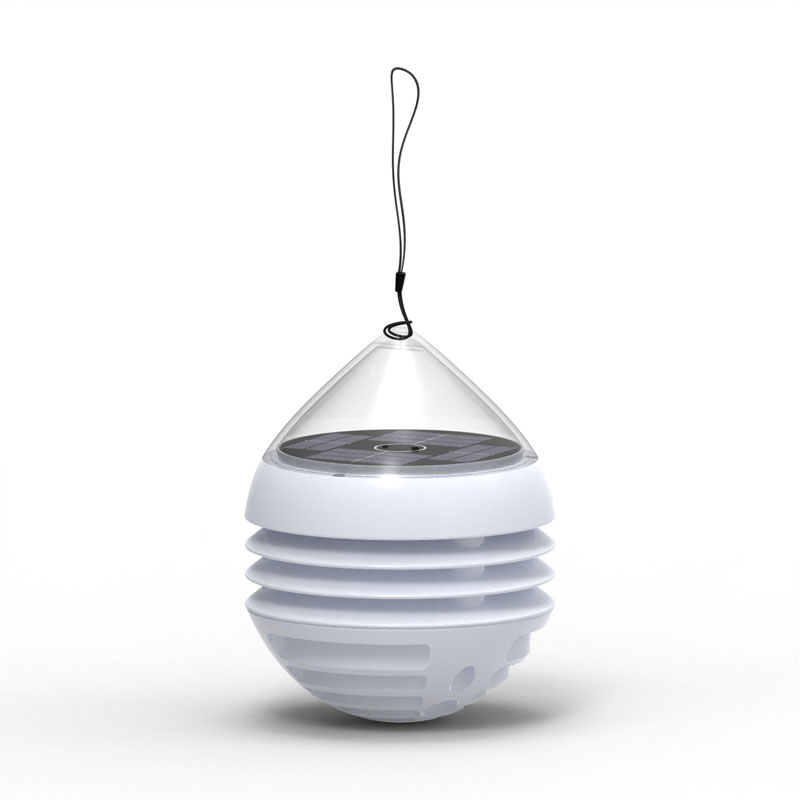
The Air Quality Monitoring Station is a miniaturized product dedicated to real - time online monitoring of the atmospheric environment. It has the capability of simultaneous multi - parameter monitoring, which can accurately measure the concentrations of various pollutants in the atmosphere, such as PM10, PM2.5, SO2, NO2, O3, and CO. Additionally, it monitors real - time environmental temperature and humidity data, providing comprehensive and detailed basic data support for the assessment of atmospheric environmental quality.
This system features a flexible design, allowing the selection of either municipal power supply or solar power supply mode based on the specific requirements of the actual application scenario. When deployed in areas with convenient access to municipal power coverage, it can be connected to the municipal power grid to achieve stable power supply. In remote areas without municipal power coverage, the solar power supply mode is adopted. Here, solar panels absorb light energy and convert it into electrical energy, ensuring the continuous and stable operation of the equipment in different environments and significantly expanding the deployment range of the system.
The core monitoring components of the equipment are high - precision sensors of various types, including electrochemical and optical sensors. These sensors offer several advantages: a low detection limit, enabling them to capture low - concentration pollutants in the atmosphere and avoiding data omission due to insufficient detection capability; high data accuracy, ensuring the reliability of monitoring data and providing a precise basis for subsequent environmental analysis; and high time resolution, allowing for high - frequency data collection to promptly reflect the dynamic changes in atmospheric environmental quality. Moreover, the sensors are compact in size and cost - effective, making the system suitable for grid - based and dense deployment. This enables large - scale and high - density monitoring coverage in the target monitoring area, facilitating the accurate understanding of differences in atmospheric environments across different regions.
The system adopts wireless communication technology. A large number of sensor nodes distributed at different monitoring points can establish secure and confidential communication connections with the backend server, effectively preventing the leakage or tampering of monitoring data during transmission. Through stable communication links, the large - volume environmental data collected by each sensor node can be real - time aggregated to the "cloud platform", providing strong data support for subsequent data analysis, trend prediction, and environmental governance decision - making.

Against the backdrop of climate change, extreme rainfall events are becoming increasingly frequent, posing severe challenges to flood control and drought relief work. As an important technical means to address these challenges, the rainfall monitoring station is playing an increasingly significant r...
This fully automated online hydrological monitoring device, based on K-band planar radar technology, can simultaneously measure water level, flow velocity, flow rate, and rainfall. Employing a non-contact measurement method, it is unaffected by silt and sewage corrosion. Its built-in intellige...
The traditional meteorological monitoring stations have limited distribution, making it difficult to comprehensively and real-timely grasp the complex and changeable meteorological conditions. However, combining drones with meteorological instruments has unexpectedly become a solution to make up for...
A soil moisture monitoring system is a comprehensive station that conducts real-time monitoring of soil moisture and related environmental parameters. Equipped with high-precision sensors, it adopts technologies such as Frequency Domain Reflectometry (FDR) and Time Domain Reflectometry (TDR) to accu...


 Skype
Skype
 whatsapp
 mail
mail