Tianyi Sensor IOT Technology Co., Ltd
Sales Manager:Ms. Emily Wang
Cel,Whatsapp,Wechat:+86 15898932201
Email:info@fengtutec.com
Add:No. 155 Optoelectronic Industry Accelerator, Gaoxin District, Weifang, Shandong, China


Sales Manager:Ms. Emily Wang
Cel,Whatsapp,Wechat:+86 15898932201
Email:info@fengtutec.com
Add:No. 155 Optoelectronic Industry Accelerator, Gaoxin District, Weifang, Shandong, China
time:2025-09-23 08:59:55 source:Weather Station viewed:354 time
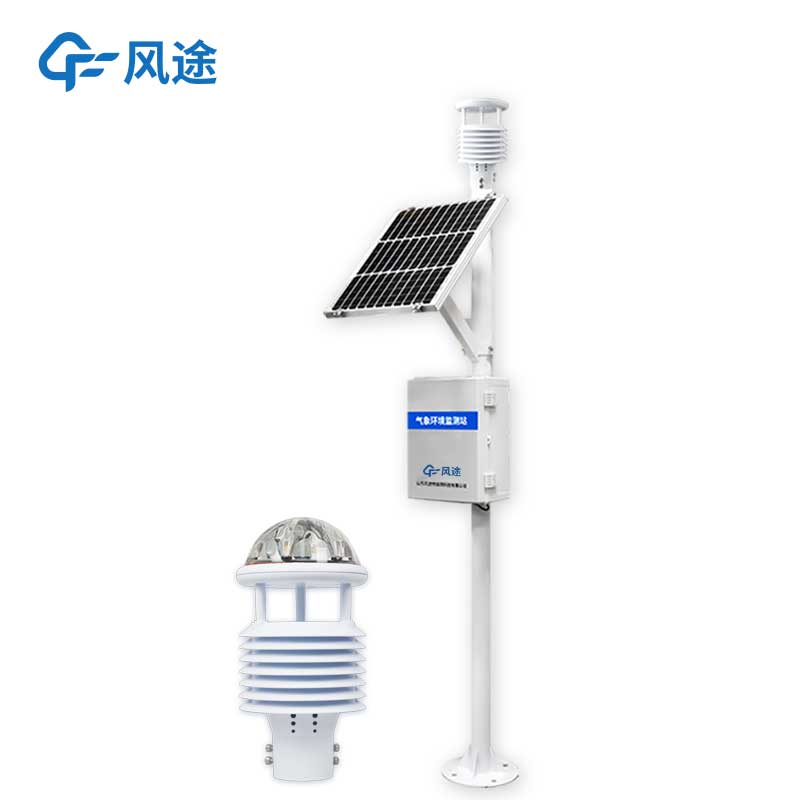
An ultrasonic weather station is a highly integrated meteorological monitoring device that utilizes modern ultrasonic detection technology. It emits ultrasonic waves and measures changes in their propagation speed through the air to accurately calculate wind speed and direction, completely eliminating issues associated with traditional mechanical anemometers, such as wear of rotating parts, inertial errors, and startup thresholds.
The core advantage of this type of weather station lies in its highly integrated design. In addition to basic wind speed and direction monitoring, it typically integrates various sensors for temperature, humidity, atmospheric pressure, rainfall, light intensity, and other meteorological elements, enabling synchronous monitoring of multiple parameters. It can also be expanded to monitor air quality parameters such as PM2.5 and PM10, forming a comprehensive environmental monitoring platform.
The device adopts a low-power design and, when combined with a solar power system and energy storage batteries, can achieve long-term unmanned operation in the field. The housing is often made of corrosion-resistant materials with a protection rating of IP65 or higher, allowing it to withstand various harsh environmental conditions. For data transmission, it supports multiple methods such as GPRS, 4G, and Bluetooth, facilitating integration into IoT platforms for remote monitoring and data analysis.
Ultrasonic weather stations are widely used in various fields, including meteorological observation, agricultural cultivation, forestry monitoring, environmental protection, ocean observation, and operations at airports and ports. Their characteristics—easy installation, low maintenance requirements, and high measurement accuracy—make them essential tools in modern meteorological and environmental monitoring, providing accurate and reliable meteorological data support for various industries.
As the impacts of climate change continue to intensify, the frequency and destructive scale of flood disasters are on the rise, posing severe threats to public safety and socio-economic development. Summer is inherently a high-risk period for disasters such as floods and droughts. To further enhance...
Debris flow is a common sudden geological disaster in mountainous areas. Triggered by heavy rains and melting snow and ice, it carries a large amount of solid materials such as sediment and rocks, flowing rapidly with strong impact force and a wide range of destruction. It often causes severe damage...
Integrating sonar and video detection technologies, underwater sonar detectors feature high-definition imaging and multi-frequency detection capabilities. They can scan underwater terrain and detect underwater life and obstacles, making them suitable for complex aquatic environments and signif...
Atmospheric Visibility Sensor Utilizing the forward-scattering method to measure the total atmospheric extinction coefficient, this device accurately calculates meteorological optical range and visibility values. It features excellent protective capabilities, ultra-low power consumption, and stable...



 Skype
Skype
 whatsapp
 mail
mail