Tianyi Sensor IOT Technology Co., Ltd
Sales Manager:Ms. Emily Wang
Cel,Whatsapp,Wechat:+86 15898932201
Email:info@fengtutec.com
Add:No. 155 Optoelectronic Industry Accelerator, Gaoxin District, Weifang, Shandong, China


Sales Manager:Ms. Emily Wang
Cel,Whatsapp,Wechat:+86 15898932201
Email:info@fengtutec.com
Add:No. 155 Optoelectronic Industry Accelerator, Gaoxin District, Weifang, Shandong, China
time:2025-10-10 09:13:47 source:Weather Station viewed:380 time
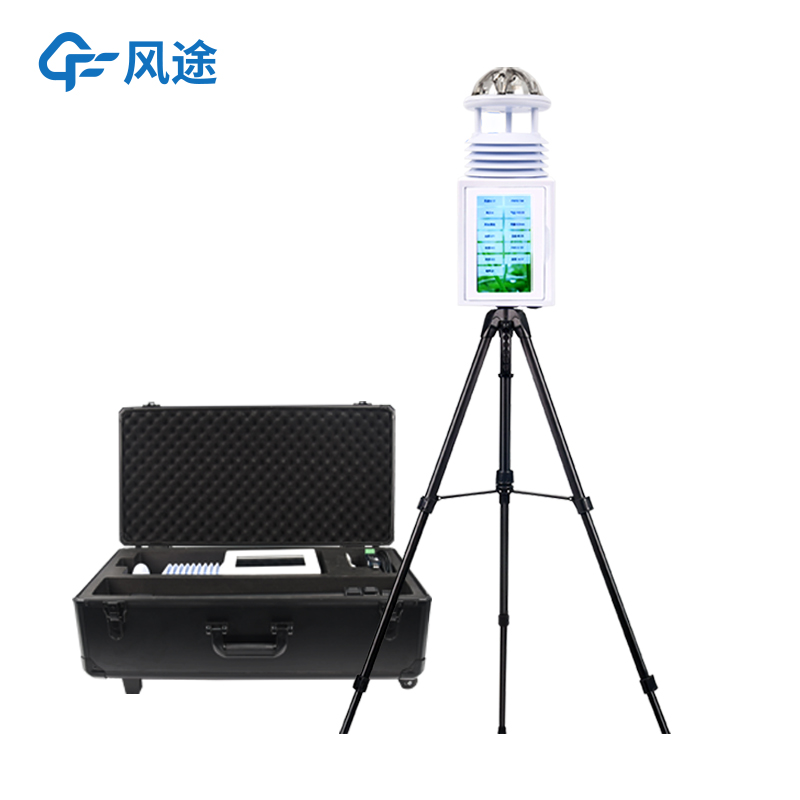
A Portable Weather Station is a highly integrated automatic field meteorological data collection and transmission device. Essentially, it is a fully functional mobile observation platform capable of rapidly establishing temporary meteorological observation points in areas not covered by conventional weather station networks or requiring quick deployment. Its core design integrates multiple meteorological sensors, data loggers, power supply units, and communication modules into a robust yet lightweight system, enabling plug-and-play automated operation.
It can automatically, continuously, and synchronously measure basic meteorological elements. These elements typically include atmospheric temperature, relative humidity, atmospheric pressure, wind speed, wind direction, and precipitation. It can also be extended to measure solar radiation, illuminance, soil temperature and humidity, as well as environmental parameters such as noise and air quality. Raw data collected by all sensors is standardized, calculated, and temporarily stored by the built-in data logger.
With its compact structure and built-in rechargeable battery, it can be conveniently transported to any required location by vehicle or manpower. The deployment process is quick and simple, requiring no complex infrastructure construction. From setup to beginning to output valid data usually takes only a short time.
Through wireless technologies such as GPRS, it remotely transmits processed meteorological data at preset time intervals to designated data centers, servers, or user terminals in real-time or near-real-time. This allows personnel in the rear to synchronously obtain the latest meteorological conditions and historical data sequences from the observation points without having to be present at the scene.
It has become essential technical equipment in fields such as emergency meteorological support, disaster prevention and mitigation, field scientific research, military operations, environmental monitoring, aviation support, and meteorological services for large-scale events. It provides crucial first-hand data support for making timely and scientific decisions in complex and changing environments, effectively filling the gaps in the observation capabilities of fixed station networks.
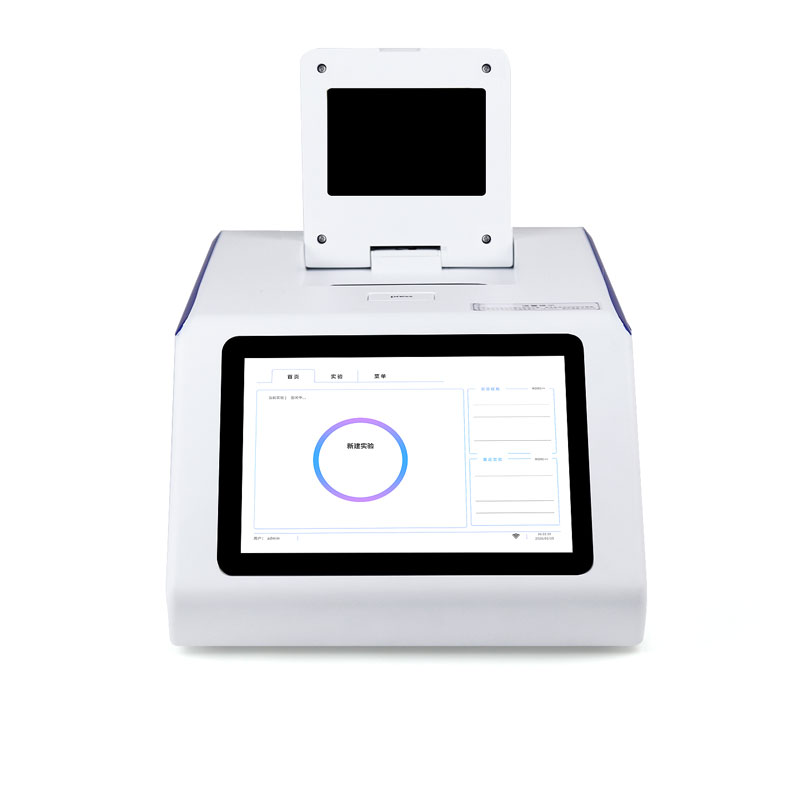
Total Phosphorus Analyzer follows the HJ670-2013 ammonium molybdate spectrophotometric method. Water samples are digested under high temperature and pressure, and concentration is calculated through complexation color development and absorbance detection. The equipment offers stable accuracy,...
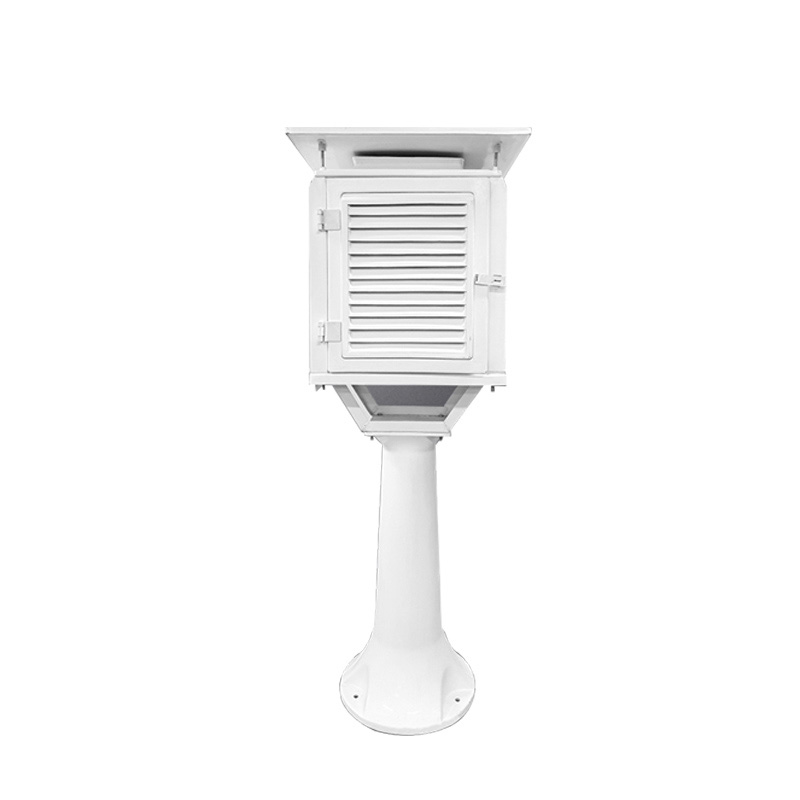
The water level and rainfall monitoring system utilizes K-band planar radar microwave technology to simultaneously monitor water levels and rainfall via non-contact methods. Characterized by low power consumption and high stability, the system is immune to various environmental factors and is suitab...
As a convenient and efficient meteorological monitoring device, the performance improvement of the Portable Weather Station is closely related to the application of new ultrasonic sensors.The Portable Weather Station features small size, portability, easy installation and operation, enabling meteoro...
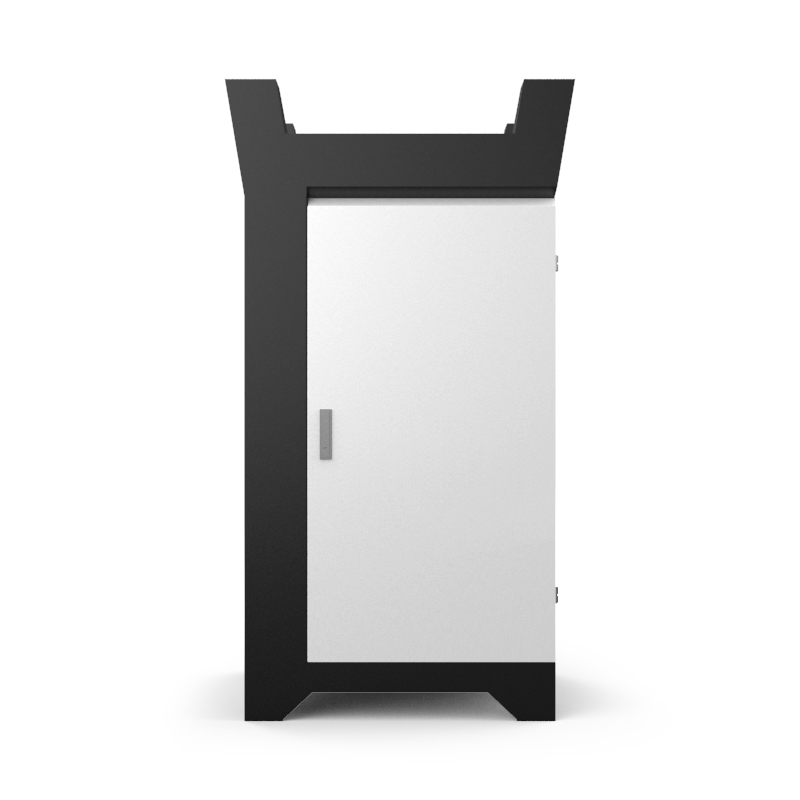
Meteorological and Environmental Monitoring Equipment is a highly integrated, low-power automated weather observation system capable of real-time monitoring of wind speed and direction, temperature and humidity, atmospheric pressure, optical rainfall, PM2.5, PM10, and various gaseous pollutant...


 Skype
Skype
 whatsapp
 mail
mail