Tianyi Sensor IOT Technology Co., Ltd
Sales Manager:Ms. Emily Wang
Cel,Whatsapp,Wechat:+86 15898932201
Email:info@fengtutec.com
Add:No. 155 Optoelectronic Industry Accelerator, Gaoxin District, Weifang, Shandong, China


Sales Manager:Ms. Emily Wang
Cel,Whatsapp,Wechat:+86 15898932201
Email:info@fengtutec.com
Add:No. 155 Optoelectronic Industry Accelerator, Gaoxin District, Weifang, Shandong, China
time:2026-03-25 13:12:35 source:Weather Station viewed:260 time
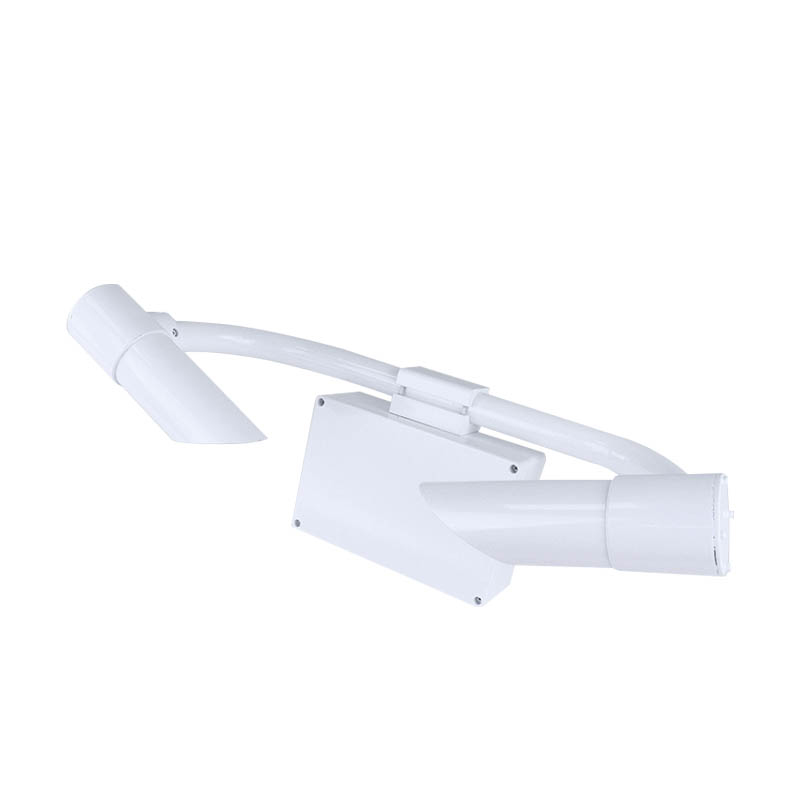
Present weather and visibility sensor employs the forward-scattering method to measure the total atmospheric extinction coefficient, thereby calculating visibility. It features a measurement range of 2 km and a resolution of 1 m, with measurement errors controlled in segments based on distance, making it ideally suited for applications in road traffic management, meteorology, and related industries.
Present weather and visibility sensor achieves quantitative measurement of atmospheric visibility based on the forward-scattering principle. Its operational mechanism involves emitting pulsed infrared light into the atmosphere; as the light beam propagates, it encounters and scatters off atmospheric aerosol particles. The sensor then captures these scattered light signals at a specific forward-scattering angle. By precisely measuring the intensity and angular distribution of the scattered light—and applying the established functional relationship between the atmospheric extinction coefficient and visibility—the current visibility value is accurately calculated.
This sensor boasts a measurement range of 2 kilometers and a resolution of 1 meter, enabling highly granular monitoring of low-visibility weather conditions. Measurement errors are segmented according to the visibility range: when visibility is 2 kilometers or less, the error is controlled within ±2%; for the range between 2 km and 10 km, the error is ±5%; and when visibility exceeds 10 km, the error is ±10%. This segmented error configuration ensures maximum measurement accuracy within the critical low-visibility warning zone, thereby meeting the practical requirements for traffic and meteorological early warning systems.
In terms of structural design, the sensor features an integrated optical module wherein the transmitter and receiver are securely mounted on a single baseplate. The optical path is factory-calibrated, eliminating the need for repetitive field adjustments during installation. The optical windows are equipped with heating elements that automatically activate in low-temperature and high-humidity environments, preventing condensation or frost accumulation on the lens surfaces from interfering with measurements. The housing is constructed from corrosion-resistant materials and meets an IP65 or higher protection rating, ensuring reliable, long-term, and continuous operation in outdoor environments. For signal output, the sensor supports various industry-standard interfaces—such as RS485 and 4–20 mA current loops—facilitating seamless integration into road traffic weather stations, highway monitoring systems, or meteorological observation networks.
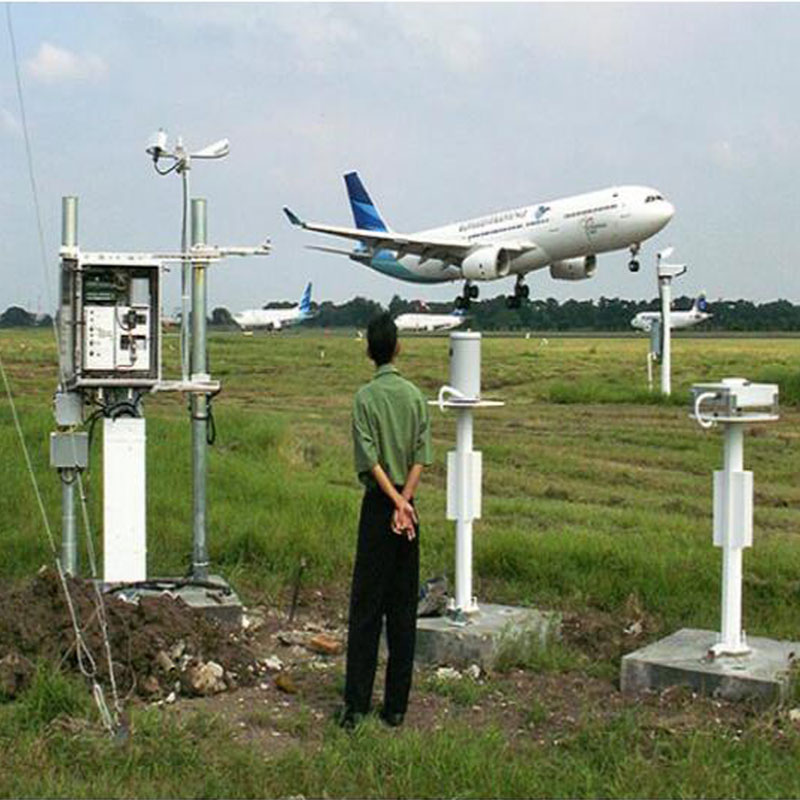
In terms of application, this sensor is widely deployed along highways, bridges, tunnel entrances and exits, and other critical road segments to provide real-time monitoring of reduced visibility caused by localized fog patches, rain, or snow. When visibility falls below a preset threshold, the system can interface with Variable Message Signs to issue speed limit warnings, or activate fog guidance devices to safely guide vehicles through the area. In the field of meteorological observation, these sensors serve as auxiliary components for automated weather stations, providing visibility data utilized in aviation forecasting, port operations, and ambient air quality assessment. Employing a forward-scatter measurement method, the system eliminates the need to install long-baseline transmitter-receiver units on both sides of the roadway; measurements can be performed via a single-ended installation, thereby reducing infrastructure investment and maintenance costs.
In today's society, environmental issues are receiving increasing attention, and air quality has become an important factor affecting people's quality of life. As one of the key pollutants impacting air quality, dust is in urgent need of accurate monitoring and effective control. The Dust De...
Microwaves refer to electromagnetic waves with frequencies ranging from 300MHz to 300GHz and wavelengths from 1 millimeter to 1 meter. Due to their high frequency and short wavelength, they have strong directivity and penetrating power, enabling stable propagation under different meteorological cond...
Life Detector Device is a vital sign detection device based on ultra-wideband radar technology. It can penetrate non-metallic obstacles such as brick walls and rubble, detecting stationary life forms at a distance of ≥26 meters and moving life forms at a distance of ≥36 meters. It features t...
The portable visibility monitor uses the forward scattering method to measure the total extinction coefficient of air and calculate visibility. Its integrated, portable design is compact and lightweight, making it widely applicable in emergency response, road traffic, and meteorological scenar...


 Skype
Skype
 whatsapp
 mail
mail