Tianyi Sensor IOT Technology Co., Ltd
Sales Manager:Ms. Emily Wang
Cel,Whatsapp,Wechat:+86 15898932201
Email:info@fengtutec.com
Add:No. 155 Optoelectronic Industry Accelerator, Gaoxin District, Weifang, Shandong, China


Sales Manager:Ms. Emily Wang
Cel,Whatsapp,Wechat:+86 15898932201
Email:info@fengtutec.com
Add:No. 155 Optoelectronic Industry Accelerator, Gaoxin District, Weifang, Shandong, China
time:2026-05-15 11:19:56 source:Weather Station viewed:223 time
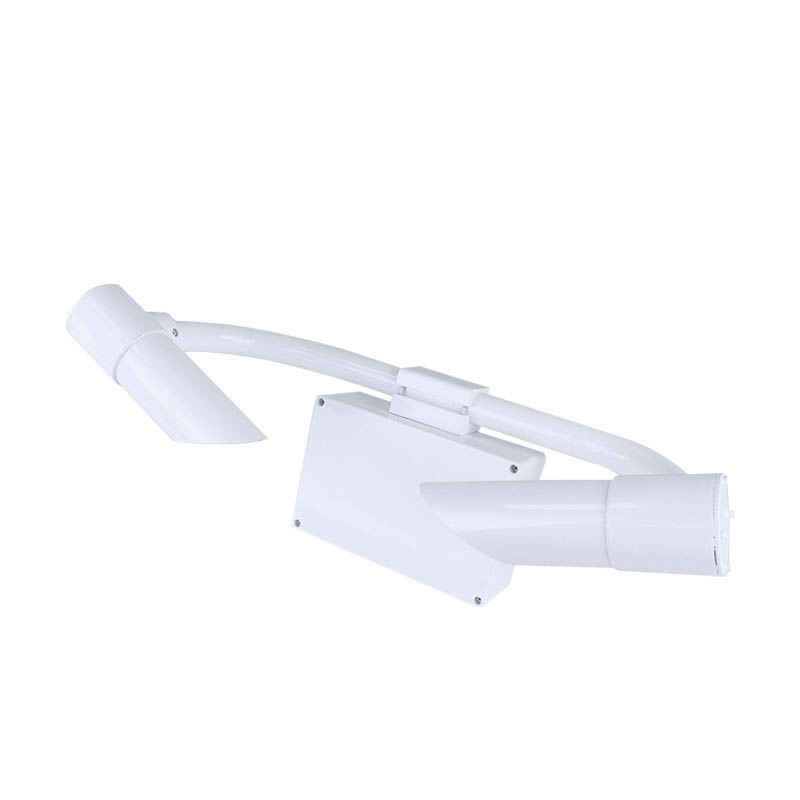
A weather phenomenon sensor is an optical measuring instrument that uses the forward scattering principle. It emits an infrared pulse beam into the atmosphere and receives the scattering signals from aerosol particles, calculating the extinction coefficient to determine the visibility value. The instrument can identify weather phenomena such as fog, rain, snow, mixed precipitation, and clear skies with a high recognition rate. It is mainly used in automatic weather stations, road traffic weather monitoring, and airport visibility measurement.
Weather phenomenon sensors are a type of atmospheric sounding instrument designed based on the optical forward scattering principle. The instrument consists of three parts: a transmitter, a receiver, and a data acquisition processor. The transmitter's infrared LED or laser semiconductor infrared diode emits an infrared pulse beam into the atmosphere. During propagation, the beam is scattered by aerosol particles, fog droplets, or precipitation particles. The receiver collects the scattering signals from a specific scattering angle. The data processor converts these signals into an extinction coefficient and finally calculates the meteorological optical range (MOR) according to Koschmieder's law. The angle between the transmitter and receiver is typically chosen within the 30-45 degree forward scattering range, which offers good sensitivity to both large and small particles.
In weather phenomenon identification, the core capability of weather phenomenon sensors stems from the multi-dimensional analysis of scattered signals. When the atmosphere contains only clean air, the scattered signal is weak, and the sensor determines the weather to be clear. When fog or haze occurs, a large number of tiny suspended particles cause the scattered signal intensity to rise uniformly. The sensor calculates the visibility value based on the extinction coefficient and reports the fog condition. When precipitation occurs, raindrops or snowflakes pass through the sampling area. The sensor captures the scattered pulses of these discrete particles through continuous high-speed sampling, estimates the particle size based on the amplitude of each pulse, estimates the precipitation intensity based on the pulse frequency, and combines this with data from particle falling velocity and external temperature sensors to finally output a weather code according to the WMO 4680 codebook.
Weather phenomenon sensors play a crucial role in visibility measurement and weather identification across multiple industries. In the road traffic sector, sensors are deployed along highways to monitor visibility values in real time and link the data to variable speed limit signs and electronic information boards. When fog or snowfall is detected, warnings are sent to traffic control centers. In airport aviation meteorology, weather phenomenon sensors, as part of the runway visual range (RVR) system, provide RVR measurement data. They accurately detect all types of precipitation and visibility under extreme weather conditions at airports, supporting pilots' safe takeoffs and landings in low-visibility conditions. In routine meteorological observation, forward-scattering visibility meters are widely used in automated operational visibility observations at national meteorological stations. The sensor has a compact structure and a corrosion-resistant housing to withstand rain and salt spray. The sensor outputs data via RS232 and RS485 interfaces using the Modbus protocol, supporting integration with existing automatic weather stations and monitoring networks, and is suitable for long-term unattended continuous observation operations.
Meteorological monitoring equipment includes six-parameter automatic weather stations, precipitation sensors, radiation observation stations, and unmanned aerial vehicle (UAV) systems, used to monitor meteorological elements such as temperature, humidity, wind speed and direction, rainfall, at...
The Wind Sensor employs the time-of-flight measurement principle, accurately calculating wind speed and direction by detecting changes in the speed of ultrasonic waves propagating in the air....
Greenhouse sensor is primarily used for monitoring and controlling humidity in the air. These devices are designed for complex indoor and outdoor environments and can measure four key parameters in real-time: temperature, humidity, carbon dioxide, and light intensity. They are widely app...
Life Detector Device integrates infrared thermal imaging detection, 4K high-definition video observation, and two-way voice communication functions. This device can effectively locate signs of life in complex environments such as debris and enable communication between rescuers and those trapp...


 Skype
Skype
 whatsapp
 mail
mail