Tianyi Sensor IOT Technology Co., Ltd
Sales Manager:Ms. Emily Wang
Cel,Whatsapp,Wechat:+86 15898932201
Email:info@fengtutec.com
Add:No. 155 Optoelectronic Industry Accelerator, Gaoxin District, Weifang, Shandong, China


Sales Manager:Ms. Emily Wang
Cel,Whatsapp,Wechat:+86 15898932201
Email:info@fengtutec.com
Add:No. 155 Optoelectronic Industry Accelerator, Gaoxin District, Weifang, Shandong, China
time:2026-05-08 10:54:16 source:Weather Station viewed:226 time
The cost of water level monitoring equipment varies based on brand, model, functionality, and measurement precision. Buried-type water level monitoring devices are priced at approximately 4,000 yuan; submersible devices are around 6,000 yuan; and river channel water level monitoring stations cost approximately 16,000 yuan—making them suitable for a wide range of water conservancy and flood control applications.
The price of water level monitoring equipment is influenced by various factors, including the brand, model, functional configuration, measurement accuracy, and the specific manufacturer; market prices typically range from a few thousand to tens of thousands of yuan. Users should select the appropriate equipment type and configuration based on their specific application scenarios and monitoring requirements.
Currently, common water level monitoring devices on the market fall primarily into three categories. The FT-JS1 buried-type water level monitoring device is priced at approximately 4,000 yuan; it is designed for groundwater level monitoring scenarios, allowing for deep underground deployment to provide continuous, real-time data. By integrating IoT, sensor technology, and big data analytics, it enables remote, automated monitoring of groundwater levels. The FT-DSW1 submersible water level monitoring device is priced at approximately 6,000 yuan; utilizing pressure-sensing principles, the sensor is submerged directly into the water body to measure the level. This makes it suitable for environments requiring immersion-based measurement—such as deep groundwater wells, mines, and geothermal wells. The FT-SW1 river channel water level monitoring station is priced at approximately 16,000 yuan; it employs radar technology for non-contact detection, rendering it unaffected by water turbidity, floating debris, or the impact of water currents. This makes it ideal for monitoring water levels in open water bodies such as rivers, lakes, and reservoirs.
In addition to these three typical categories, the market offers products with various other configurations and price points. Basic-model submersible water level meters—such as those used in general agricultural irrigation areas or small reservoirs—typically range in price from 1,000 to 3,000 yuan when special features (such as explosion-proofing or groundwater over-extraction monitoring) are not required. Similarly, basic single-function radar water level stations—when not integrated with rainfall monitoring capabilities—are often priced between 5,000 and 12,000 yuan. Higher-end products—such as water level stations that integrate rainfall monitoring and are designed to withstand complex environmental conditions—are priced between 16,000 and 27,800 yuan, making them suitable for scenarios where high data precision and robust environmental adaptability are critical requirements. In government procurement, the unit price for pipeline network liquid level monitoring stations is 12,636 RMB per set; the reference price for wireless groundwater level monitors is approximately 9,900 RMB; and the cost of an online water level monitoring system is around 26,000 RMB.
When selecting water level monitoring equipment, users should comprehensively consider factors such as budget, required monitoring accuracy, on-site environmental conditions, and data transmission requirements to choose the product that offers the most optimal cost-performance ratio. Buried devices are suitable for groundwater scenarios, submersible devices are convenient for installation in deep wells and industrial tanks, while riverway stations are best suited for monitoring vast open water bodies.
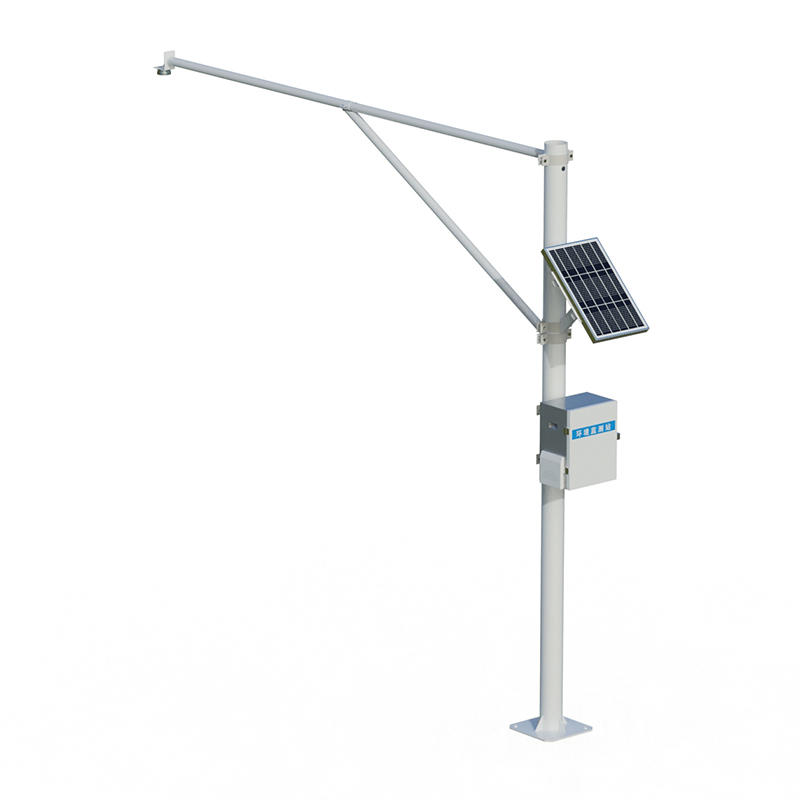
In the photovoltaic field, the I-V Curve Tracer is a core device used to measure and evaluate the electrical performance of solar cells and modules. The "IV" in its name stands for Current-Voltage. This instrument accurately plots the volt-ampere characteristic curve of the measured object...
An ultrasonic weather station is a highly integrated meteorological monitoring device that utilizes modern ultrasonic detection technology. It emits ultrasonic waves and measures changes in their propagation speed through the air to accurately calculate wind speed and direction, completely eliminati...
In the cold winter, transmission lines often face severe challenges of icing. When conditions such as low temperature, high humidity, and specific wind speed occur simultaneously, the phenomenon of icing on transmission lines is likely to form. Line icing not only increases the mechanical load on co...
Precision Snow/Rain Gauge is capable of monitoring all types of precipitation—including liquid, solid, and mixed solid-liquid phases. It features a real-time precipitation intensity measurement range of 6 to 1800 mm/h and a cumulative precipitation range of 0.2 to 1500 mm, with an RS485 inter...


 Skype
Skype
 whatsapp
 mail
mail